


You’re reading Monday Morning Economist, a free weekly newsletter that explores the economics behind pop culture and current events. You can support the newsletter by sharing it or by becoming a paid subscriber to help it grow:
Rehan Alam has been really busy. The owner of The Red Lion soccer bar in downtown New York City has spent the last few weeks hiring extra bartenders, bolting new TVs to the walls, and paying sound engineers to rewire the whole place. Costs for just about everything have been climbing for months, but Rehan is betting on the World Cup, which kicks off this Thursday in Mexico City.
“A boost like this,” he told the BBC, “is definitely going to give us that uplift of spirits.”
Save this article. Because when the tournament ends in July, you are going to hear a version of Rehan’s story amplified by FIFA, mayors, members of Congress. They will cite job numbers and point to packed bars. They’ll call it a transformational moment for the American economy. The press conferences are basically already written.
The World Cup is worth having, but not for the reasons they’ll give us.
FIFA’s Numbers Don’t Add Up (They Never Do)
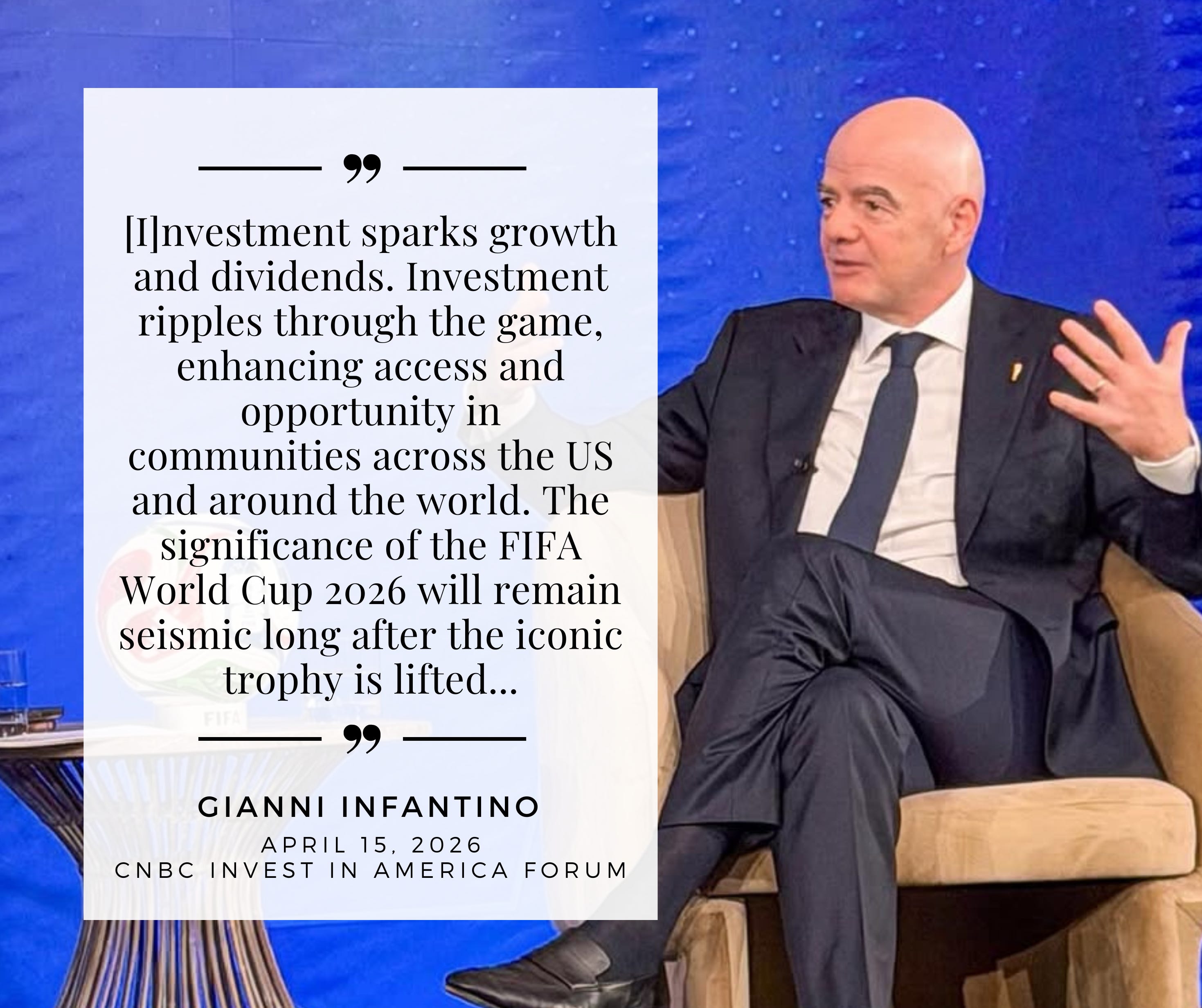
A few months ago, FIFA president Gianni Infantino told the CNBC Invest in America Forum that the tournament would produce $80.1 billion in gross output, including $30.5 billion in the United States alone. He also claimed the two-month tournament would create 200,000 permanent jobs in the U.S. “The significance of the FIFA World Cup 2026,” he said, “will remain seismic long after the iconic trophy is lifted.”
Seismic. That’s a word that should trigger some skepticism.
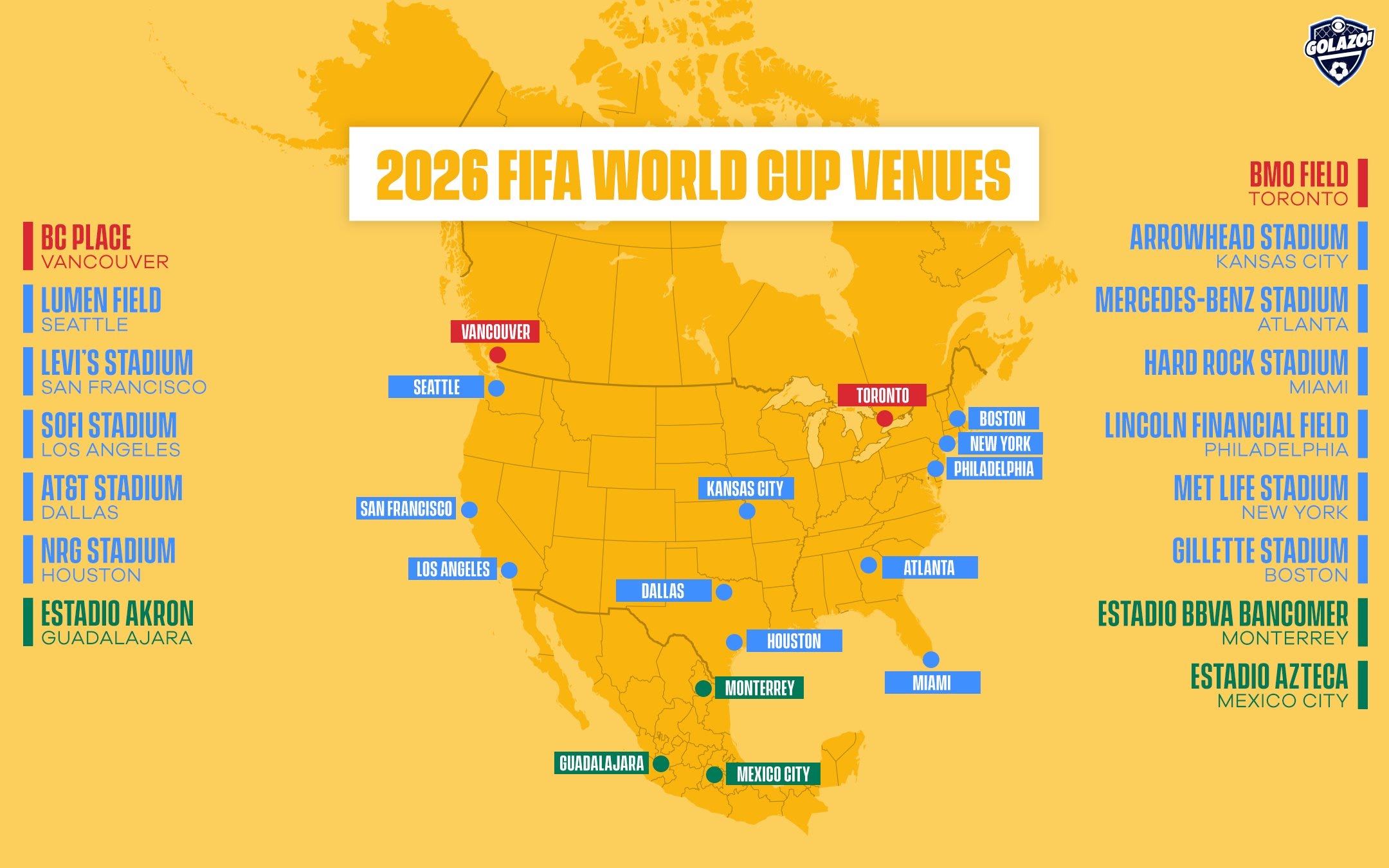
To be fair, on paper this one really does look different. Forty-eight teams instead of thirty-two will play one hundred and four matches across Canada, Mexico, and the United States. It’s the biggest World Cup ever, by almost every measure.
But sports economists have heard this refrain before. Drawing on GDP data from every World Cup since 1982, researchers find that hosting produces a marginally positive but statistically insignificant bump in real output. The long-run impact is effectively zero. Heck, twelve of the last fourteen World Cups since 1966 resulted in financial losses for host countries.
Every tournament looks transformative on paper. Almost none of them are, in the data.
The Economic Concept That Explains Why: The Seen and the Unseen
In 1850, the French economist Frédéric Bastiat wrote about what he called the seen and the unseen. When something visible and exciting happens, we count it. Stadium renovations, packed sports bars, and a surge in taxi rides will all show up in press releases about economic impact. What those same press releases will ignore is everything that didn’t happen because of it.
It’s easy to see packed sports bars and think the World Cup is boosting the economy as expected. Some analysts are already pointing to the recent Jobs Report’s bump in hospitality and leisure as evidence the games are working. But what about the entertainment venues and restaurants around the corner? The Italian restaurant that sits half-empty because its regulars are at the sports bar or the movie theatre that has a few extra vacant seats. Residents are just redirecting the money they normally spend each week toward things associated with the World Cup. Their spending is moving around the economy, not growing it.
What about all the new visitors coming to spend money they wouldn’t otherwise have spent here? Tourism spending largely displaces existing visitor flows rather than generating net new activity. Some travelers who would have come to the U.S. this summer are avoiding host cities due to chaos around flights and hotels. We’re getting different tourists, not additional ones.
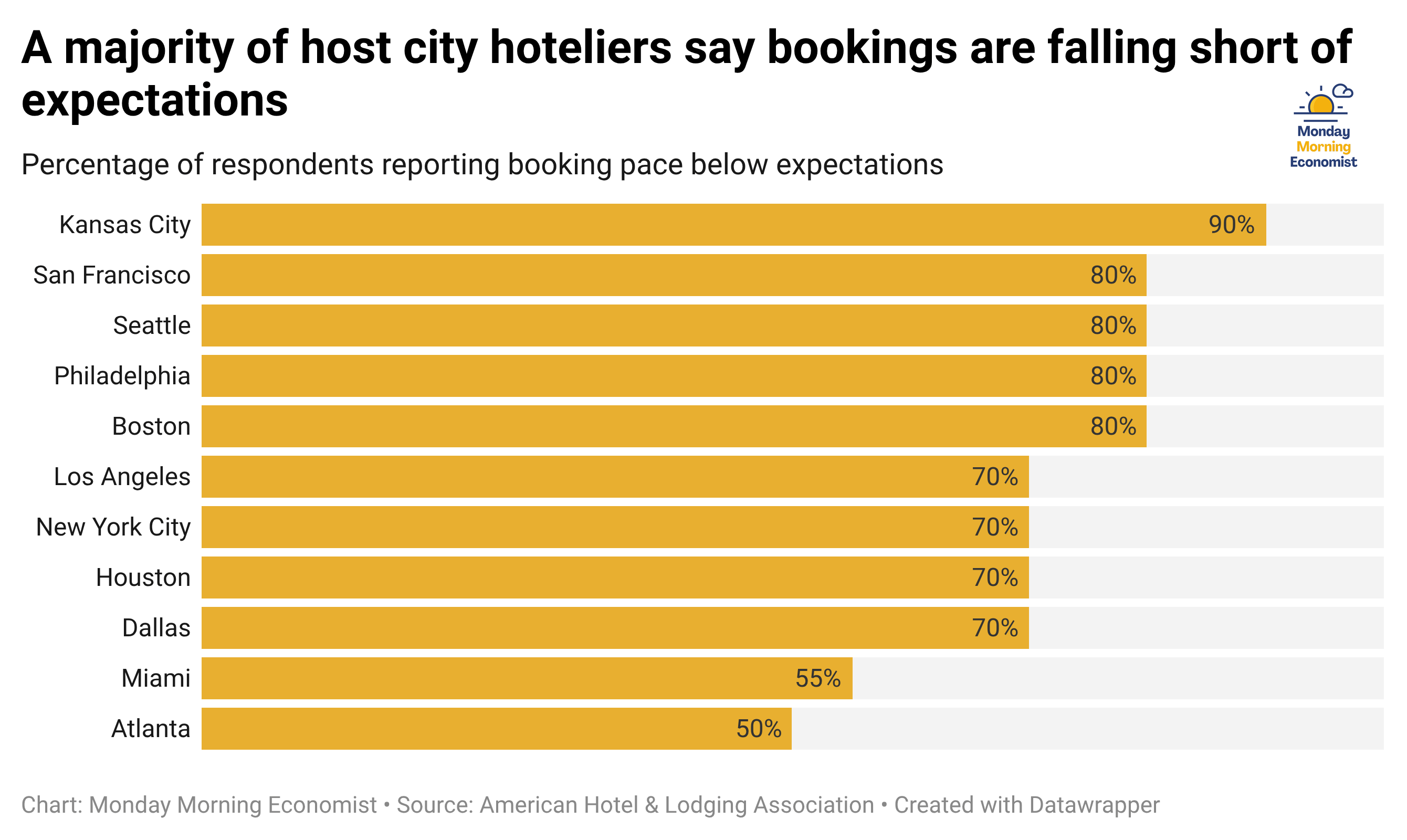
And then there are all the costs showing up in local newspapers, but won’t ever appear in FIFA’s press releases. Kansas City spent millions to expand its bus system to shuttle fans to matches, but will stop service once the games end. Residents will be left with fewer routes and higher fares than they had before the expansion. At a broader level, 80% of hotels surveyed by the American Hotel and Lodging Association a few weeks ago said World Cup bookings were lagging behind forecasts. It’s a shortfall the association blames on FIFA overbooking room blocks that never reflected real demand, compounded by travel restrictions keeping international visitors away.
GDP Can Count the TVs, But It Can’t Count the Feelings
When FIFA claims $80 billion in gross output and 200,000 permanent jobs, they are making claims that the World Cup will move the needle on Gross Domestic Product. GDP is the measure economists use to track how an economy is doing: it adds up everything a country produces into a single closely-watched number. When it goes up, we say the economy is growing. When it goes down, we worry.
When it comes time to calculate GDP for the next few months, it will count Rehan’s new TVs, his sound engineer, and his new hires’ wages. It will count your hotel stay or the gas you put in your car to get to the venue. All of it shows up.
What it won’t count is psychic income. It will leave out the pride of watching your country compete on the world stage, the joy of a last-minute goal, the sense of belonging that comes from a city full of strangers who are, just for a moment, all rooting for the same thing. These are real and meaningful human experiences, but they won’t show up in the data.
Simon Kuznets, the economist who invented GDP in the 1930s, saw this limitation clearly. He warned that “the welfare of a nation can scarcely be inferred from a measurement of national income.” GDP is a useful instrument, but it was never designed to measure joy. Frameworks like the UN’s Human Development Index, Bhutan’s Gross National Happiness, and the OECD’s Better Life Index all attempt to fill that gap. There’s a growing consensus that output alone is an incomplete picture of how a society is doing. None of them are perfect either, but at least they’re asking the right question.
Final Thoughts
Rehan Alam will probably have a great summer, alongside thousands of other sports bars across North America. But the U.S. economy won’t post a measurably better quarter because of it. The economic impacts FIFA and host city officials report will be overstated. The psychic income will almost certainly be undercounted, because pride and joy are harder to put in a press release.
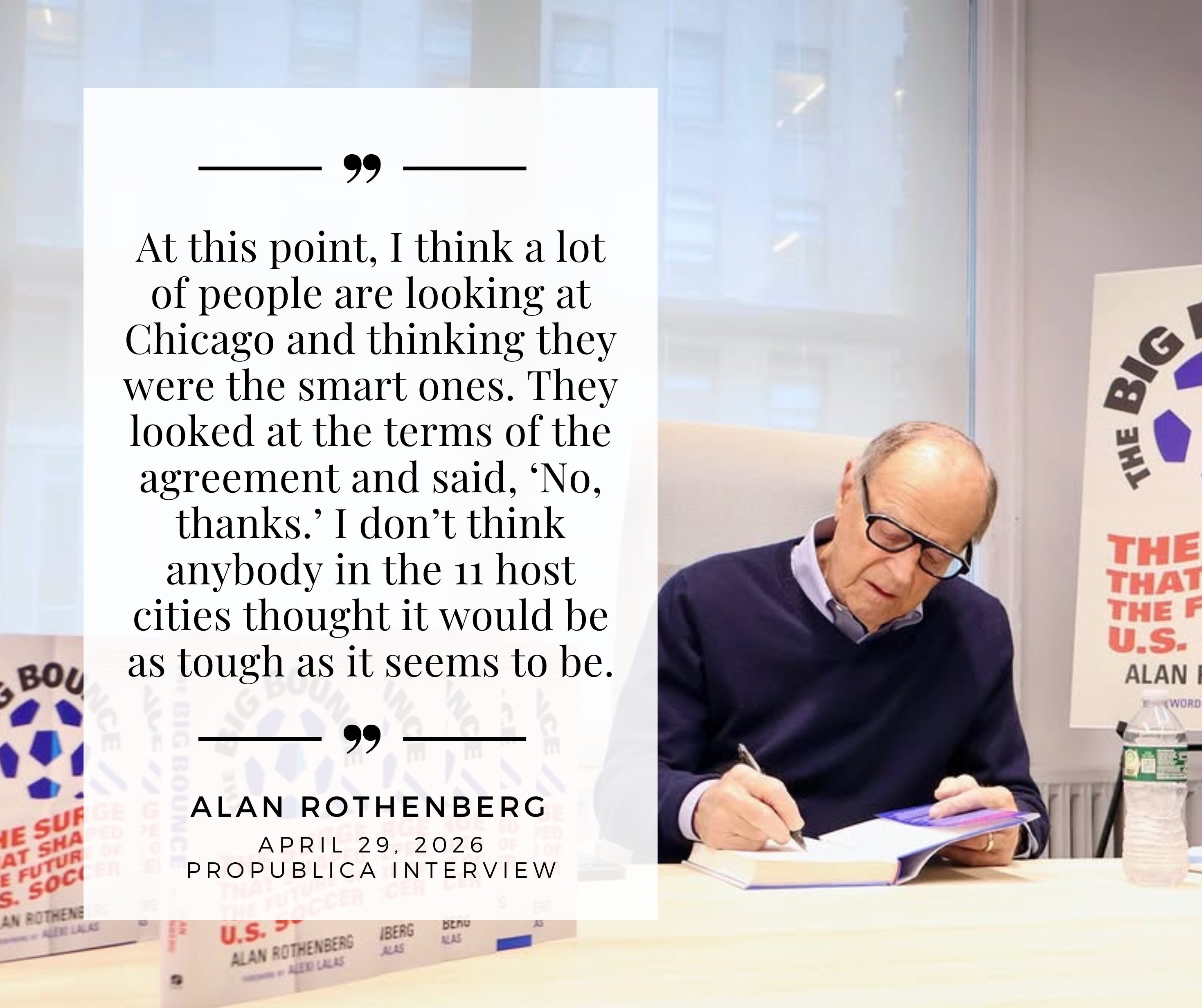
Host cities agreed to shoulder hundreds of millions of dollars in costs, subsidizing a tournament expected to generate $11 billion in profits for FIFA. Host cities have paid for security, stadium retrofits, and fan festivals. In return, they won’t see a dollar of ticket sales, concessions, merchandise, or parking revenue. That trade-off wasn’t accidental. The cities that said yes knew the terms going in. Some cities, like Chicago, looked at the same contract and walked away.
There is a discussion around public funding that seems to get lost in all of this. Cities spend public money on things that make people happy all the time, but we don’t justify those with GDP projections. City parks don’t turn a profit. Neither do Fourth of July parades, public art installations, or free summer concerts. Most people believe that shared joy is a legitimate use of public resources.
The World Cup could be defended on exactly those terms. A month of collective electricity that involves strangers from a dozen countries crammed into the same bar, losing their minds over the same goal. Rehan’s regulars telling stories about this summer for years. That’s worth something.
But that’s never how it’s sold to cities. Mega-events like the World Cup are sold as a seismic, transformational economic investment. And when FIFA’s president takes the podium in late July and when a host city mayor announces the numbers, that’s the version you’ll hear again.
Now you’ll know what to do with it.
If you learned something today, someone you know is about to be fooled by a press conference. Send this to them.

Lower-tier Category 3 tickets to group stage matches were $69 four years ago, but FIFA has been selling them for as much as $265 this year [WABE]
Leisure and hospitality led all sectors with an additional 70,000 jobs in the May 2026 jobs report, well above the 14,000 per month average over the past year [CNBC]
The Azteca Stadium in Mexico City will become the first venue to host matches at three different men’s World Cups [Euronews]
The highest concentration of establishments in the United States with “sports bar” in the name was in the St. Cloud, Minnesota metro area, which has more than 10 times the national average concentration of sports bars [Bureau of Labor Statistics]
For Vancouver alone, the cost of hosting seven matches could reach $729 million, nearly $1.2 million per minute of play [The Mercury News]
We actually have a paper out on the effect of organizing mega events and increased wealth inequality, check it out: https://www.sciencedirect.com/science/article/pii/S0176268024001174
YES! Thanks for this. And, yes, my hometown Chicago looks like the smart ones- finally. I think we learned a lesson when a previous Mayor with a very (in)famous dad (ahem) leased all the city parking meters for 99 years to a private firm for some upfront cash in order to produce the winning bid for the 2014 Olympics. That went over well. This also may be why we're letting Indiana help foot the bill for a new stadium for our NFL franchise. We know how cash strapped that league is! ;) So, Hammond, IN will be the recipients of a shift in Chicago spending for 8, 9 or maybe even10 Sundays a year. Curious what that trade-off looks like for Hoosier-land. Psychic benefits aside (and, they are hard to quantify), I appreciate your spelling it out like this. The role of FIFA and the IOC as monolith monopsony and monopoly are certainly worthy of some SEISMIC commentary.