


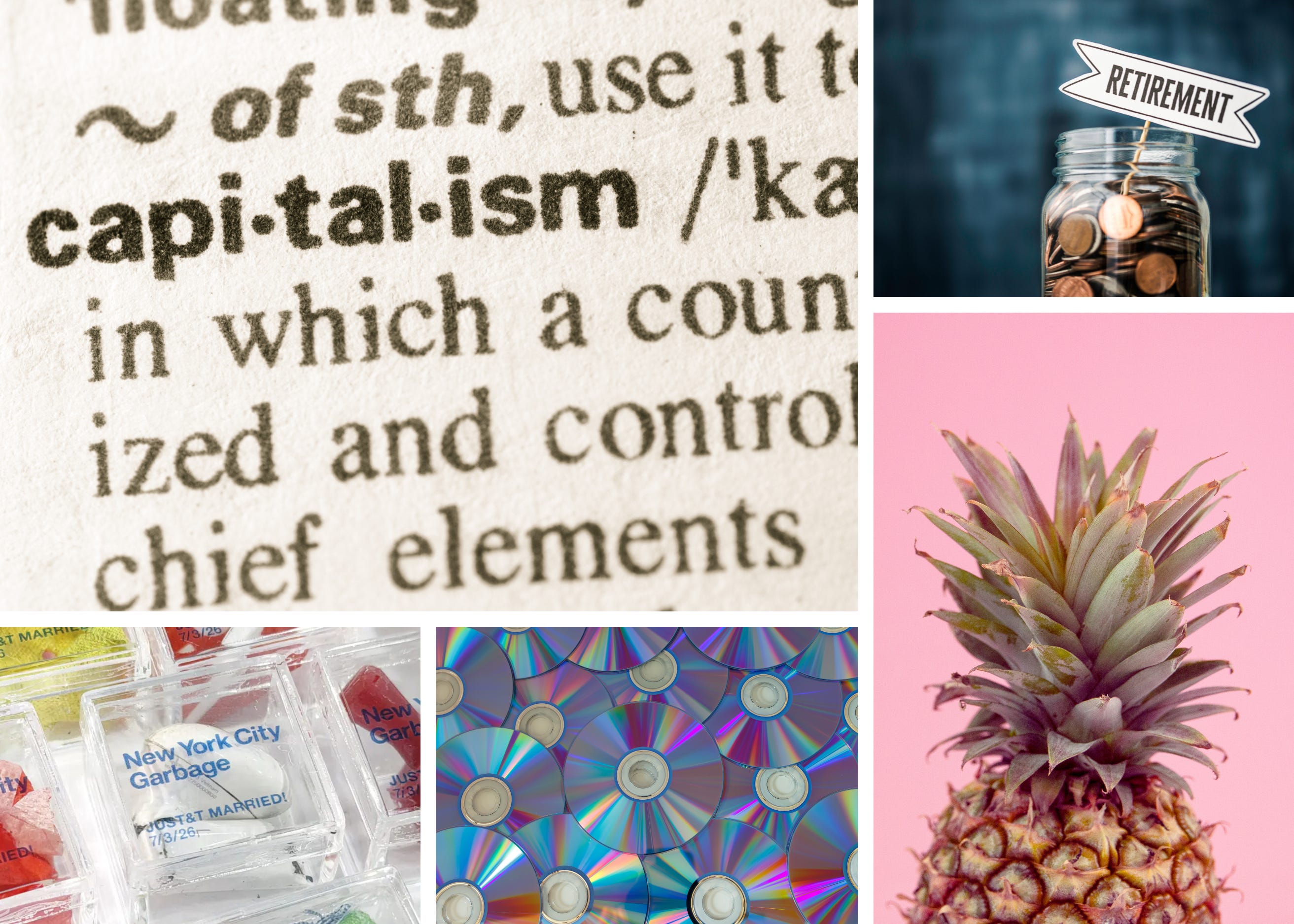
Hi y’all! Here are five stories from this week that contained some neat applications of economic principles or are related to teaching:
Has capitalism gotten a bum rap? [The Wall Street Journal]
Americans estimate they’ll need $1.2 million to retire comfortably, but only 30% think they’ll hit the mark before retiring [CNBC]
One artist is selling cubes of trash from the street outside of Taylor Swift and Travis Kelce’s wedding [Fast Company]
Compact disc sales are up 16% in the first half of the year [Vice]
A $400 pink pineapple exists, but it’s illegal to buy, sell, or even grow it in the country that produces it [The Hustle YouTube]

The World Cup is over, but don’t let anyone tell you it was an economic success. Reports that it generated billions in economic activity are overstated and undersupported. You can learn more about the economic impact of mega events from our post a few weeks back:
The World Cup Won't Boost the Economy (Don't Let Anyone Tell You Otherwise)

You’re reading Monday Morning Economist, a free weekly newsletter that explores the economics behind pop culture and current events. You can support the newsletter by sharing it or by becoming a paid subscriber to help it grow:

Grocery unit sales fell last month as prices climbed, but the data reveals something more nuanced. Using survey data from Bain & Company and LendingTree, take a walk through the grocery store to learn why the same price increase can be a shrug for one product and a dealbreaker for another. Four factors are driving how you respond to price changes. Have you experienced them all?
The Quiet Math Happening in Every Grocery Cart

You’re standing in the cereal aisle, and you’re doing math you don’t remember doing on previous shopping trips. The name-brand box of your favorite cereal is $4.29. The store brand is shelved right beside it and only costs $2.29. You wouldn’t have thought twice about grabbing your favorite box last year, but today is different. …
Are you an educator looking for ways to introduce this week’s newsletter into your classroom? Sign up for the Classroom Edition of Monday Morning Economist to get assessments and lesson plans delivered straight to your inbox every week.
"Has capitalism gotten a bum rap?"
Yes.
That was easy, didn't even need to read the article!