


Hi y’all! Here are five stories from this week that contained some neat applications of economic principles or are related to teaching:
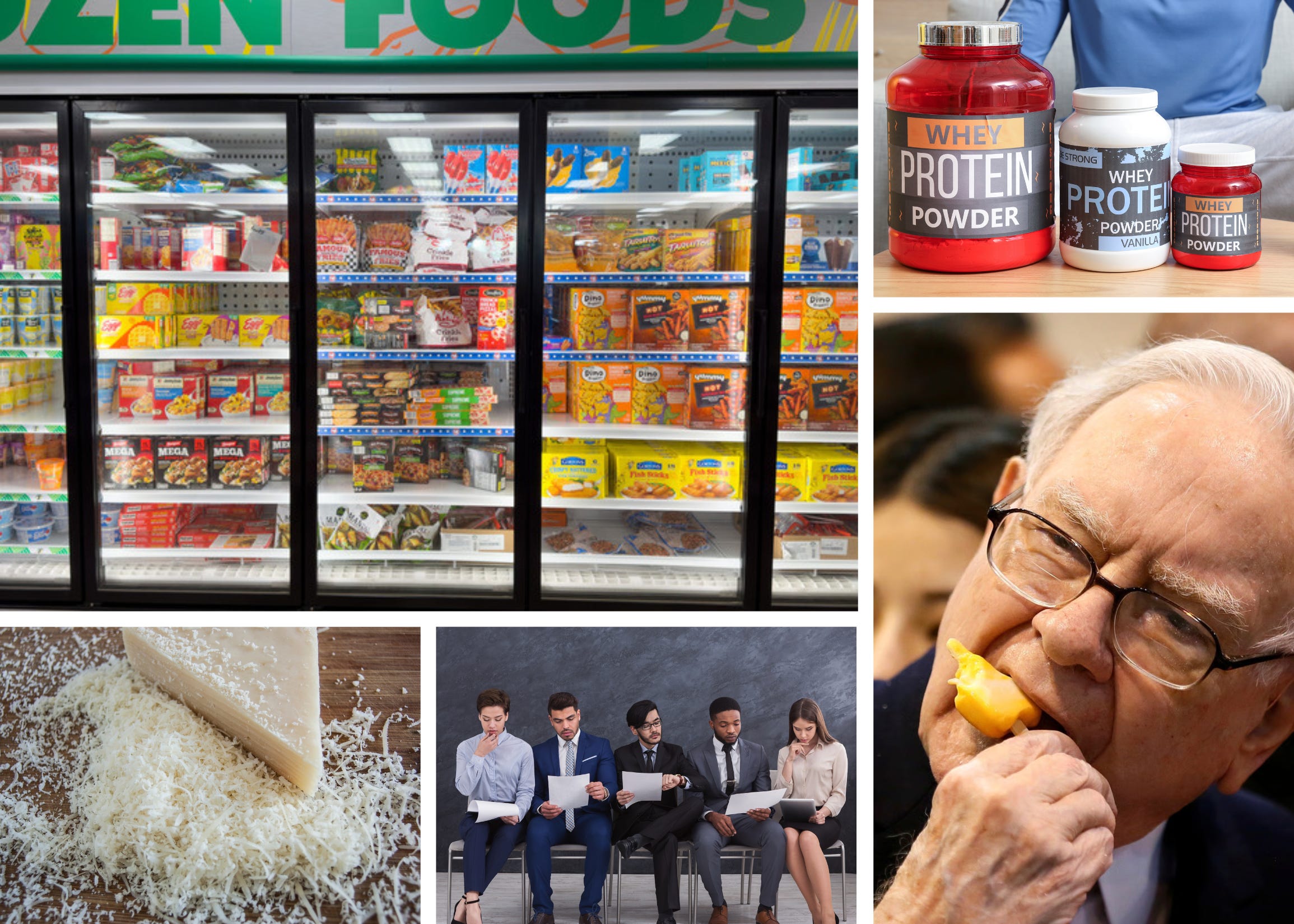
What does it mean when the dollar store is the only store for groceries? [Marginal Indulgence]
Companies started putting protein in literally everything, and now intense demand has increased the price of standard whey powder by 50%+ since January [Food Dive]
Inside Italy’s secret ‘Cheese Bank,’ where Parmigiano Reggiano becomes financial gold [CNN]
Charting young America’s exceptional pessimism on the current job market [Gallup]
Someone paid $9 million to have lunch with Warren Buffett and Steph Curry [ESPN]

Spotify turned twenty last month and gave everyone a look at the first song they ever streamed on the platform. That nostalgia helps us explore switching costs, the reason you’ll probably never cancel your subscription even though you’re free to leave anytime. If you haven’t read it yet, it might change how you think about every app you use.
The Cost of Your First Song

Spotify wants you to look up the first song you ever streamed. That nostalgic feeling? It's also the reason you'll probably never cancel.
Are you an educator looking for ways to introduce this week’s newsletter into your classroom? Sign up for the Classroom Edition of Monday Morning Economist to get assessments and lesson plans delivered straight to your inbox every week.
I decided on "Food Dive" for today's economics indulgence. One interesting aspect of today's article is that the phenomenon it describes barely affects me. It points out that the growing use of protein, as a result of "bro" culture and the popularity of gyms (even the ultimate nerd Mark Zuckerberg -- a perfect duplicate of Napoleon Dynamite) as well as Wegovy and clones, has increased demand for whey protein concentrate. Supply is hard to increase locally, because US cows have low protein in their milk. So of course I looked up why, and stumbled across yet another example of economic incentives. US cows are predominantly Holsteins, which have lower protein in their milk, but, crucially, produce higher volumes -- historically, farmers were paid by the gallon.
More recently, butterfat has been an incentive to increase production of butter, as consumers have switched from margarine (on which I was fed growing up in the 60s). The USDA says milk fat content increased from 3.68% in 2000 to 3.98% on average by 2020 (cool article: https://www.ers.usda.gov/amber-waves/2021/august/farm-milk-components-and-their-use-among-dairy-products-have-shifted-over-time), and as of 2025 Holsteins are averaging 4.11% fat (https://www.farmweeknow.com/livestock/milk-fat-outpacing-milk-protein-production-in-u-s-dairy-herd/article_df9ac0db-b6d3-485c-9339-f1dd8cc7632d.html). FarmWeek says “Farmers are genetically selecting for higher butter fat, and they’re selecting for pounds of fat because farmers are paid for pounds of fat, not percent” -- by the way, this is still selective breeding, not yet genetic engineering. Now there is more demand for protein, which is a problem, as increased fat came at the cost of less protein: "butterfat percentages in U.S. milk have been increasing at twice the pace of protein. From 2000 to 2017, the protein-to-fat ratio held constant at 0.82 to 0.84. In the following years, the ratio gradually slipped to 0.77."
I rarely eat highly processed foods; I in one of the less than 33-48% of US households that prepare five meals or more from scratch each week, and my caloric intake is not over 50% ultra-processed foods (https://www.nytimes.com/2019/06/12/well/eat/can-home-cooking-reverse-the-obesity-epidemic.html). And I eat a lot of left-overs...
But my point is that my sole use of milk powder is to supplement the milk in my home-made kefir, an originally Central Asian fermented milk product that Americans, of course, mostly eat as a processed highly sweetened drink. It was popularized in Russia as a way to increase longevity after Irina Sakharova, an employee of the Moscow Dairy, attracted the attentions of a Caucasian prince, and the Czar ordered her released, along with a payment of 10 pounds of kefir grains (https://www.rawmilkinstitute.org/updates/the-fascinating-history-of-milk-kefir). The global milk powder market is expected to see 5.15% CAGR from 2026 to 2034 (https://www.openpr.com/news/4492935/milk-powder-market-size-share-and-forecast-2026-usd-61-3). Buy now!