


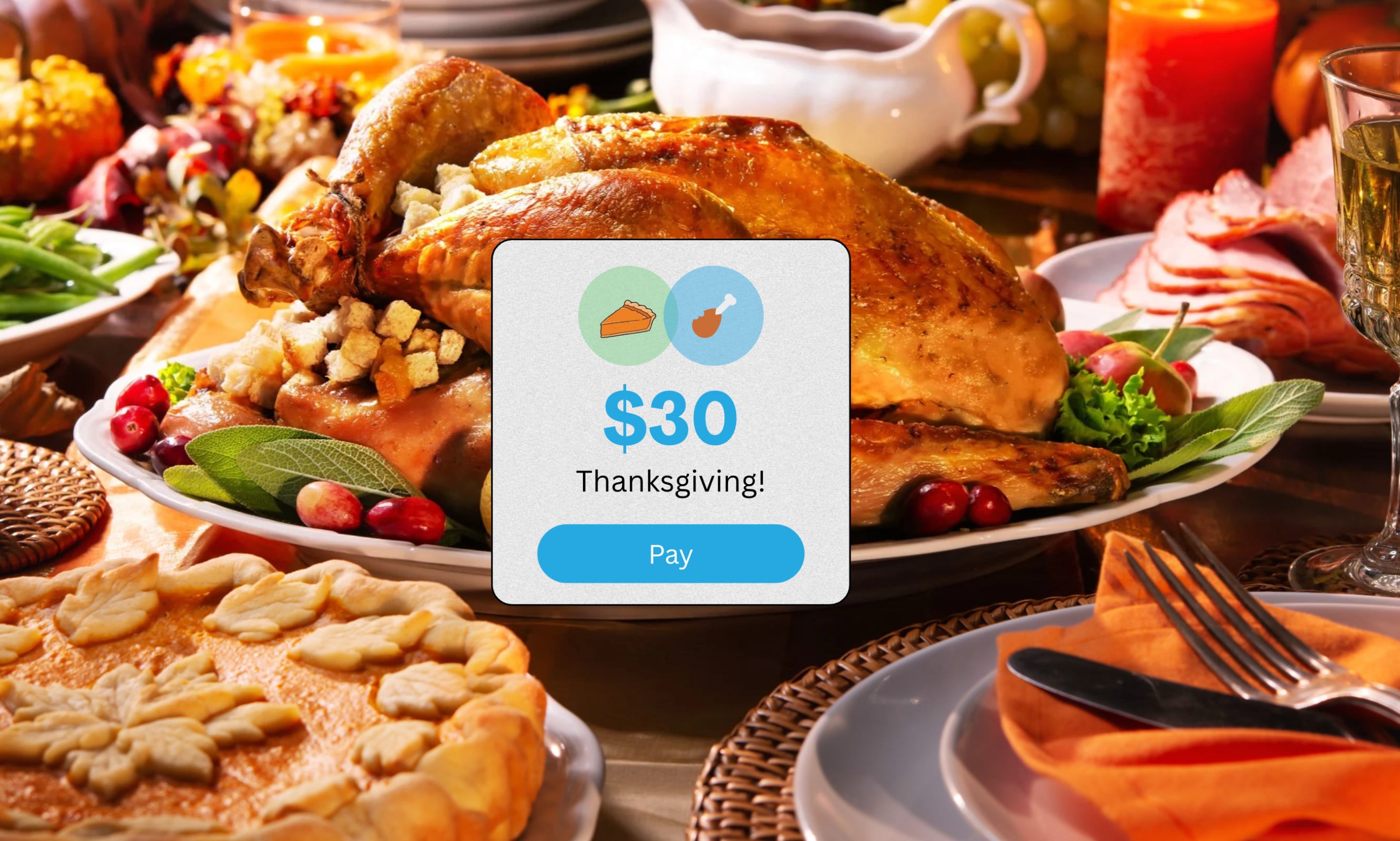
Thanksgiving is my favorite holiday. I look forward to it every year, mostly for the food. It doesn’t hurt that the weather is crisp, football is on all day, and the day brings people together in a way that feels different from most other big holidays.
Coming together is sort of the entire point, but it may also explain why we squabble every year over the “right way” to do it. If you’ve been to a big hosted dinner, at Thanksgiving or any other time of year, you’ve probably seen some version of this argument. Someone hosts, someone else brings a small dish, and somebody’s cousin shows up with just an empty stomach.
It doesn’t take long for someone to wonder: is it okay for a host to charge guests for Thanksgiving dinner? It seems to come up every year, though perhaps not as often as the fight over canned versus homemade cranberry sauce.
Some people online have started calling it a “cover charge,” but this isn’t a good comparison. Regardless of the terminology, a flat fee to cover costs should be fairly harmless. And yet, a lot of people recoil from the idea. Economists have a name for that reaction, but let’s first be clear about what a cover charge is.
What a Cover Charge Actually Does
You’ve likely seen cover charges at bars, clubs, or comedy shows. It’s essentially an entrance fee that allows you access to a space. To an economist, it’s the first part of a two-part tariff. There’s one price at the door to get in and a separate price for the drinks and food you buy once you’re inside. The door fee also helps ration space in crowded areas, since fewer people show up when just walking in costs money.
Venues can take it a step further and layer additional price discrimination techniques on top of that by charging different people different amounts for the same entry. Free entry before 10 p.m. gives early arrivals a lower price, and “no-cover nights” for certain groups help a venue draw the crowd it wants.
A Thanksgiving fee doesn’t exactly serve the same purpose. Sure, the host may be doing it to deter some people from showing up, but it’s not like they are selling anything once you’re through the door. Imagine getting a bill for each deviled egg? The Thanksgiving fee has been proposed to help cover the cost of the meal, not to make a profit like a nightclub does.
On the surface, there’s nothing wrong with that. A flat fee that matches the cost of the meal is about as plain as a price can be. Someone has to cover the cost of the meal, and that someone is usually the host.
Someone Has to Pay for the Turkey
Hosting a big family meal ain’t cheap. This year, Thanksgiving hosts expect to spend about $427 on food, drinks, and housewares. That’s up roughly 3% from last year. In the same survey, 60% of hosts expect guests to bring money, food, or drinks, and 25% would consider leaving a guest who doesn’t contribute off next year’s invitation list.
So asking guests to contribute is already common, and most people see a dish as the acceptable way to do it. A potluck isn’t exactly a free meal since everyone pays for their seat with casseroles instead of cash. It’s the cash version of this exchange that keeps showing up on social media feeds.
Last year, a viral Reddit post described a family asking relatives to bring $100 worth of food or chip in toward the host’s costs for a dinner of about 25 people. The relative who posted it declined to go, and plenty of readers sided with them. Michelle Singletary wrote an article in the Washington Post arguing there’s no financial case for charging guests and described the practice as “monetizing fellowship.”
To be fair to the hosts, it’s expensive. It doesn’t help that grocery prices are still increasing at an above-average rate. Chipping in to help isn’t abnormal. So, why does handing over cash feel so different from handing over a casserole?
Repugnant Transactions
Sometimes two people would happily make a trade, but the exchange is blocked or frowned on because other people object to it. Back in 2007, Al Roth gave these a name: repugnant transactions. They are trades held back not by technology or incentives, but by distaste.
But what’s repugnant to some isn’t to others, and the line moves over time. Lending money at interest was once widely condemned and is now ordinary. Selling yourself into indentured servitude was once a common way to pay for passage across the Atlantic and is now unthinkable.
You could argue “repugnant” is too strong a word for paying toward a family meal. Roth himself says milder terms like distasteful, inappropriate, or undignified fit some cases better. Most of the commentary about charging for Thanksgiving also sticks to those milder words.
It turns out that Roth has a useful parallel for our debate, but it’s based on the organ trade. He is perhaps most well-known for designing kidney exchange programs, where one donor-patient pair swaps kidneys with another. Selling a kidney is illegal in nearly every country, but those swaps don’t draw nearly the objections that paying for a kidney does.
The Thanksgiving “cover charge” works the same way. Ask people to bring a dish, and you’re hosting a potluck. Ask them to pay $30 at the door, and you’ve created something that feels like a market transaction. The same $30 feels generous as a pie and insulting as a payment.
Final Thoughts
Remember that the comment on how repugnance can change over time? There are some signs it’s moving in this market as well. In a survey of Christmas hosts, about half of 25-to-34-year-olds said they ask guests to chip in, compared with 9% of those 65 and older. That gap is consistent with how younger adults tend to socialize, since Friendsgiving and Venmo make splitting costs feel routine. Of course, younger hosts may also just be under more financial strain. That could explain the gap without any change in norms at all.
Some hosts may have a more practical reason for asking for money. A potluck only works if everyone contributes. If too many guests show up with a sleeve of plastic plates instead of food, there’s no dinner to be had at all. If that’s the motivation, then the host is trying to solve a classic version of the free-rider problem.
Whichever way your family handles it, just know that the money question was always in the back of someone’s mind. Hosting a potluck answers it without anyone putting a number in the group chat. I’m hosting this year and asking friends to bring a dish as their contribution. If someone slips me $20, I won’t feel repulsed. I’m an economist who understands the value of a good meal, after all.
This newsletter has no cover charge. It runs a lot like a potluck: free to attend, and you’re welcome to bring something if you like. If you know someone gearing up for the annual Thanksgiving debate, forward this along and let them bring the economics.
23% of Americans say Thanksgiving is their favorite day of the year [YouGov]
A 1939 poll found just 30% of Americans approved of President Roosevelt’s decision to move Thanksgiving Day to one week earlier [Gallup News]
Around a quarter (26%) of Americans expect to have Thanksgiving dinner with more than 10 other people, including 7% who expect to have it with more than 20 others [Pew Research Center]
Thanksgiving hosts are expected to spend about $427 on food, drinks, and housewares [LendingTree]
Cranberries or cranberry sauce led least favorite foods at 21%, followed by vegetables at 17% and sweet potatoes or yams at 11% [Gallup]
A 2003 Pentagon plan for a prediction market that let traders bet on terrorist attacks was scrapped soon after it became public [NBC News]
Cover charges, microtransations, and kidney swaps. Thanksgiving dinner at Jadrian's house sounds lit! Probably has the cranberry sauce with whole berries, too.
"A 2003 Pentagon plan for a prediction market that let traders bet on terrorist attacks was scrapped soon after it became public"
Ah, yes, a both timely and relevant inclusion to this article.
Thanksgivings are often potlucks with the host covering the location, often the turkey, and snacks. Everybody else often picks up a casserole, potatoes, pies, etc. I don't think I have been to many Thanksgivings where people can just Show Up and Eat.