


You’re reading Monday Morning Economist, a free weekly newsletter that explores the economics behind pop culture and current events. Each issue reaches thousands of readers who want to understand the world a little differently. If you enjoy this post, you can support the newsletter by sharing it or by becoming a paid subscriber to help it grow:
Every few months, the same complaint seems to come up again. Whether it’s on social media, standing in line at an understaffed business, or in casual conversation, the same claim surfaces: “No one wants to work anymore.”
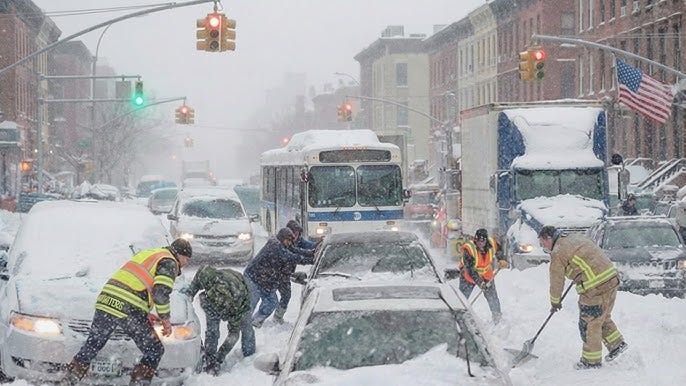
And then last week, New York City offered $30 an hour to shovel snow, and more than 1,400 people signed up in a single day.
The people didn’t change. The price of their time did.
This story shows up in labor markets all the time. A job needs to get done, but not enough people are willing to do it at the current pay. Then the pay increases, and suddenly, people show up.
That’s exactly what played out as a major snowstorm approached the Northeast. Just before the snow began to fall, the mayor announced the new wage.
And just like that, a quiet weekend at home started to look a little more expensive.
This Isn’t About Being a Good Neighbor
The mayor could have asked residents to step up out of a sense of community, to pitch in and help their neighbors dig out. Mayors make those appeals all the time, and sometimes they work at the margins. But they tend to run into a simple constraint: people’s time has value.
And this wasn’t easy work. Shoveling snow is cold, physical, and inconvenient even on a normal day. During a major blizzard, it’s worse. Travel was restricted, schools were closed, and conditions were severe enough that most people were planning to stay inside.
A simple request to “pitch in” wasn’t likely to move many people. If anything, this is exactly the kind of work people avoid when they have the choice.
So the decision came down to a tradeoff.
Every hour spent outside clearing sidewalks is an hour not spent inside, staying warm and comfortable. At low wages, that’s an easy choice. Staying home wins.
At $30 per hour, that same choice looks different. A few hours on the couch now comes with a new price tag. Staying home effectively costs $30 per hour in lost income.
That shift is what brought people outside.
The Work vs. Leisure Tradeoff
Economists formalize this idea as the work–leisure tradeoff. Leisure isn’t just vacations or time off. It’s anything that isn’t paid work. That includes staying under a blanket, avoiding the cold, or tackling something else at home.
Work, by contrast, is when you’re paid to give those things up. The city was already paying about $19 per hour for emergency snow removal. There was always an opportunity cost to staying home, but that wage wasn’t high enough to pull many people out into the cold.
When wages are low, leisure is relatively cheap. Giving up income doesn’t cost much, so staying home feels like the better option.
But when the wage increased to $30 per hour, leisure became more expensive. It’s not because you’re paying for it, but because of what you’re giving up by not working. At $30 per hour, time at home carries a higher opportunity cost.
That’s why higher wages tend to increase the quantity of labor supplied. More people decide that working is worth it.
At extremely high wages, this relationship can reverse. People may work less because they can afford more leisure, a concept known as the income effect. But that’s not what we’re seeing here. In this case, higher wages did exactly what we would expect: they pulled people out of their homes and into the cold.
Why the City Had to Raise Wages
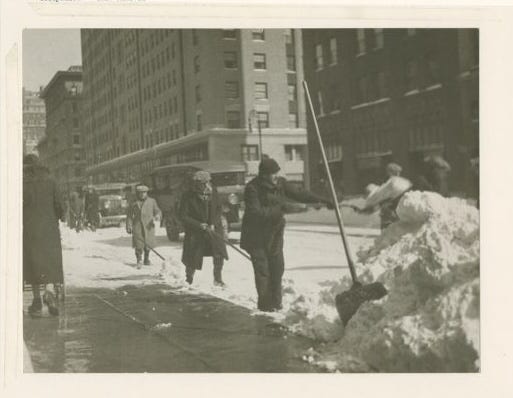
The program itself wasn’t new, but the scale of the storm was becoming an issue. As its arrival got closer, it was clear this one would be larger, more disruptive, and far more urgent. As the storm intensified, so did the need to clear sidewalks.
More snow meant more work and more urgency to get it done quickly. The demand increased, not for workers themselves.
The city wasn’t hiring people for the sake of hiring people. It wanted clear sidewalks. Economists describe this as derived demand, where the demand for labor comes from the demand for a final outcome. Workers were simply the means to get there.
At the previous wage, the existing workforce wasn’t large enough to meet that demand. There weren’t enough people willing to shovel given how demanding the job was and what they’d have to give up to do it.
The result would have been a shortage. Too few workers relative to the amount of snow that needed to be cleared, leaving sidewalks covered and the city struggling to keep up.
So the city raised wages to pull more people into the market. And as economic theory would predict, more workers showed up.
Final Thoughts
As economist Alex Tabarrok puts it, prices are a signal wrapped in an incentive. When New York City raised wages, it didn’t need to convince people to help. The higher pay did that work on its own. Time that would have been spent at home now had a clear market value.
That’s what makes this story useful beyond last week’s snowstorm. Even in the middle of a snowstorm, prices were doing what they’re designed to do: coordinate behavior.
Many employers say they’re struggling to find workers, often framing it as a question of motivation or work ethic. But the pattern looks familiar. When the amount of work increases and wages don’t adjust, shortages follow. It’s not because people don’t want to work, but because they don’t want to work at that wage.
New York adjusted wages quickly. Other employers often don’t.
Instead, they rely on appeals to their current employees. They’ll ask them to pitch in, go the extra mile, or show loyalty when more effort is needed. But those requests don’t change the underlying tradeoff. Wages do.
If you want more labor, raise the price of labor.
Because at the end of the day, people aren’t choosing between working and not working. They’re choosing how to spend their time. And when the price is right, even a snowstorm can turn a quiet day at home into a day on the job.
Know someone who keeps talking about how “nobody wants to work anymore”? Send this their way. It’s a great conversation starter.

Last week’s snowstorm was the ninth biggest ever for Central Park, which saw 19.7 inches [NBC New York]
The emergency snow shovelers cleared an estimated 16,000 crosswalks, about 4,166 hydrants, and close to 7,000 bus stops [Office of the Mayor]
The emergency snow shoveling program was initially offered as temporary employment for men left economically devastated by the panics of 1857 and 1893 [Slate]
68% of employers believe there is a lack of “work readiness” in younger generations joining the workforce [The Standard]
When I hear employers say they have a productivity or a shrink problem i usually ask have they tried efficiency wages? I am often met with Blank stares. I know not all businesses can afford them but those that can may find surprising results.
Surprisingly capitalist from Comrade Zomdani