


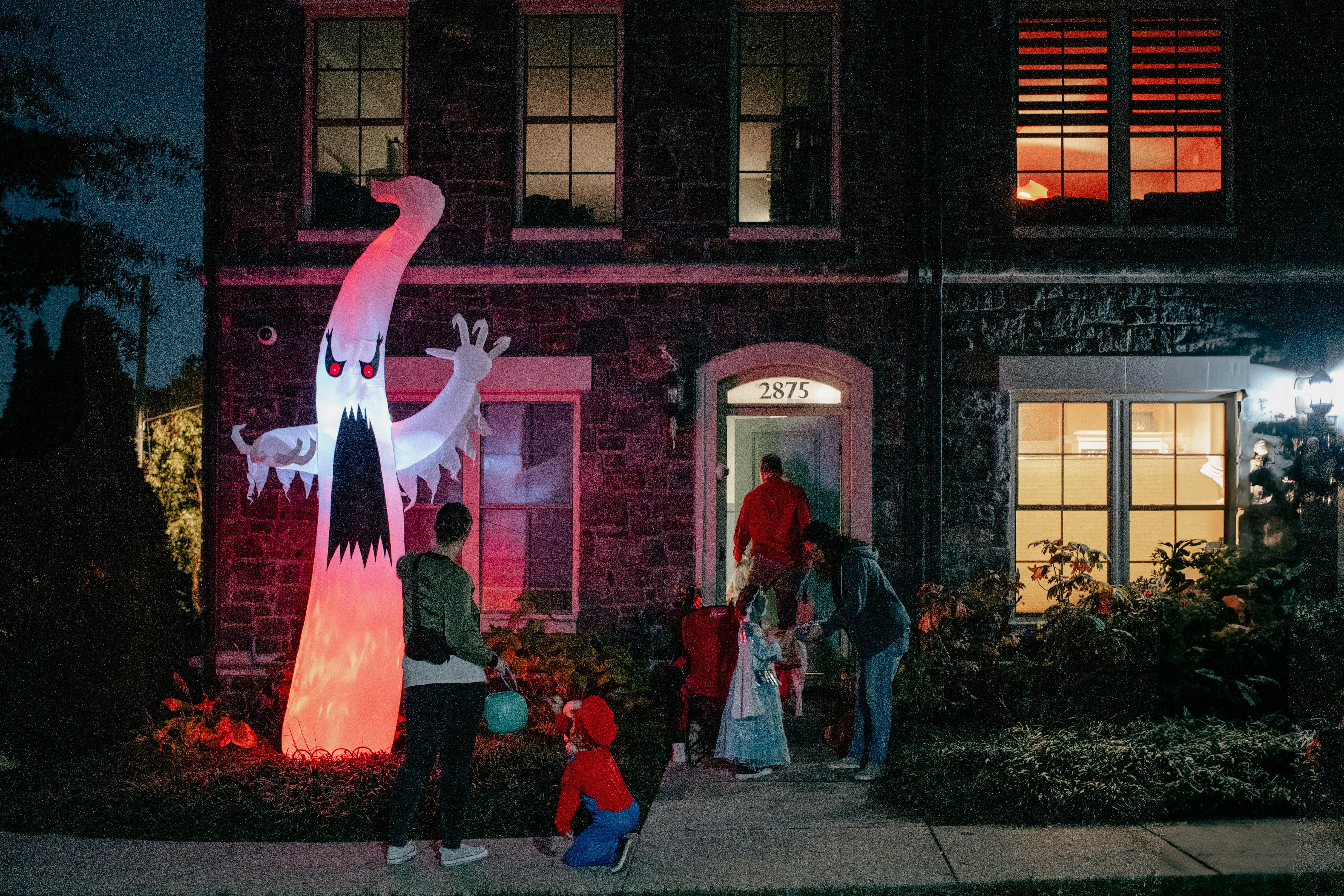
Every year around this time, my social media feed fills up with a mix of takes on trick-or-treating. I’ve noticed an above-average number of people upset that kids aren’t saying please, thank you, or even “trick-or-treat.” But the most common complaint, year after year, seems to be that there just aren’t as many kids in the neighborhood anymore.
I remember a similar feeling when I moved into what looked like my first real neighborhood. I was determined to be a good neighbor, so I stocked the candy bowl with full-size candy bars. We put some decorations up a few days before, and we triple-checked that the porch light was on. We were ready to hand out treats. We waited for a few hours, but never heard a single knock on the door.
I also wondered why the night wasn’t going the way I remember it when I was a kid. If other streets around town were anything like mine, Halloween must have officially died. Over the next few days, I started seeing posts from people with similar experiences in their neighborhood. My beliefs that Halloween was dead were confirmed. The culprit? Millennial parents were skipping the door-to-door routine in favor of trunk-or-treat events in church parking lots.
Little did I know at the time that the complaint would become a Halloween tradition of its own.
The people posting pictures of their empty streets mirrored my own experience, but does a quiet street actually tell us anything beyond that street? I’ve long since retired the candy bowl, but it’s not like the kids have vanished. They just happen to be concentrated where young families live, and those young families haven’t bought houses in the same neighborhoods as the people who moved in thirty years ago.
Count the Candy
The usual explanations for those quiet streets are that parents feel less comfortable letting their kids knock on strangers’ doors. The rise of trunk-or-treat, where kids collect candy from a row of car trunks parked in one convenient spot, has turned door-to-door trick-or-treating into a relic. Before blaming either one, it’s worth checking whether trick-or-treating has actually disappeared.
If Halloween were dying, we would probably first see evidence in the spending data. Instead, the National Retail Federation projected that Americans would spend $13.5 billion on Halloween this year. That’s a notch above last year’s record of $13.1 billion and up about two-thirds since 2019. Those numbers include spending on adult costumes, yard decorations, and even pet costumes, which means it simple tells us Halloween is healthy. It doesn’t tell us much about who’s knocking on doors.
Candy sales may be the closest thing we have to a trick-or-treating signal. Anyone who has bought a bag of fun-size bars lately knows candy inflation has been scary high. But once you adjust for inflation, candy spending has been fairly flat over the past few years. This isn’t what you’d expect to see if the holiday were slowly dying.
Of course, successful trick-or-treating requires someone on the other side of the door. According to the NRF, about 74% of people plan to celebrate Halloween this year, but only 61% plan to hand out candy. Unfortunately, there isn’t a reliable census of trick-or-treaters. The closest thing we have is surveys of parents, which one reporter has tracked down going back decades.
Back in 1985, 60% of parents of children under 15 said their kids were going trick-or-treating. Last year, 63% of parents of children under 18 said the same. Those numbers aren’t quite apples to apples, but the results are consistent with other surveys over the years.
I also don’t think it’s fair to blame the millennial parents, either. An AP-NORC poll found that millennials are more likely than any other generation to take kids trick-or-treating, presumably because they have kids that are appropriately aged for trick-or-treating.
Trick-or-treating is still happening, but the data indicates something has changed. There’s no evidence to suggest the tradition has vanished as the empty-porch photos suggest. So, why do those photos feel so convincing?
Your Street Isn’t the Country
When you draw conclusions about a whole group from a sample that wasn’t chosen at random, that’s known as selection bias. If you judge your Halloween decorations only by the people who stop to compliment them, you’re probably going to think you have the best decorations on the block. You’re also going to miss everyone who walked by quietly thinking you could have done better. Their opinions aren’t part of your survey, but they should be.
Neighborhoods work the same way. People aren’t randomly assigned a street when they’re ready to buy a house. The one you live on was shaped by choices made over decades. People with certain incomes, family sizes, and priorities have quietly shaped the neighborhood before you moved in. If your street was once full of kids, it’s probably because it was once full of families at the same stage of life.
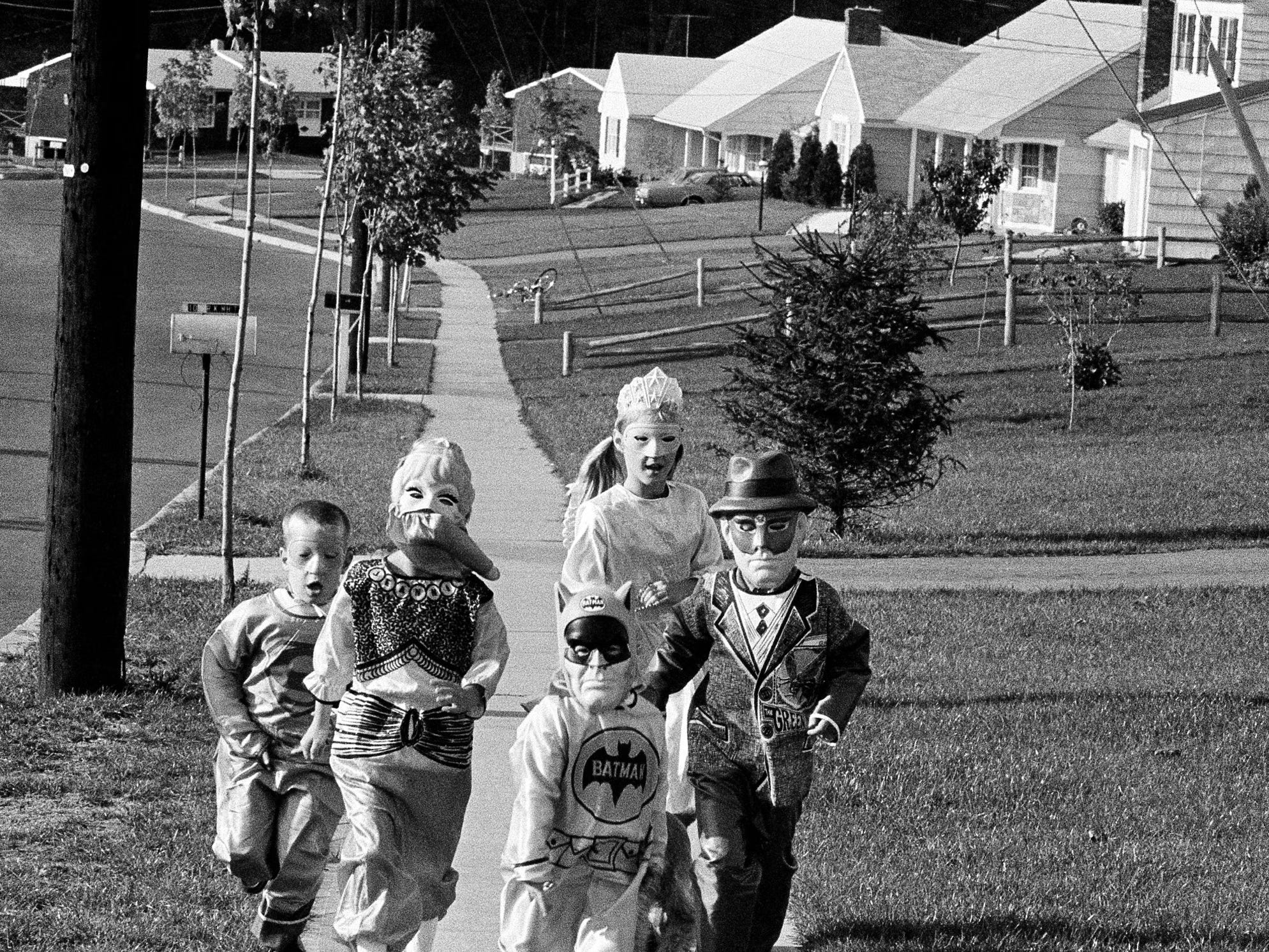
That distinction really matters because the complaint always seems based on a comparison to some busier Halloween in the past. Where your memories come from depends on how long you’ve been on your street. If you’re a younger homeowner, like I was when I first moved in, you’re probably comparing your street to the one you grew up on. That old neighborhood was probably packed with kids for a reason. Your parents probably picked that street for the same reasons other families with small children did.
If you’ve been living in your house for the past several decades, your memory likely comes from the years you took your own kids trick-or-treating. You watched as your kids grew up alongside your neighbors’ kids, but now they’ve all moved out and have families of their own. Rather than downsizing, you and your neighbors turned the empty bedrooms into hobby rooms.
Regardless of where your memory comes from, the “before” in your before-and-after isn’t a random sample. You’re remembering a neighborhood during its peak kid years. That’s why the empty-porch posts feel so convincing to the people sharing them. Almost by definition, they come from neighborhoods where the kids have grown up and left.
The posts aren’t inaccurate, but it’s the jump from “my street” to “the country” that doesn’t hold up. The better question is where the kids are now, and why young families haven’t moved in to replace the ones who left.
So, Where Did the Kids Go?
Let’s start with the kids themselves. There are around 71.5 million kids in the United States today, up from about 63.8 million in 1980. Americans have been having fewer kids over the past decade, which means that children now make up a smaller share of the population than they did in 1980. That might partly explain why some neighborhoods seem childless, but there are still plenty of kids in the country. Where those kids live depends a lot on whether their parents can buy a house.
The typical first-time buyer is now 40 years old, up from 29 in 1981. The typical seller is now 64 years old. People are staying in their homes longer than ever. As a result, it shouldn’t be all that surprising that the share of recent buyers with children under 18 has fallen to a record low of 24%. Back in 1985? It was about 58%.
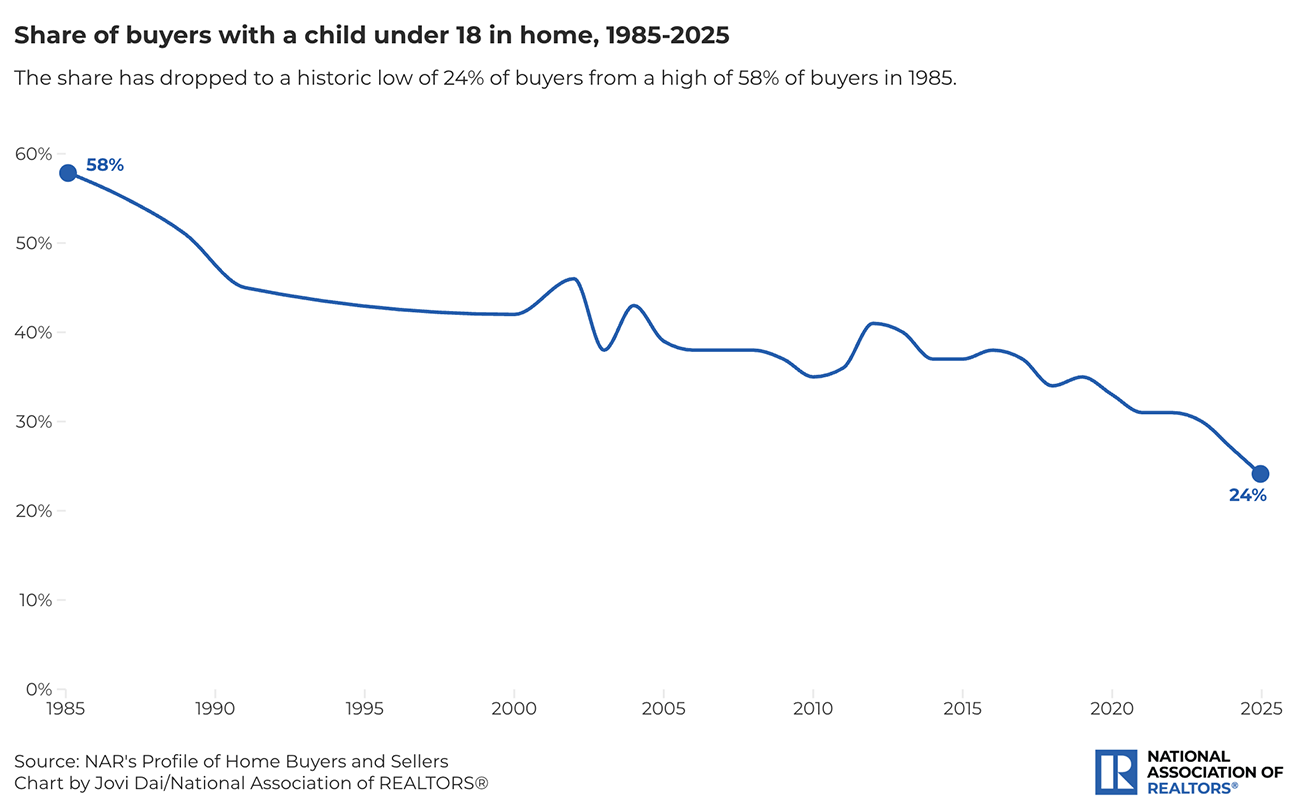
That data isn’t perfect, since it describes recent home buyers instead of all households in the country. You shouldn’t read that number as meaning only a quarter of American families have kids. It just means the people moving into houses look a lot different than they once did.
There are two forces working together here. The first is aging in place, when older homeowners stay put rather than downsizing. They often have very strong financial reasons to stay. An owner holding a mortgage from when rates were near record lows would face a much higher rate on their next house. That’s known as the lock-in effect. For owners who have paid off their mortgage or have a capped property tax bill, moving is just as hard to justify. Either way, the house stays with its longtime owner.
The second force is the elephant in the room: affordability. Even when a house in an established neighborhood does come up for sale, many young families simply can’t afford it. Lock-in keeps houses off the market, and affordability keeps young families out when one does sell. Put those together, and you get neighborhoods empty of trick-or-treaters. The same owners in the same houses watch their kids grow up to live somewhere else, but wonder why there are no kids left in the neighborhood come October 31st.
If you want the supply side of why housing costs what it does, I wrote about zoning, housing, and highways back in August.
Final Thoughts
If your neighborhood was quiet this year, it will probably be quiet next year, too. Fewer homes have been changing hands lately, and young families can’t move onto your street until someone else moves off it. As long as mortgage rates stay well above what many owners locked in, your neighbors may be staying put for a while. However, if you’re one of the younger buyers on an older street, you might be the first sign that it’s starting to turn over.
Neighborhood kids haven’t stopped trick-or-treating. A lot of parents are driving them to the streets where the other kids are, or to a church parking lot full of open trunks. That’s a great story about search costs, but I’ll save it for next Halloween.
I wish I realized this back when I was sitting next to my bowl of full-size candy bars. If you’re determined to keep the porch light on, please don’t quit. Your street may have been quiet this year, but there are cars full of superheroes and princesses eagerly searching for the best score every year. Take the free time next year to talk with your neighbors about turning on their lights as well.
Like any single street, the readers of this newsletter aren’t a random sample of the country. You can, however, make the sample a little bigger by sending this to a friend who still keeps a bowl by the door.
The median first-time homebuyer is now 40 years old, a record high and more than a decade older than the median of 29 in 1981 [HousingWire]
74% of Americans planned to celebrate Halloween this year, compared with 68% before the pandemic [National Retail Federation]
96% of Halloween shoppers planned to buy candy, adding up to $4.1 billion, nearly as much as the $4.3 billion expected on decorations [National Retail Federation]
Halloween spending has risen more than 68% since 2019, though that figure isn’t adjusted for inflation [Talk Business & Politics]
Very interesting! I remember moving into a new town one year in a good neighborhood across the street from a school, and I prepared with candy and everything, but not a single kid came to my door. It was such a bummer. Meanwhile, my dad in Maryland gets a ton of kids year after year - he attributes it to the full-size candy bars. I really hope trick-or-treating doesn't die off for trunk-or-treating. I only find the latter truly acceptable if a lot of the participating kids live in rural areas where walking door to door isn't feasible.