


You’re reading Monday Morning Economist, a free weekly newsletter that explores the economics behind pop culture and current events. Each issue reaches thousands of readers who want to understand the world a little differently. If you enjoy this post, you can support the newsletter by sharing it or by becoming a paid subscriber to help it grow:
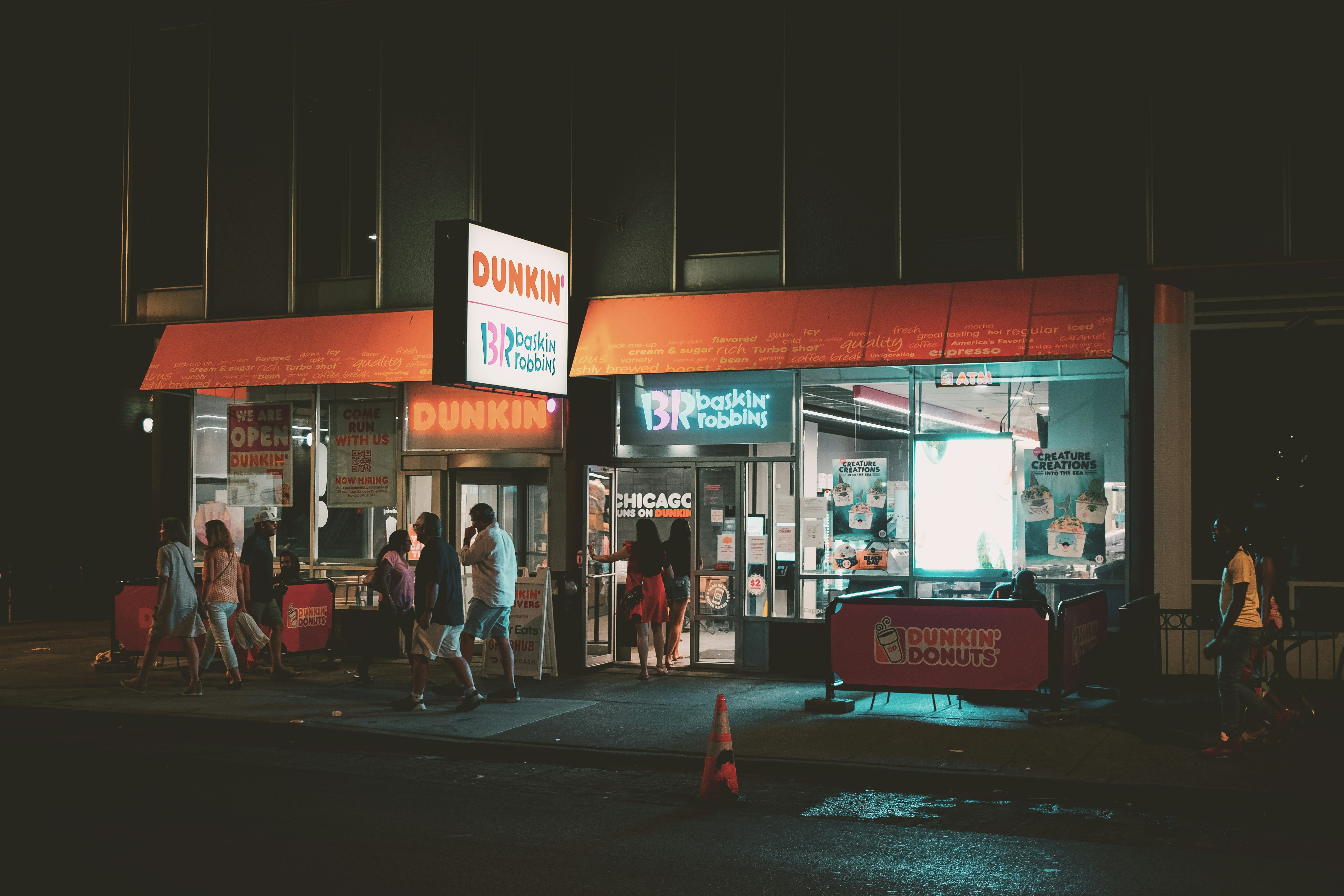
There’s a very specific moment when a donut smells almost perfect.
You’re walking past a small shop at just the right time. The oil is still warm, and a faint smell of chocolate hangs in the air. For a few seconds, whatever you were worried about can wait. Your brain registers one simple thought: that smells good.
That moment is pleasant because it’s brief.
Assuming you didn’t stop and grab a bite, the smell will fade after a few steps. As you keep walking, the world keeps moving. But it’s worth asking a simple question: what happens when that smell doesn’t go away?
When it’s there in the morning. When you open a window. When you come home at night. Not once in a while, but all the time.
When a Pleasant Smell Becomes a Complaint
That’s the situation some residents in Haverhill, Massachusetts, say they’ve been living with since a new donut production facility opened nearby.
This isn’t a corner shop with a few fryers in the back. It’s a large-scale operation producing roughly one million donuts a day, supplying hundreds of Dunkin’ locations across the region. And according to nearby residents, the smell from that production doesn’t come and go. It lingers.
At a city council meeting late last year, neighbors described the odor as “heavy” and a “carnival smell.” One resident said their house smelled like donuts all day, every day, for months.
America may run on Dunkin’. But for some people in Haverhill, the smell of donuts has stopped being a treat and started becoming a problem.
The Part the Textbook Skips
Economists have long loved bakeries as an example of something called a positive externality.
The premise is simple. Someone walks past a bakery, catches the smell of fresh bread or donuts, and enjoys it. They don’t buy anything. They don’t pay for that enjoyment. But they benefit anyway.
That unpaid benefit is the positive externality. It’s the same experience we started with at the beginning of this piece: a pleasant smell, enjoyed briefly, by someone just passing through.
But did you notice who that story quietly left out?
The textbook version imagines someone walking by once. The situation in Haverhill looks very different. These residents aren’t passing by. They’re living next to it.
When the same activity imposes costs on people outside the transaction, economists call that a negative externality. Instead of an unpaid benefit, it becomes an uncompensated cost. A smell you enjoy for ten seconds can feel very different when it follows you into your living room, day after day.
That’s the distinction externalities are trying to capture. They’re not about whether something is good or bad in the abstract. They’re about who bears the costs and who receives the benefits, and whether those costs and benefits show up in the prices people pay.
What Prices Capture, and What They Miss
At a basic level, prices are supposed to reflect costs. When you buy a donut, the price covers flour, oil, labor, rent, and profit. That price tells the firm whether producing another donut is worth it. It tells consumers whether buying one makes sense.
In that way, each donut creates value. Dunkin’ earns revenue. Customers get a product they enjoy. Society gets… more donuts.
So far, so good.
The problem is that the price of a donut only reflects the costs borne by the firm and the benefits enjoyed by the buyer. It does not reflect the costs experienced by people living near the production facility in Haverhill. Their annoyance doesn’t show up on any receipt. But those costs are real.
Economists consider this a form of market failure. It’s not because donuts are bad, but because the market is sending an incomplete signal. When prices fail to capture all the relevant costs, production decisions get skewed.
From society’s perspective, the total cost of producing donuts includes both Dunkin’s production costs and the spillover costs imposed on nearby residents. The total benefit includes the enjoyment people get from buying and eating donuts. If the social costs exceed the social benefits, then too many donuts are being produced relative to what would be ideal.
Final Thoughts
At its core, this story is about property rights.
The company has the legal right to operate the factory. It obtained permits and meets regulatory standards. Residents also have the right to enjoy their homes without unreasonable interference. The problem is that those rights overlap, and the law doesn’t always draw a clear line between them.
In theory, if transaction costs were low, the people affected could bargain their way to a solution. The firm might invest in better odor control. Residents might accept compensation. In practice, that rarely happens. There’s one factory, hundreds of households, and no easy way to negotiate.
That’s why the responses we usually see are regulatory rather than market-based. Governments can limit operating hours, require additional mitigation, or revisit zoning decisions. These approaches are blunt, but workable. A perfectly calibrated tax on each donut, collected and redistributed to residents, would be elegant in theory but wildly impractical in reality.
None of these responses suggests that the factory shouldn’t exist. And it doesn’t mean the residents are overreacting. It means prices do a good job coordinating markets, but a much worse job capturing what it feels like to live next to them.
Some people love the smell of donuts. Some people just want their house to smell like… their house.
Know someone who loves donuts, hates strong smells, or just enjoys a good real-world economics story? Send this their way.
The term “doughnut” was first used to describe a fried ball of dough by author Washington Irving in 1809 [Britannica]
There are 9,990 Dunkin’ Donuts locations in the United States as of January 19, 2026 [Scrape Hero]
Dunkin’ sells around 2.9 billion donuts and munchkins globally each year [Eat This, Not That]
On an average day, Dunkin’ sells about 60 cups of freshly brewed coffee each second around the world [Taste of Home]
Well of course this is a negative externality. Dunkin makes garbage donuts. Now if this were Parlor Donuts everyone would be happy all the time.
As a disclaimer, my daughter works at Dunkin. She does not endorse my statement on the poor taste or consistency of their donuts.
Still gotta be better than the smell coming over from Lawrence