


Hi y’all! Here are five stories from this week that contained some neat applications of economic principles or are related to teaching:
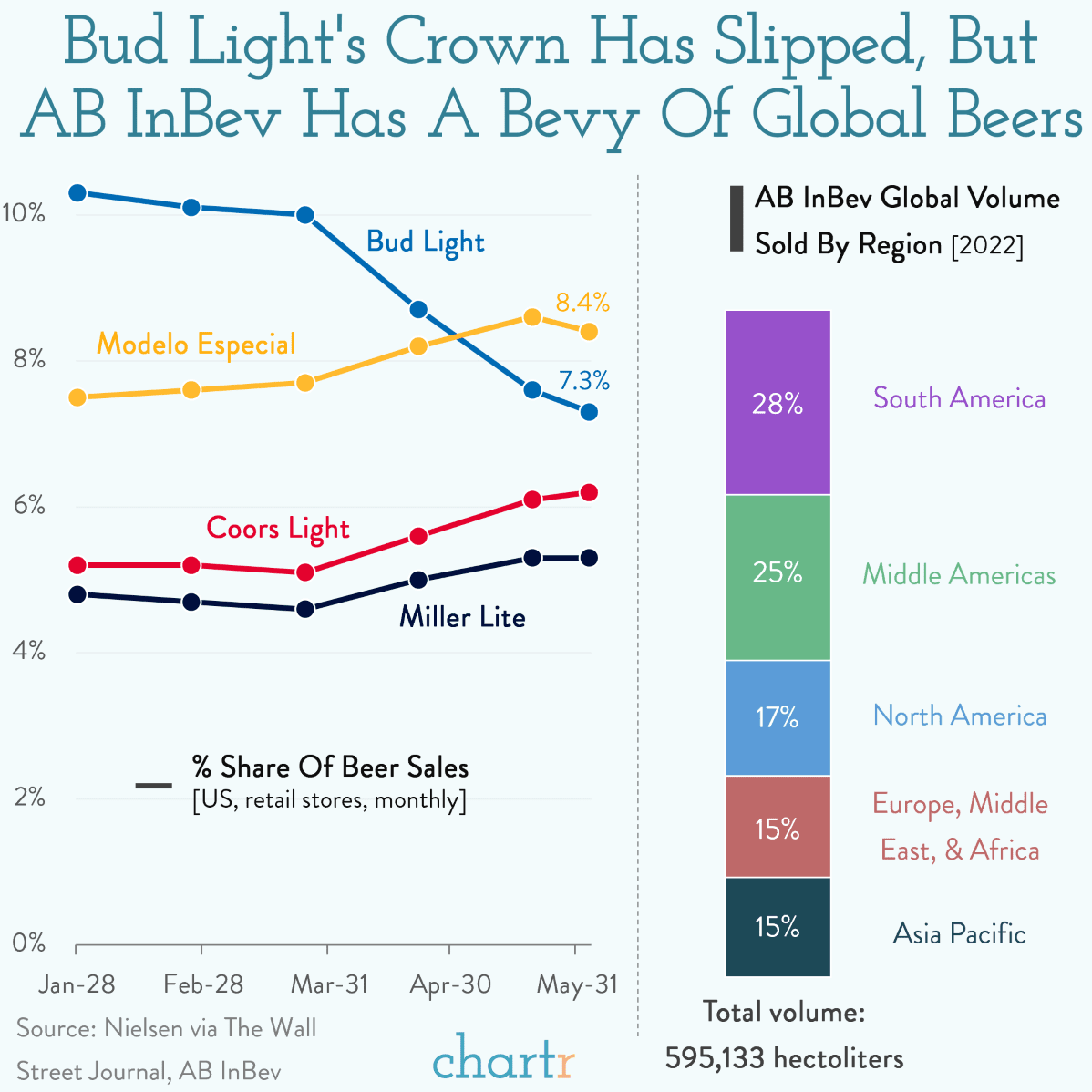
Modelo Especial is now America’s top-selling beer, dethroning Bud Light which previously held the top spot since 2001 [The Wall Street Journal]
In 2018, Tulsa incentivized remote workers to relocate to the city for a minimum of one year by offering them $10,000; impressively, 90% of participants upheld their commitment, and 76% made the move permanent [Vox]
Sweden's central bank blames Beyonce for keeping inflation too high [The New York Times]
Netflix will open a restaurant that serves food from ‘Chef’s Table,’ ‘Nailed It!’ and more [Tech Crunch]
Ticketmaster and SeatGeek commit to an all-in pricing model after criticism mounts in regard to “junk fees” [The Hollywood Reporter]

A Finnish multimillionaire businessman received a staggering €121,000 speeding fine, calculated as a percentage of his income. This sparks a discussion on Gary Becker's rational model of crime and the factors influencing criminal decision-making.
The Millionaire’s Speeding Fine Explained With Economics

In a recent story that made waves around the world, a multimillionaire businessman in Finland was slapped with a jaw-dropping €121,000 speeding fine for driving 30 kilometers over the speed limit. What makes this penalty so intriguing is that in Finland, fines are calculated as a percentage of the offender's income. It's an approach that provides us wit…