


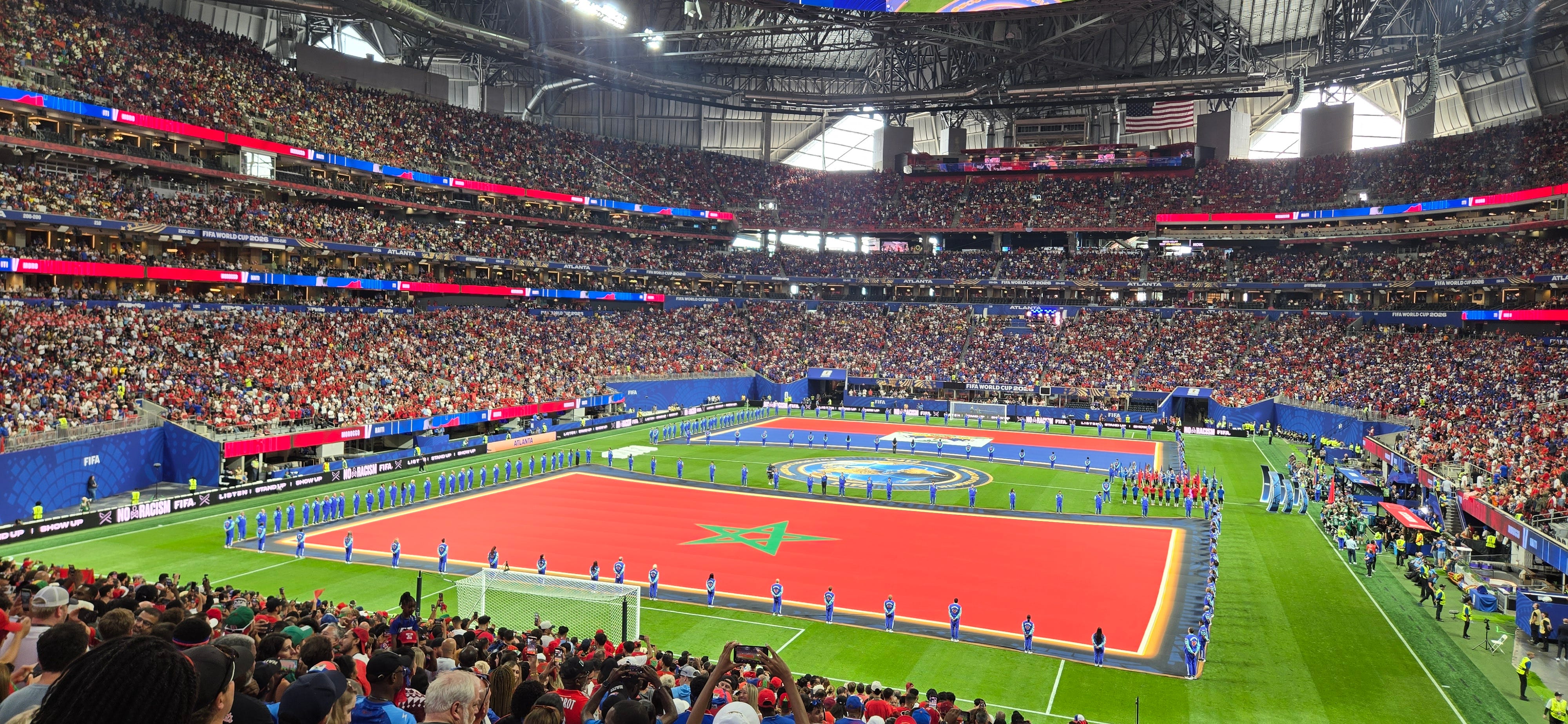
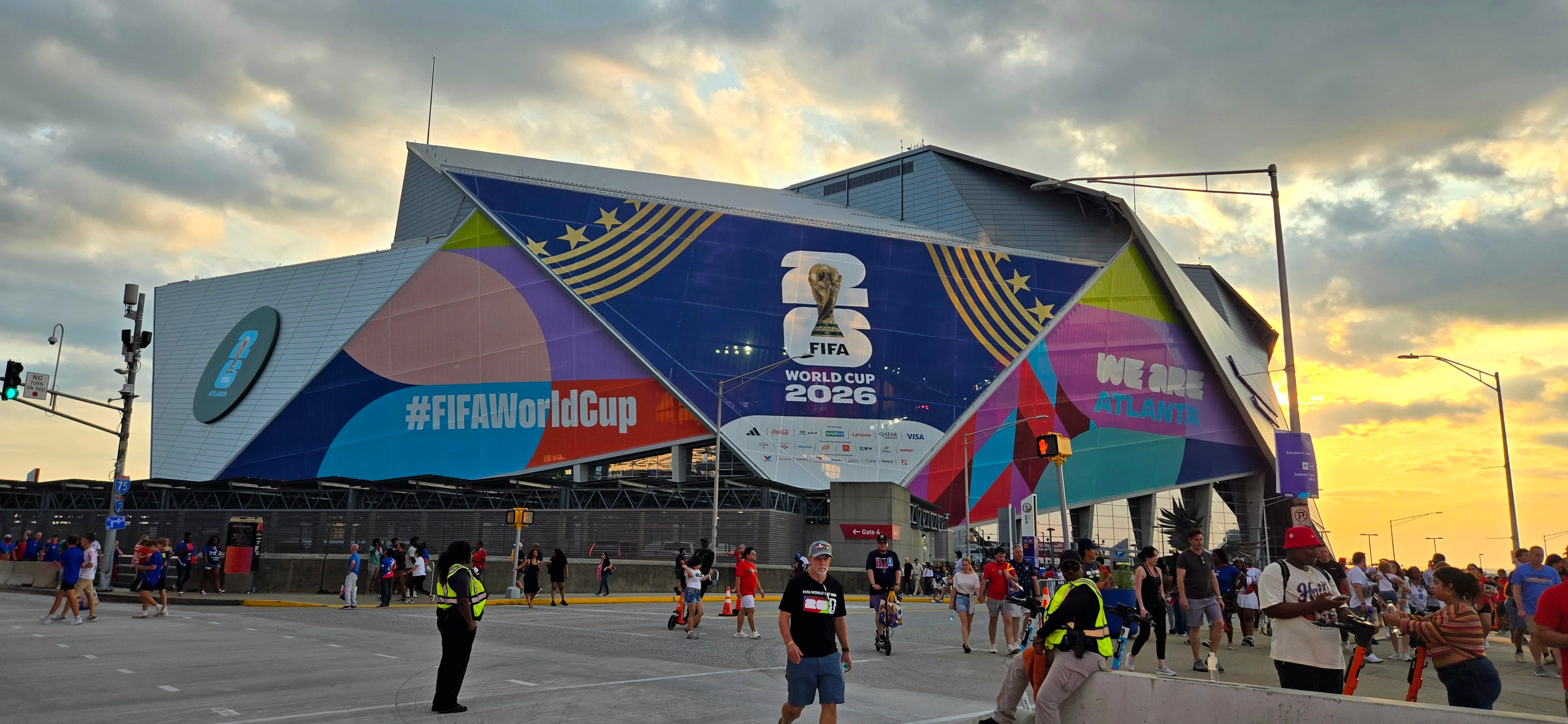
Last week I checked something off my bucket list: attending a World Cup match. My seat was genuinely good; you can see it above. It was the last row of a lower bowl section, just off-center from the back of one of the nets. It’s the kind of seat you snap a picture of and share with your friends as soon as you sit down. The stadium was electric with fans of both Morocco and Haiti showing up with a lot of energy for their team.
I settled in early with a pile full of cheap snacks and cold drinks thanks to Atlanta’s Fan First pricing model. Life, briefly, was excellent.
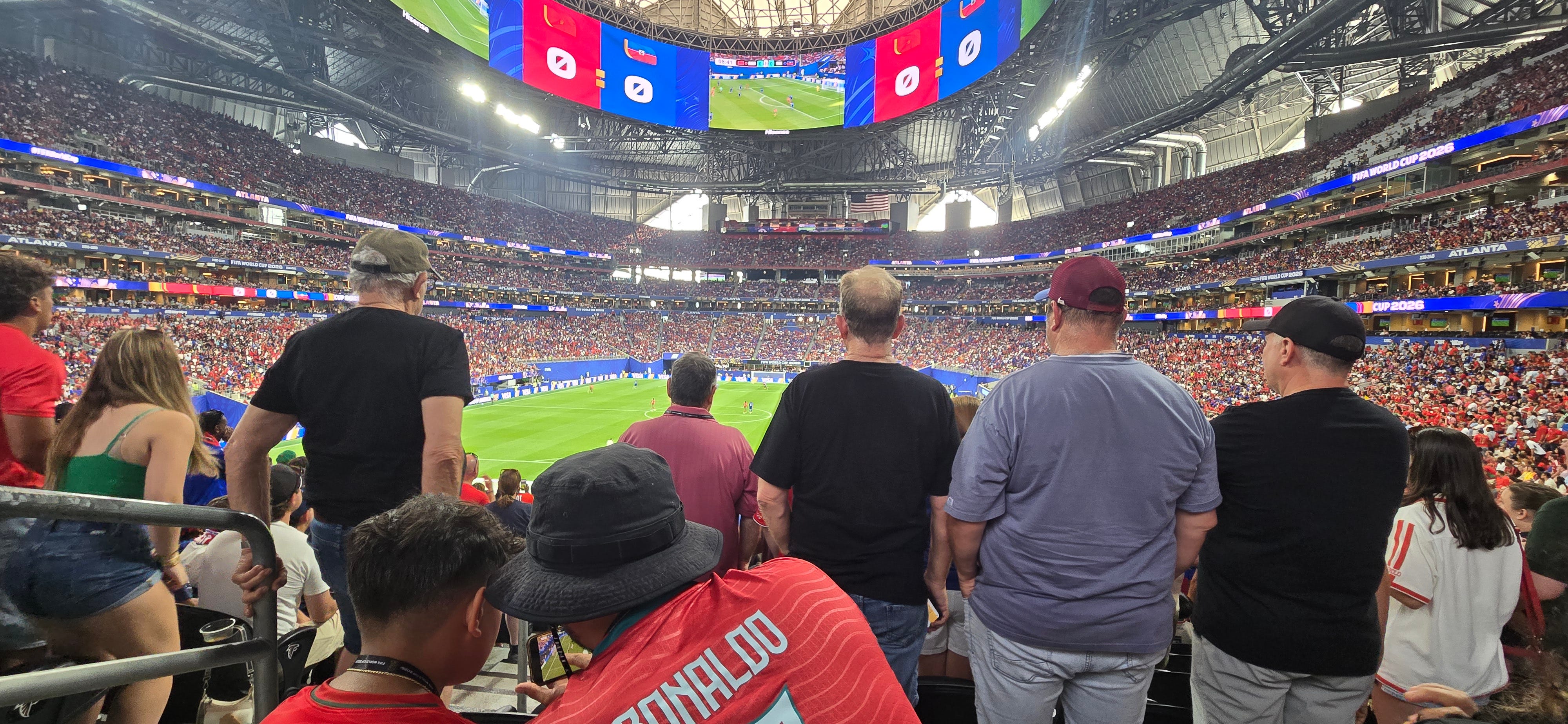
Like everyone else in the stadium, I was on my feet for the national anthems and kickoff. Haiti came out attacking hard with several shots on goal in the opening minutes that kept most of the stadium on its feet. But as the pressure eased, the back half of my section started to sit. The front half never did. So when the people in Row 12 realized the people in the rows ahead of them weren’t going anywhere, they stood back up. They opted for a slightly better view of the pitch and passed along something else for the people seated right behind them: a wall of blue jerseys and the backs of heads.
Each subsequent row faced the same choice. They could stand and recover their view, or sit and lose it. And one by one, each row slowly stood back up. Each person made a completely rational decision that created a cost for everyone behind them. By the time it reached my row in the back, it didn’t really feel like much of a choice. I could stand alongside everyone else or stare at a stranger’s shoulder blades for 90 minutes.
Sound Familiar?
This experience isn’t unique to World Cup soccer. You’ve probably found yourself in a similar situation at a concert or a parade. Unless you’re in the front row, you’re probably just doing what the people in front of you are doing.
I usually buy tickets higher in the stands or toward the back of a venue for exactly this reason. I’ll trade a worse sightline for a better chance of actually sitting down.
But there’s something different about a stadium compared to a parade route. Stadiums are specifically designed for everyone to sit and still see the game. The seating is tiered so you can see over the head of the person in front of you, but only if everyone is sitting. When I eventually stood up, my view was exactly what it would have been had we all stayed seated.
But I was one of the lucky ones. A father and his young son were seated just in front of us. When everyone stood, the boy’s view got meaningfully worse. It eventually boiled over into a confrontation with the people in front of them because everyone was constantly moving to get a better view. The cascade of standing produced no net gain in view for anyone, but it added real costs for many.

One Person’s Win, Everyone Else’s Problem
Let’s go back to the beginning. I’m talking about those people in the very first row who never sat down in the first place. Honestly, can you blame them? They’re in the front row of a World Cup match! Millions of people are watching at home. This isn’t a baseball game where you’ll regularly spot someone right behind home plate scrolling their phone between pitches. This is the biggest sporting event on the planet, and they are in it.
Psychologists call this Basking in Reflected Glory. When your team is playing, you feel like part of the game. Standing feels like the only appropriate response to what’s happening in front of you. It would feel strange not to stand.
So Row 1 stands, and the benefit stays almost entirely with them. They feel the energy alongside all the people standing around them. Nobody else does.
The cost, though, doesn’t stay with Row 1. It lands on Row 2, who had no say in whether the people in front of them should stand. The benefit was internal to the people who made the choice, while the costs were handed to everyone else.
Meet the Negative Externality
There’s a name for what happened in that stadium. Economists call it a negative externality: a cost imposed on a third party who had no say in the decision that created it.
You’ve likely seen this before, even if you didn’t have a name for it. It’s the person who tosses a soda can out the car window for a marginally cleaner car, but now it’s your neighborhood’s problem. It’s the roommate who’s having a great time playing video games at full volume all night, but you’re lying awake at midnight.
In each case, someone privately benefits while the cost gets distributed to others.
What makes the stadium example unusually rich is that it isn’t just one person generating an externality. It’s a chain of externalities. Every person who stands to recover their view immediately creates a new externality for the row behind. The cost travels like a wave to the back of the section, all because of a single moment in Row 1.
Why Nobody Was Wrong, and Everything Was Wrong
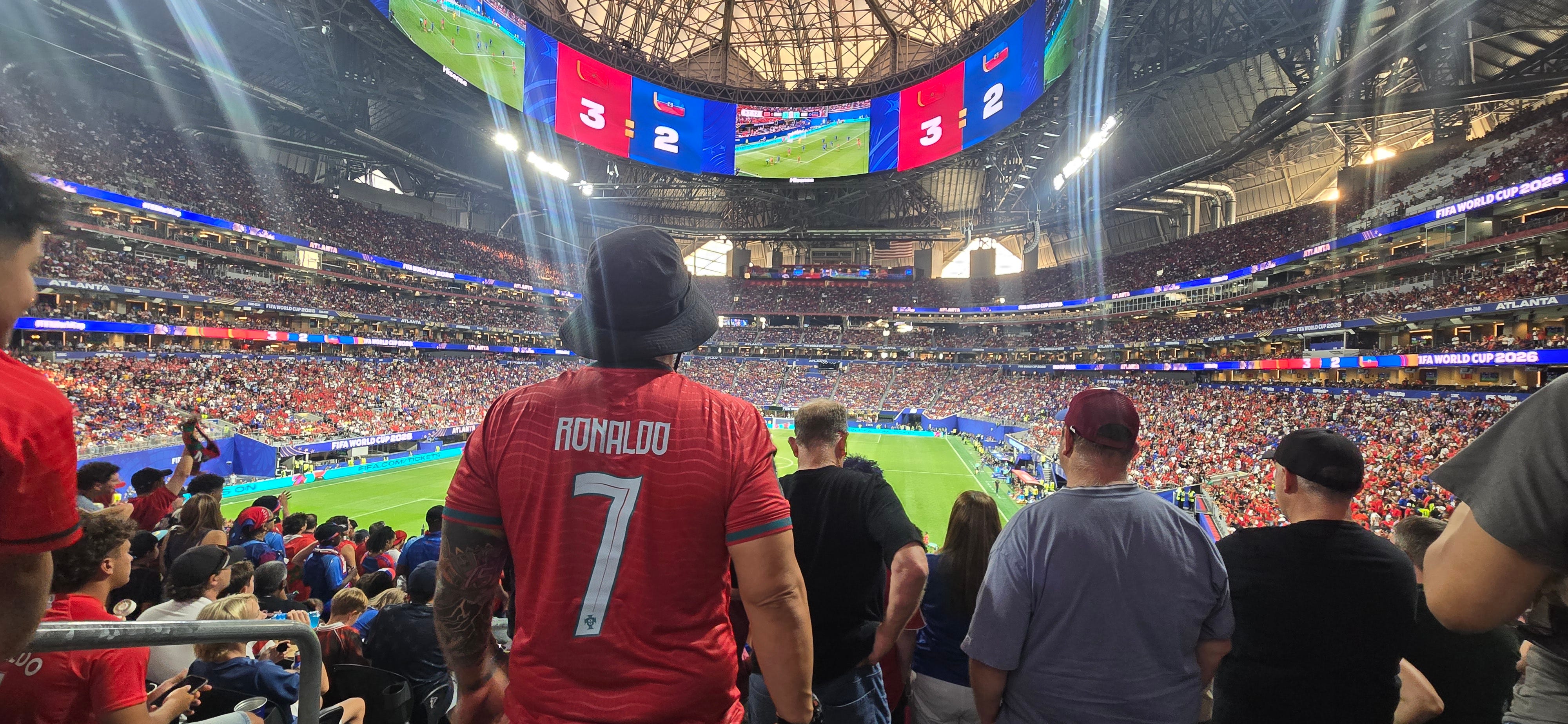
Every person in that stadium made a rational decision about whether or not to stand. Row 1 stood because they felt part of the game. Row 12 stood because the rows ahead never sat down. Every row after that stood because the alternative was staring at someone’s back for 90 minutes. Nobody was being unreasonable, nor were they being malicious. And yet the collective outcome involved our entire section standing, getting the same view we would if we had all sat down.
This is what economists call a coordination failure: individually sensible decisions that interact badly and leave everyone worse off. We got to a worse outcome, not because of bad choices, but because the system didn’t give us a path to the good outcome.
So what are the solutions to externalities? Economists typically reach for two tools. The first is a tax that charges people for the costs they impose on others. A “standing fee” collected by ushers sounds absurd, but that’s essentially the logic. The second is a regulation that just bans standing outright. A handful of venues and performers have tried no-standing policies, and they tend to make the news precisely because they feel so heavy-handed. Both approaches work in theory, but both feel a little strange when you apply them to a soccer match.
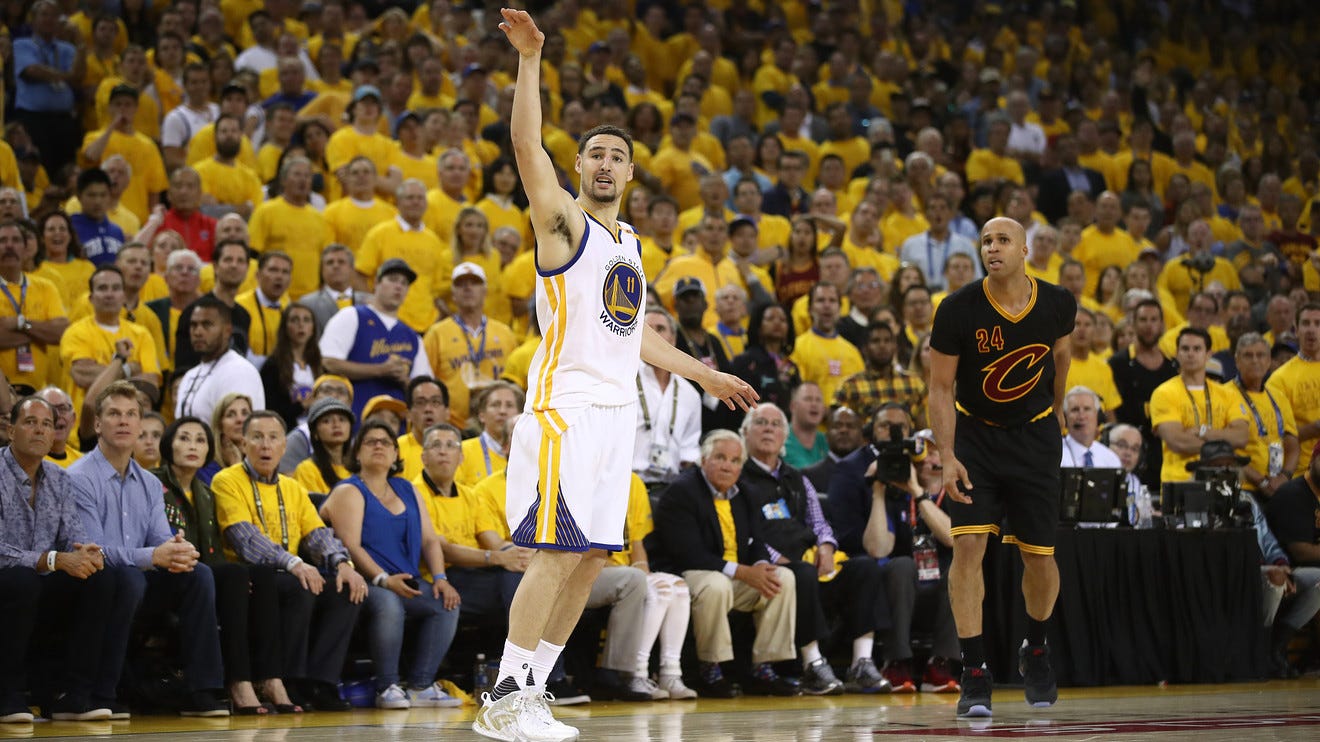
The more natural solution is a shared, unspoken expectation that you sit down so everyone can see. It works in plenty of contexts. You don’t see much standing at a baseball game, and tennis crowds stay seated almost religiously. And NBA courtside seats are famous for being seats. No one stands courtside at a basketball game the entire time.
The problem in soccer, especially at the World Cup, is that the norm runs the other way. Standing is part of the culture. At the match I attended, one of the older men a few rows ahead of me walked down a few rows at the start of the match and asked a younger fan to sit down. He got an eye roll and a shrug, and the rest of us stayed standing for the match.
Stadium seating has been engineered specifically so that every person can see over the head of the person in front of them. Sitting was always the efficient outcome. Standing broke a design that was already working. For fans who want to stand the whole match, most venues now offer a Standing Room Only section. The NBA’s Clippers famously built “The Wall” at their arena, a dedicated SRO section that became a defining part of their home atmosphere. The people who want to stand go there, and everyone else gets to sit.
Final Thoughts
Given the situation, I also stood for the majority of the game. By the time the wave reached my row, it was the only move that made sense for me individually. Somewhere in the back of my mind, I knew that it wasn’t going to improve anything for anyone, and I didn’t want to sit squinting at the video board over the middle of the field.
But at least I was in the last row of the section, so I wasn’t creating a new problem for whoever was behind me.
Negative externalities aren’t usually the product of bad people making bad decisions. They’re the product of normal people making normal decisions in a system that doesn’t account for the costs those decisions push onto others. The fix is rarely about convincing individuals to behave differently. It’s about designing systems where the right choice for the individual and the right choice for everyone else are actually the same choice.
If this made you think of someone, that’s probably a sign you should forward it to them. Negative externalities are more fun to explain when someone else does it first.
In its game against Morocco, Haiti scored in its first World Cup after 52 years [Associated Press]
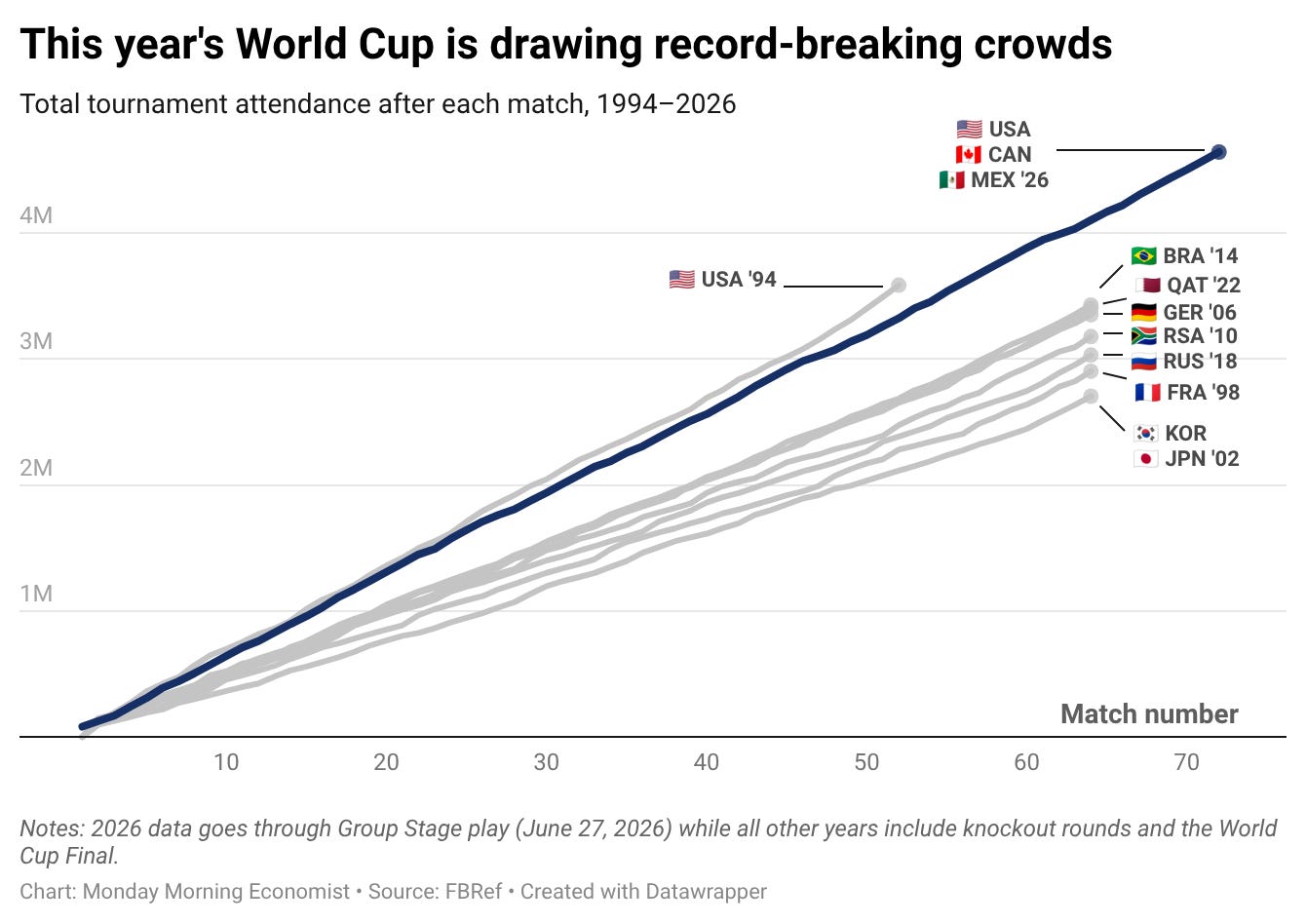
A record 3.6 million soccer fans have attended this year’s World Cup matches, with weeks left to go in the tournament [NBC News]
Telemundo reported that its World Cup viewership is “pacing at more than double” the 2022 tournament in Qatar [CNN Business]
9,722 people watched all 48 initial World Cup matches on Fox and FS1, according to Nielsen data [Yahoo! Sports]
Also one of the better metaphors for inflation.
I love the discussion of negative externalities, but it seems like that's not important to most Americans these days (see air pollution, traffic, smoking, non-vaccination, etc.).
Instead, how does standing at sporting events look through the lens of supply/demand? As long as we keep filing up the stadiums, owners aren't incentivized to penalize standing. The best seat is in my living room with a big-screen TV, cheap snacks, and a pause button on the DVR so I can go to the bathroom without missing a play. The owners would rather me buy a ticket, and a $20 beer, but they're filling up the stadium (high demand) so no need to adjust policies!