


You’re reading Monday Morning Economist, a free weekly newsletter that explores the economics behind pop culture and current events. Each issue reaches thousands of readers who want to understand the world a little differently. If you enjoy this post, you can support the newsletter by sharing it or by becoming a paid subscriber to help it grow:

If you had to pick a color to define next year, what would it be? Something bold? Something muted? Something that reflects how people feel about the state of the economy?
Pantone does this exercise at the end of every year. Their choice for 2026? PANTONE 11-4201, a shade they call Cloud Dancer. It’s described as “a whisper of calm in a noisy world,” though many people looked at it and said, “It’s white.”
Whether people like the color is beside the point. The more interesting question is how a single company became the one that gets to make this announcement. Economists don’t find that surprising at all.
What Pantone Owns (and Doesn’t Own)
Pantone doesn’t own this shade of white. Very few companies have trademark protection for specific colors, and when they do, those protections apply only to narrow uses, like Tiffany Blue on jewelry boxes or UPS’s Pullman Brown on delivery trucks.
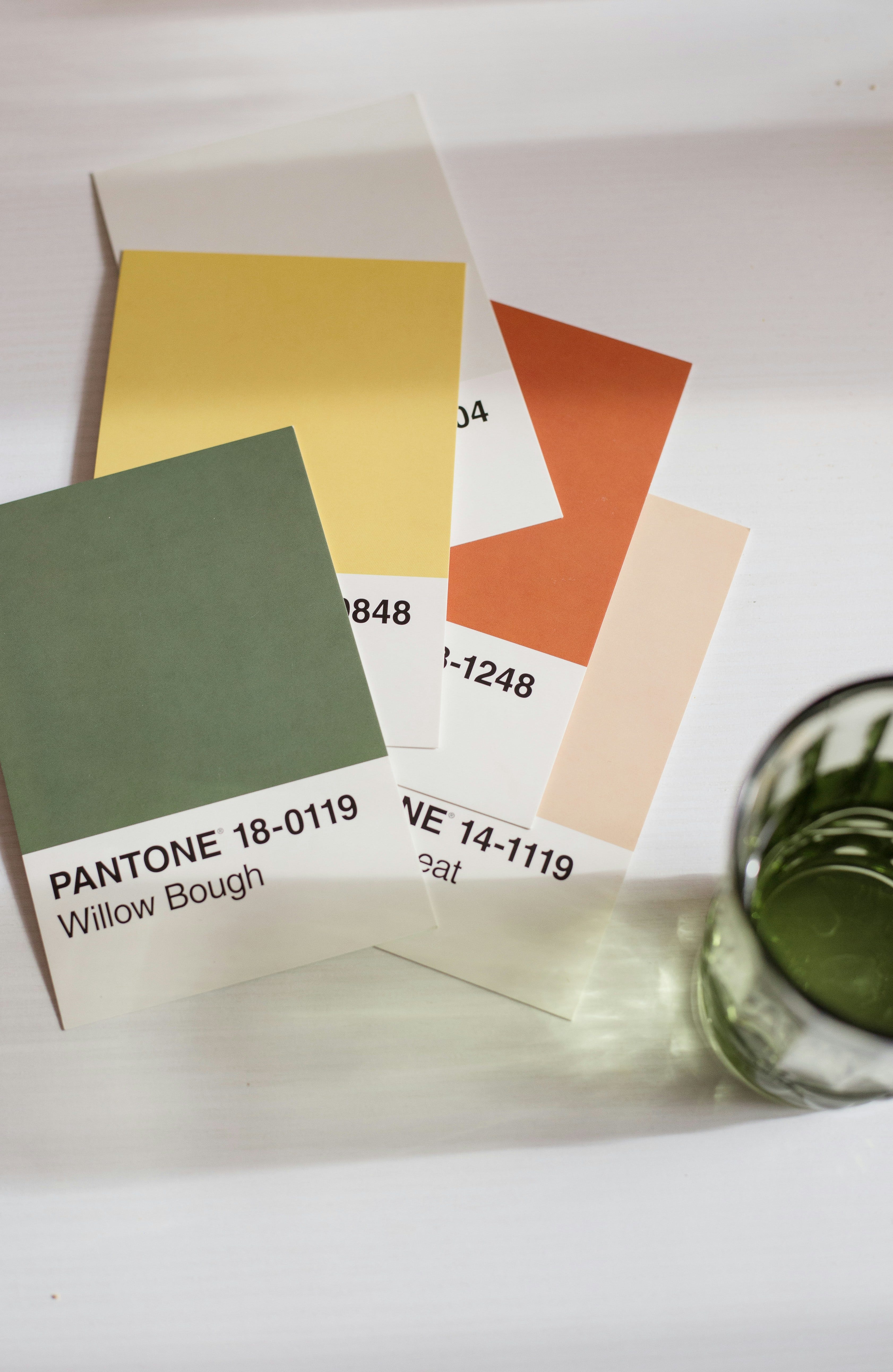
Pantone works differently in the market. They own the codes that define those colors within their system. When someone specifies PANTONE 11-4201, they’re using an identifier Pantone created and copyrighted as part of its color library.
Anyone can reproduce Cloud Dancer. But communicating that exact color across printers, manufacturers, and designers happens through Pantone’s system.
That system is what allows a printer in New York and another in Tokyo, using completely different equipment and inks, to produce the same shade every time. A simple reference tool grew into an industry standard, not because Pantone controlled color, but because they controlled the language used to describe it.
How Pantone Became a Standard
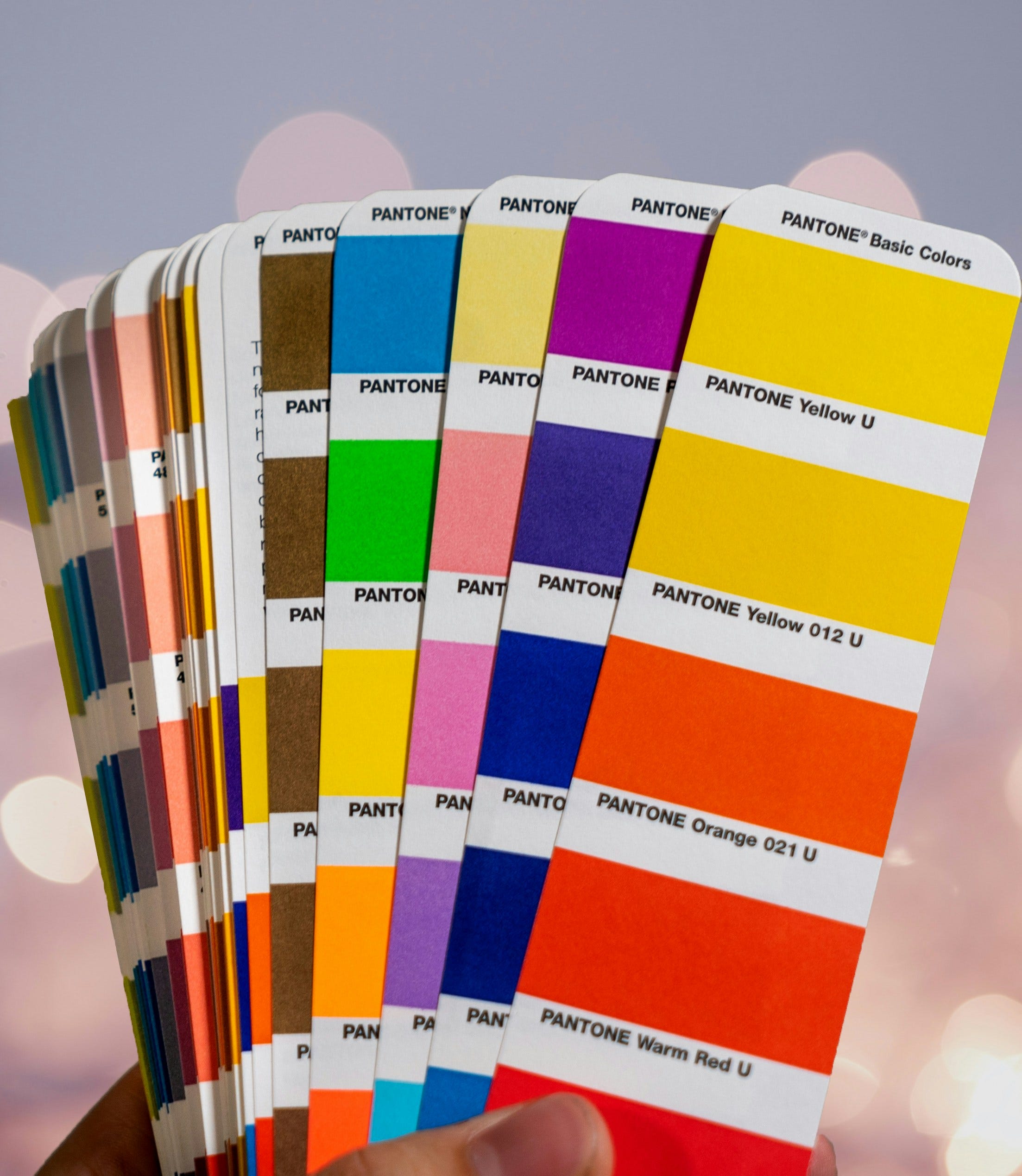
Pantone’s influence started with a simple coordination problem. In the early 1960s, founder Lawrence Herbert noticed how difficult it was for people in printing to talk about color. If a client wanted a certain shade of blue, they often mailed a physical swatch. Printers used their own reference books, but the catalogs didn’t match. A “midnight blue” in one shop might look different in another.
Herbert created a catalog that assigned every color a number. Designers and printers could talk about that number and know they were referring to the same thing. It reduced mistakes, lowered costs, and saved time.
Once a few firms adopted the catalog, it made sense for others to follow. And once enough people were using Pantone numbers, it became the path of least resistance for everyone else. What began as a practical tool evolved into a shared standard.
And this is where the economics comes in: a standard that increases in value as more people adopt it creates the foundation for a network, and that network can generate market power.
Why Businesses Pay for This
Pantone’s system benefits from network effects, a concept that describes situations where a product becomes more valuable as more people use it. Ink manufacturers adopted the system first. Designers realized it was easier to use the system. Manufacturers joined so their materials would match what printers produced. Over time, participating in the system became more valuable than opting out.
Using Pantone reduces transaction costs by giving everyone a clear reference point. Design schools teach Pantone. Software platforms include Pantone libraries. Printers calibrate equipment around Pantone numbers. Each decision reinforces the network and makes switching more expensive.
This creates a form of market power rooted in standardization. Competing systems exist, but they struggle to gain traction because the value of Pantone’s network depends on widespread adoption. As long as most people remain inside that network, new entrants face significant barriers.
The Economics of Standards
Standards shape more of the economy than we often realize. They help firms coordinate and communicate more efficiently. Some evolve naturally through repeated use. Others are created through policy.
The metric system is a universal standard that lowers communication costs across countries. It’s not owned by anyone, and everyone benefits from using it.
Other standards are mandated. The European Union’s move to require a common charger for mobile devices is a recent example. A single charger keeps consumers from buying multiple cords, but it also removes companies’ ability to earn revenue from proprietary chargers.
Pantone sits between these two. Their system isn’t legally required, but it isn’t readily available to everyone either. It became the standard because the market selected it. And because Pantone owns the underlying classification system, they capture the value that comes from maintaining it.
Final Thoughts
Cloud Dancer raises an interesting question about what the color of the year represents. Choosing an off-white shade might resonate in a moment when many people still feel uneasy about the economy. After years of affordability concerns and uncertainty, a color framed as calm and quiet fits the mood.
But it could also reflect something less tied to the economic climate. The shift toward neutral palettes has been building for more than a decade, across interior design, fashion, and social media aesthetics. Cloud Dancer may simply be part of that ongoing trend rather than a signal of anything new.
I’ve never heard of a color forecast serving as an economic indicator, but this one has given us a moment to pause and think about how people are experiencing the world. Whether Cloud Dancer mirrors economic anxiety or extends the current minimalist streak, it provides a useful example of how culture, business, and economics overlap.
If you enjoyed this week’s newsletter, consider sharing it with a friend or colleague who might find it helpful. Personal recommendations are the best way for new readers to discover the work.
The Pantone graphics (PMS) system offers 9,758 total colors [Pantone]
Calvin Klein kept a Pantone chip in the kitchen to signal to his chef what color he wanted his coffee to be [The New York Times]
A Pantone guide book that includes a complete color swatch library is priced at 9,997.00 [Pantone]
A scientific conference was held from 1798 to 1799 (with representatives from the Netherlands, Switzerland, Denmark, Spain, and Italy) to validate the metric system’s foundation and to design prototype standards [U.S. Metric Association]
About two-thirds (68%) of Americans said the economy is getting worse [Gallup]
Tiffany blue and UPS brown. The linked article mentions Barbie pink. I'm not even a Red Sox fan, but no love for Green Monster green??
Standards are usually beneficial (in the ways listed), but they have drawbacks, too. Notably, widespread adoption of a standard makes it difficult to replace with a better standard (or not-yet-standard) yet, because institutional inertia makes even positive change economically painful. I suspect we'll see this soon with phone chargers; USB-C is mandated, so when something better comes along, the choice will be to either implement both chargers (costly and wasteful) or stick with USB-C to remain complaint with the law. Whatever the new, better thing is will fail to gain traction and consumers will be stuck with USB-C long after it becomes an inferior standard, until sticking with it becomes more painful than changing.
This is super interesting - a side to colour you don’t often think about: business. I just wrote about my thoughts on colour in 2026, although taking a different steer to you.. https://open.substack.com/pub/admiredbyme/p/design-notes-colour-of-the-year