


Oktoberfest wrapped up this past weekend, and Munich is cleaning up after roughly 7 million visitors stopped by the world’s largest folk festival. It shouldn’t take them too long; the city has been throwing this party since 1810.
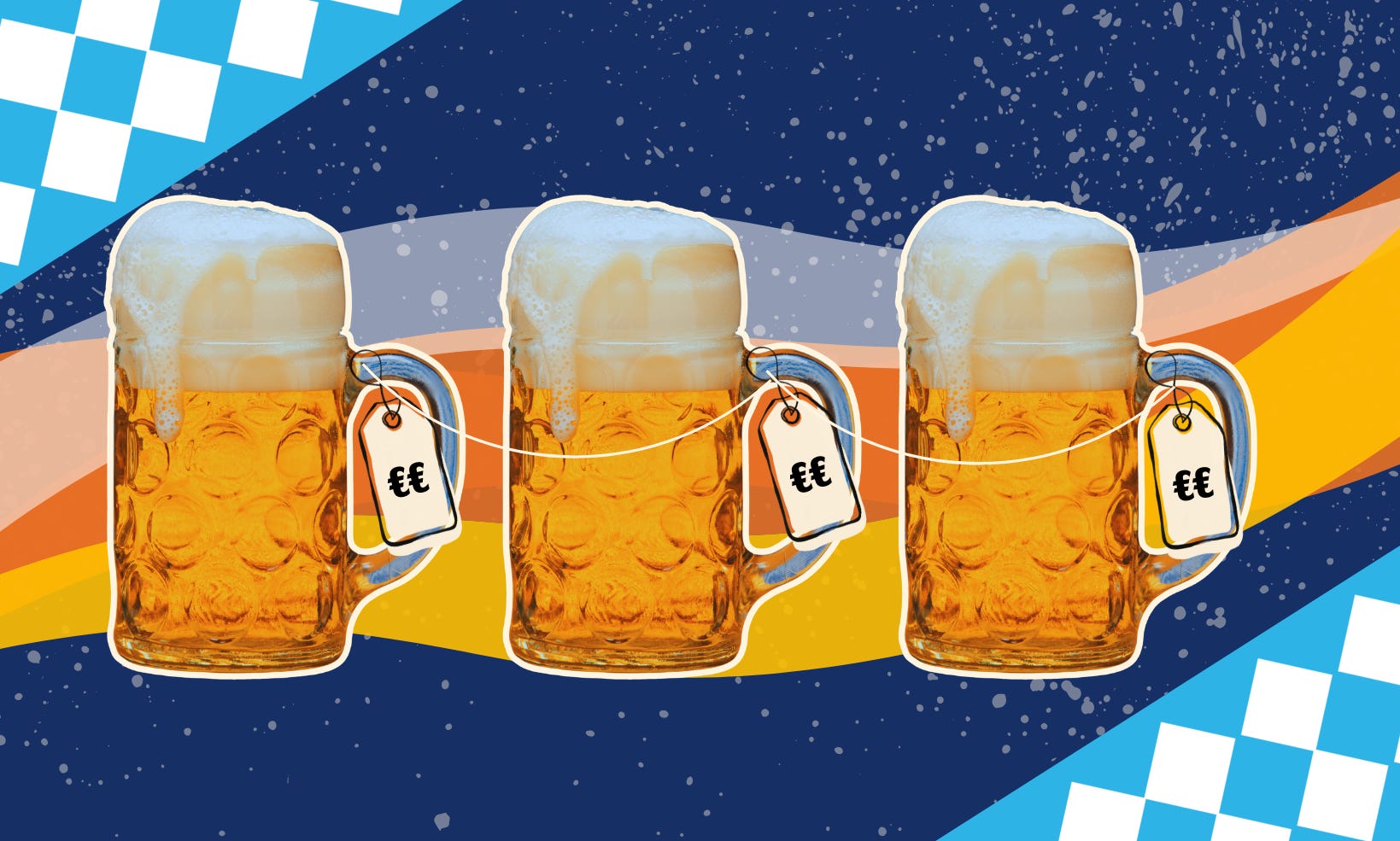
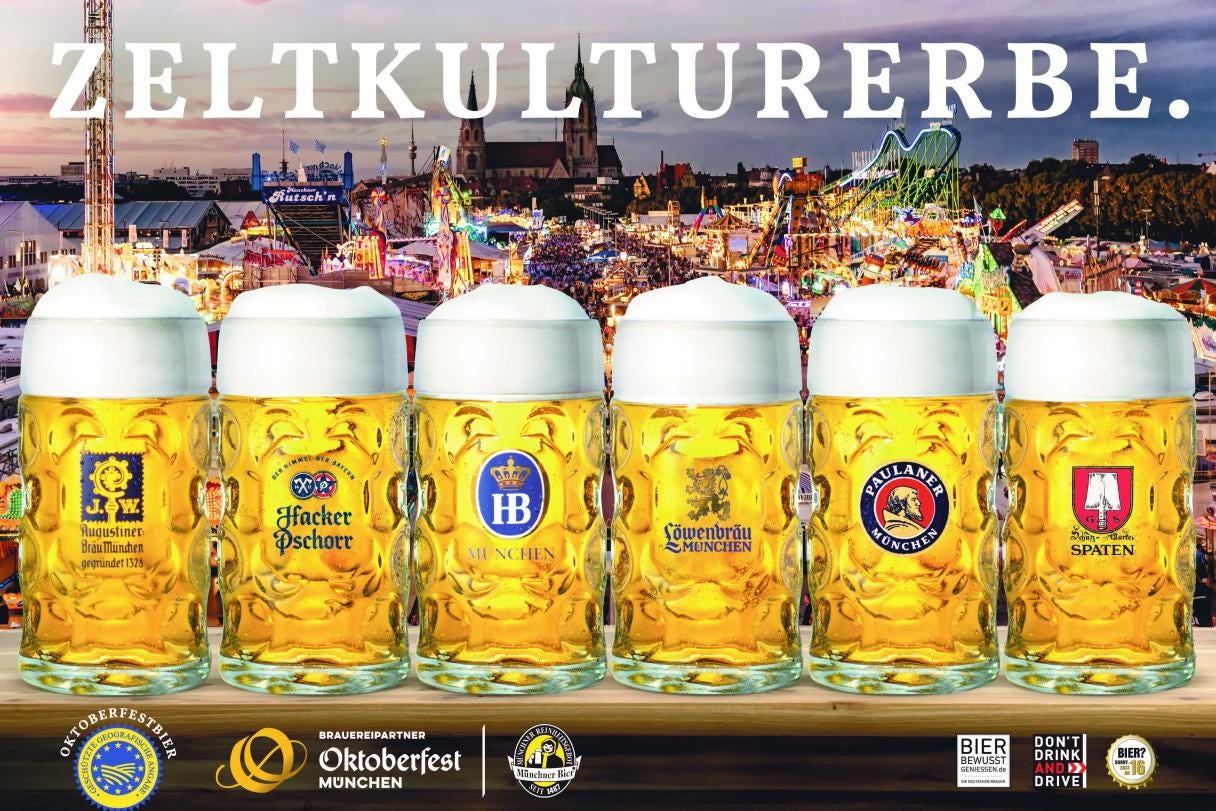
If you’re curious, visitors to this year’s event paid between €14.80 and €15.90 for a one-liter mug of beer, known as a Maß. That price has been climbing faster than German paychecks for the past few decades, but perhaps the bigger surprise for newcomers may have been how few choices they had. Bavaria had 588 breweries in 2025, more than any other German state. Only six are allowed to pour at Oktoberfest: Hofbräu, Augustiner, Hacker-Pschorr, Löwenbräu, Paulaner and Spaten. It’s the same six as last year and the same six for generations.
To join them, a brewery must brew within Munich city limits and follow the Munich Purity Law of 1487. There’s also a third condition that inspired this week’s newsletter: the brewery also needs the blessing of the Munich city council, or enough signatures to force a citywide referendum.
That arrangement now faces two challenges, one in court and one at the ballot box. To see how tightly the door has been shut, let’s start with the family that threw the first party.
Even the Guy Whose Family Invented It Can’t Get In
Oktoberfest began as a royal family party. On October 12, 1810, Crown Prince Ludwig married Princess Therese, and Munich invited its citizens to celebrate on the fields outside the city gates. The festivities went so well that the city did it again the next year, and every year after. The royal fingerprints are still present at the event. Hofbräu, one of the big six, began in 1589 as the royal court brewery and is still owned by the state of Bavaria.
The royal family itself, however, is currently on the outside. Prince Luitpold of Bavaria is a direct descendant of the groom who started it all, and currently runs his family’s König Ludwig brewery. His beer is Bavarian and follows the purity law, but the brewery sits outside Munich, so it can’t pour at the festival. Luitpold spent years trying to win a license before giving up and publicly questioning whether the city’s rules would hold up under antitrust law. Shut out of his ancestors’ party, he started his own this fall in Cologne. It turns out royalty is no workaround for barriers to entry.
At least Luitpold’s exclusion has a rulebook explanation: his brewery is in the wrong place. There are currently two people challenging the stronghold the big breweries have over the giant tents that serve thousands. One is the CEO of a Munich Restaurant that has been operating one of the 440-seat tents at the festival, but who was turned down when he bid for one of the giant tents operated by the big six. He’s suing to open the bidding to applicants across the European Union. Giesinger Bräu was founded in a garage in 2006, and now produces about 1% of Munich’s beer. It brews inside the city, follows the purity law, but is pushing for entry through a citizen referendum.
So we have a Munich tent operator and a Munich brewery that say they meet the formal requirements and still can’t get in. Economics has a framework for that kind of mismatch, and it starts with a word you’ve probably heard before.
What Textbooks Say About Cartels
Even if you’ve never taken an economics course, you probably know the basics. A cartel is an agreement among competing firms to limit competition. Without that agreement, rivals would undercut each other on price to win customers. A cartel gets everyone to call that off. Usually, each member agrees to produce less than it otherwise would, because fewer products on the market means higher prices. The members then split the profits that come from behaving like one big monopoly instead of a group of rivals.
The most well-known example is probably OPEC, which sets production targets for its member countries to influence global oil prices. But cartels have reached into a wide variety of industries, from diamonds to vitamins.
It’s easy to see how the members come out ahead while everyone else comes out behind. Customers end up paying more, but the damage goes beyond the extra profit sellers earn. Some people who would have happily bought at a competitive price don’t buy at all, so sales that would have benefited both sides never happen. That value doesn’t go to the cartel or to anyone else. It simply disappears, which leaves society as a whole worse off as a whole.
The good news is that cartels tend to fall apart. Each member has an incentive to cheat by producing a bit more than its allotment and pocketing the extra profit. If enough members do this, the cartel collapses. But that’s what makes Oktoberfest a bit strange. A typical cartel survives only as long as its members can keep each other in line. The Oktoberfest six have kept outsiders away for generations without any visible effort. Something else is holding this one together.

Why This One Is Different
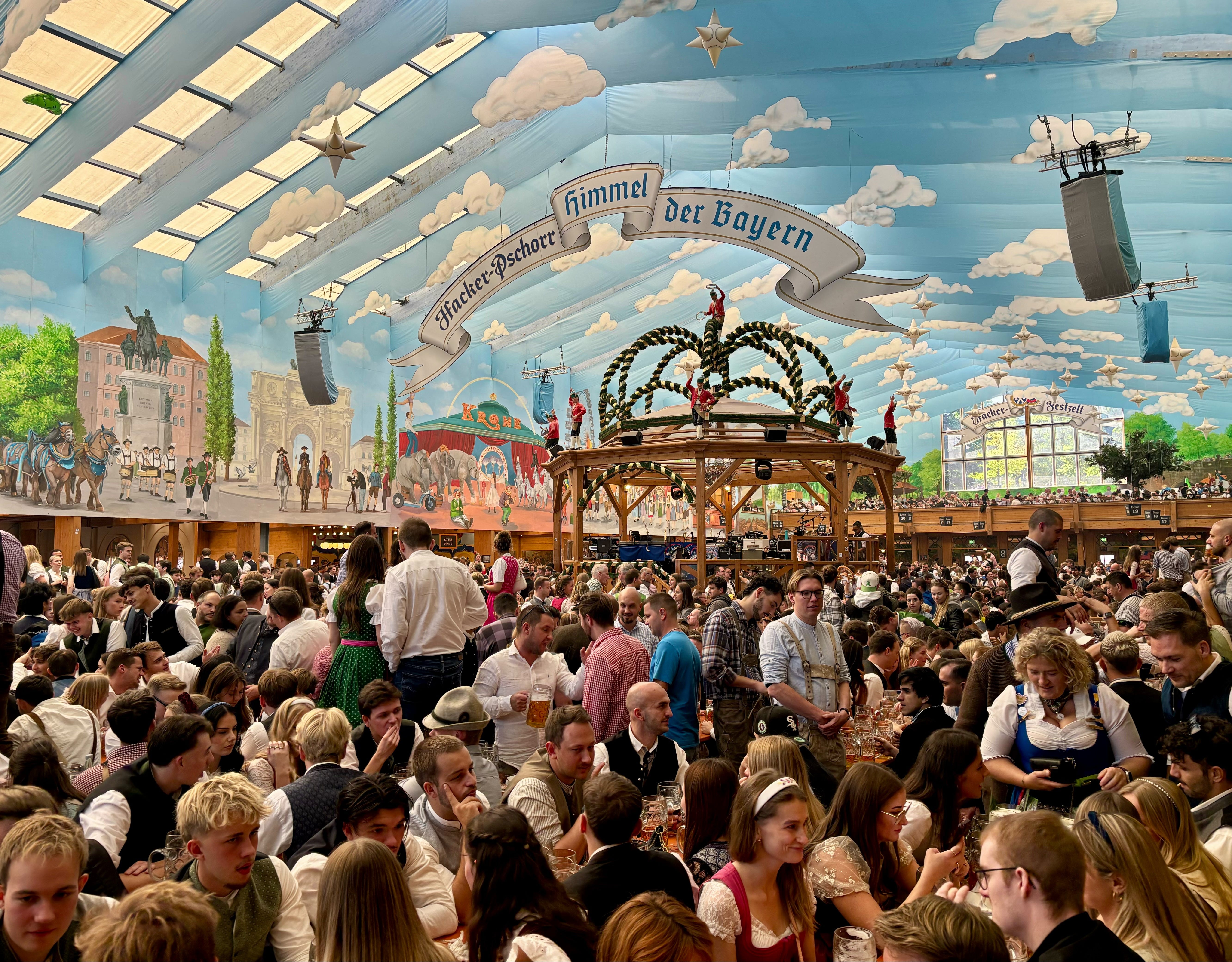
That something is the city of Munich. The rules about who pours at Oktoberfest are written into the festival’s operating regulations, which the city council re-adopts every year. Adding a seventh brewery would mean changing them, and according to the city, brewery admissions simply follow a practice built up over decades. That tradition has generated millions in profits for the group.
Normally, big profits attract newcomers who compete those profits away. Barriers to entry are the obstacles that stop that from happening. Some are natural, like huge startup costs or economies of scale. Others are artificial, created by regulation or policy. Oktoberfest’s barriers are mostly artificial, and they’re steep.
Economists have a term for when a regulator ends up serving the industry it oversees: regulatory capture. There’s no hard evidence of it in Munich, but there are reasons to ask. The six incumbents share a trade association, the Association of Munich Brewers. A former Wiesn chief once said the real danger of admitting Giesinger was that other breweries might follow, which sounds like a strange concern for an official running a public festival. The current Wiesn chief says no one is being blocked and points out that Giesinger has never formally applied.
The economics works the same way whether you call it capture or tradition. When the government guards the door, the cartel doesn’t have to.
Final Thoughts
Munich isn’t the only government body to put its muscle behind a food cartel. Consider Switzerland, where the Swiss Cheese Union ran cheese production from 1914 to 1999. It set milk prices, dictated quotas, and shrank a tradition of more than 1,000 varieties down to seven approved types. At the peak of the fondue era in the 1970s, the government reportedly spent more subsidizing cheese than equipping its military.
Then there’s Quebec, which produces the majority of the world’s maple syrup. Since 2004, the province’s producers’ federation, known as the Quebec Maple Syrup Producers, has run a quota system controlling production. Anyone selling in bulk must contribute part of their crop to a global strategic maple syrup reserve, and anyone caught producing beyond their quota faces a penalty. The reserve is so valuable that thieves stole C$18 million worth of syrup from it in 2012.
These cartels all have something in common that explains why they are able to last so long. When the government enforces the rules, members don’t need to worry about anyone cheating. That’s what makes this year’s legal challenges interesting. Munich’s new mayor has said any Munich brewery is free to apply, but the fights are still taking place in courtrooms and at the ballot box instead of under the big tents.
Six breweries have effectively decided what people get to drink at Oktoberfest, but you have the power to decide who reads this next. Share it with a friend. After all, economics is also more fun with company!
Augustiner is Munich’s oldest brewery, founded in 1328, and its beer is famously still tapped from wooden barrels at Oktoberfest [Augustiner Bräu]
Munich’s 1487 purity law predates Germany’s famous one that limits beer to barley, hops, and water [Hofbräuhaus]
It’s been 216 years since the first event, but we’ve only celebrated the 191st Oktoberfest because of war, cholera outbreaks, and COVID [Oktoberfest]
“Oktoberfest beer” has been legally protected across the EU since 2022 with the EU’s protected geographical indication noting that it must be brewed under the purity law using deep Munich water from the brewery’s own well [Food & Wine]
Brilliant work!!