


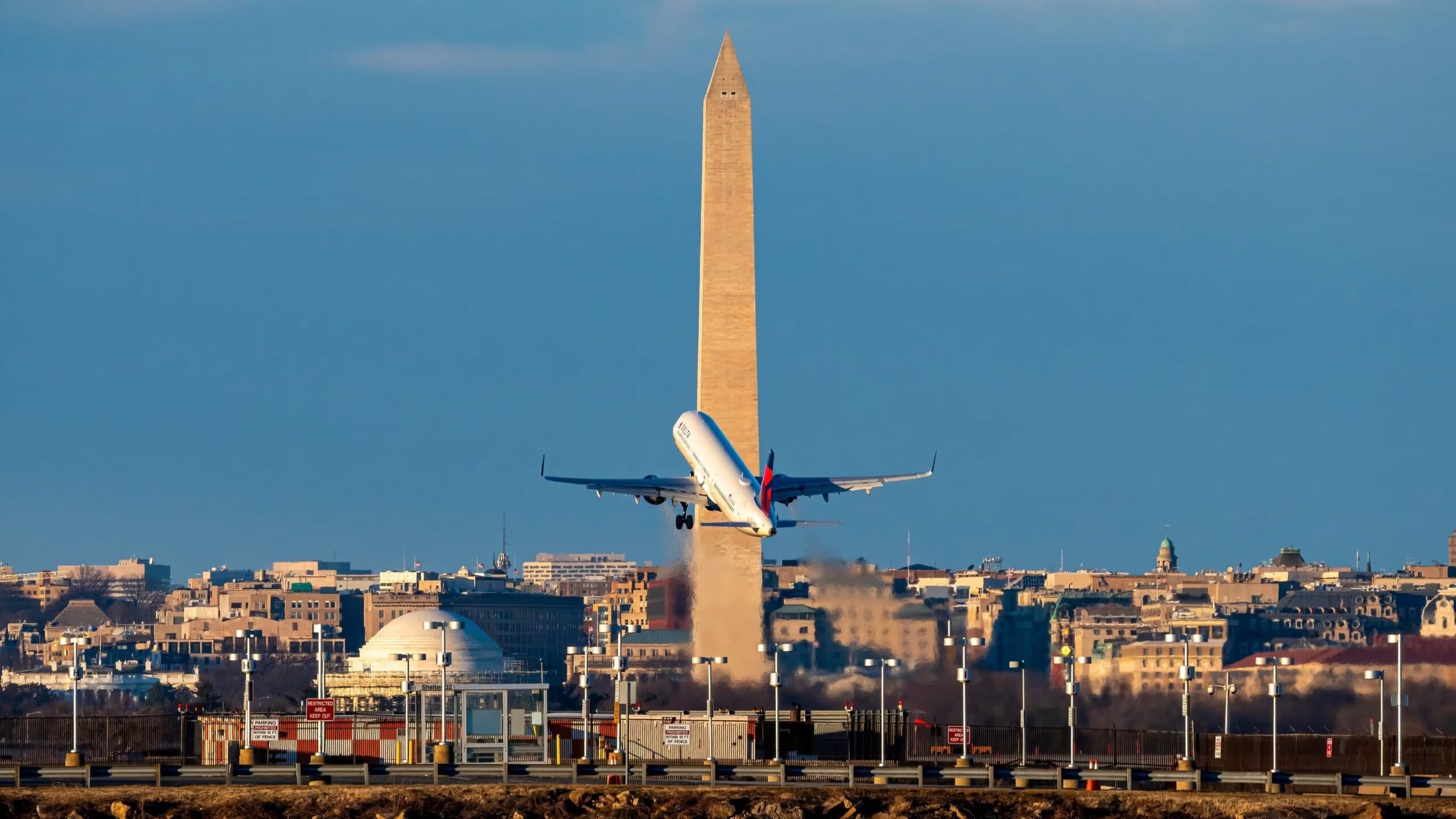
If you’ve got a trip to DC planned, you’ll soon have one more airport option. It’s probably not the pick for an easy ride downtown to visit the Washington Monument, but it might become your favorite if you’ve got business on the southwest side of the city, or you’re just tired of Dulles’s ballooning prices.
Last week, the airport formerly known as Manassas Regional earned the necessary FAA certifications required to put a jet bridge next to a runway. Washington Manassas Airport is a general-aviation field about 40 miles from downtown DC, currently home to flight schools and private planes. It’s in the middle of major renovations meant to get it ready for commercial service by the end of 2027.
Forty miles seems like a long drive after landing in a “DC airport,” but I was more intrigued by whether the metro area is even large enough to support another commercial airport alongside Dulles, Reagan National, and BWI. Assuming that it is, why is the next one sitting in the exurbs instead of somewhere closer to the city center?
That curiosity led me down a rabbit hole looking for the last time a major American city actually added a legitimate, additional airport to solve its capacity problem. It turns out it’s been a while.
A Brief History Lesson on New Airports
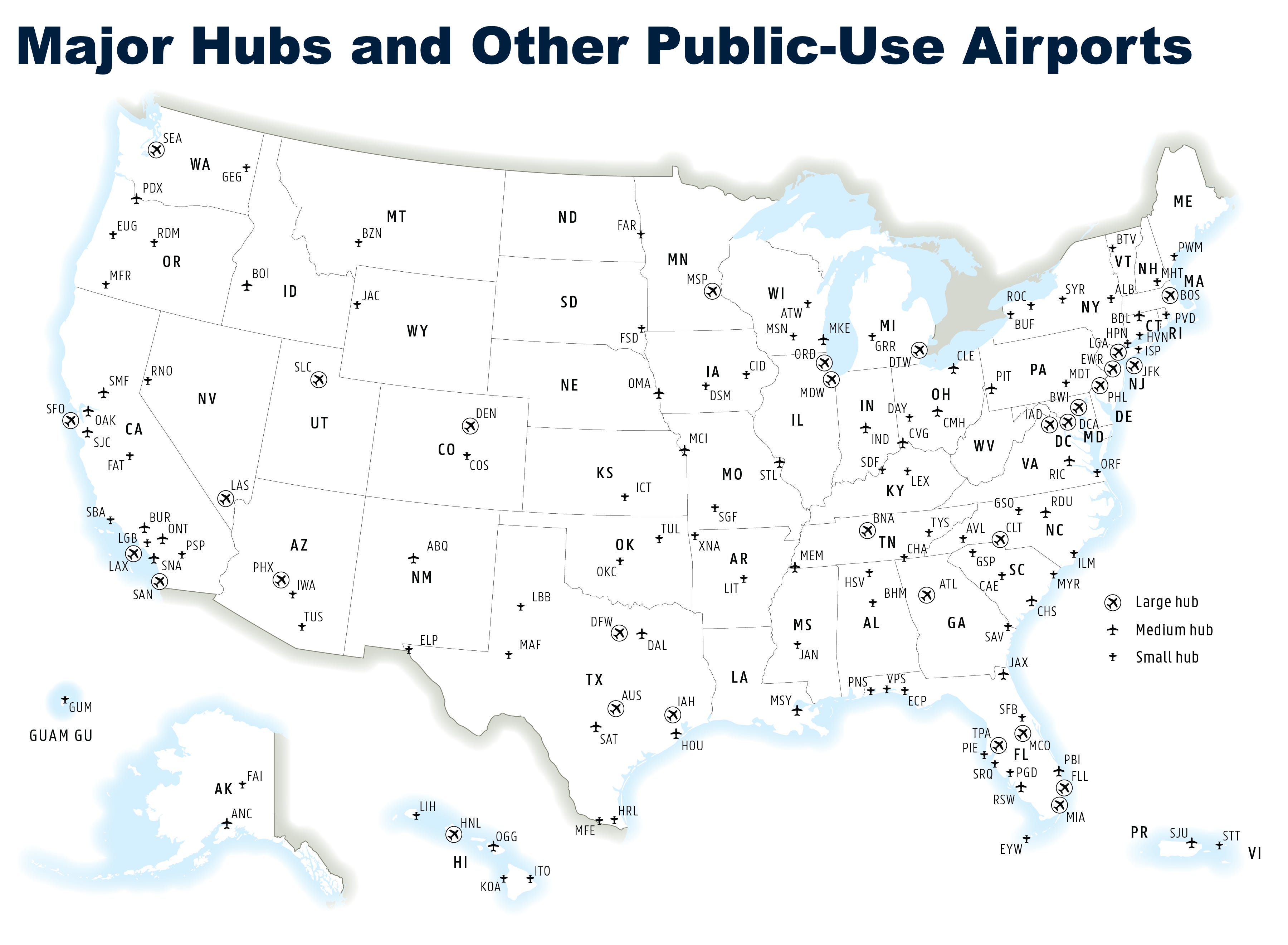
A lot of airports follow the same process as Washington Manassas by converting a general-aviation field into a commercial operation. Completely brand-new commercial airports, known as greenfield construction, are much rarer in the United States, and we’ll soon see why. Either path could reasonably count as “new,” so I set a couple of additional conditions to narrow the search.
The first was about the size of the metro area. Plenty of smaller cities have built new airports as they’ve grown, but they were never trying to solve a big-city capacity problem. Northwest Florida Beaches International opened in 2010 as genuinely new construction, but it immediately replaced Panama City’s previous airport. With a metro area of about 200,000 people, there was never a case for two airports anyway.
The second condition was that the new airport had to be large enough to actually relieve congestion at its metro’s existing airports. That rules out locations like McKinney National, 30 minutes north of Dallas, which will start accepting commercial service in November. The issue? It currently hosts one airline with five leisure routes. That’s more of a regional outpost, not an additional hub for the millions flying in and out of North Texas.
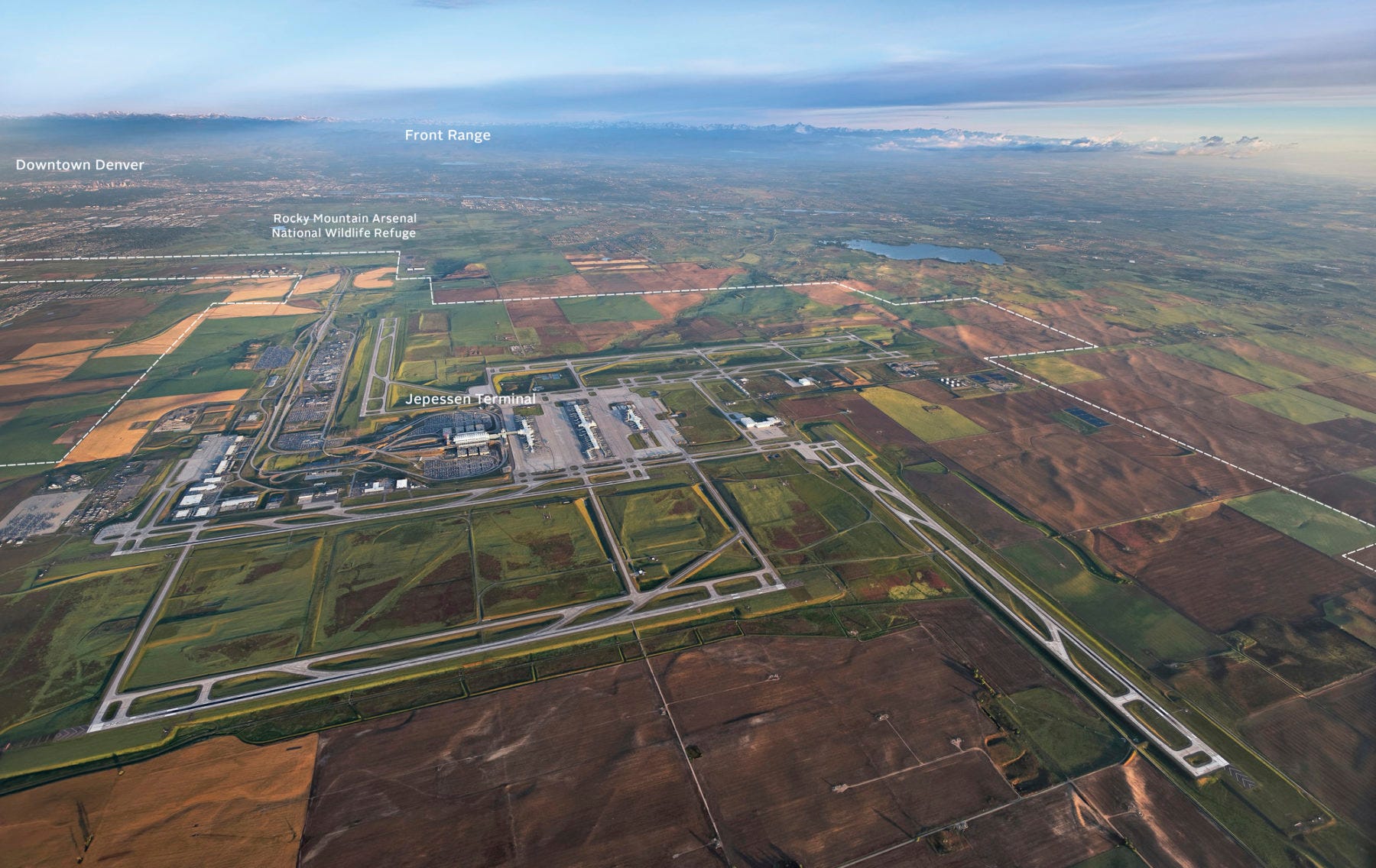
And if you thought I’d forgotten Denver International, which opened in 1995, think again. It’s unquestionably a major airport in a major metro, but it wasn’t built to serve as a second airport for the city. It replaced Stapleton, which had become boxed in by the city that grew around it. By the 1980s, there was no viable plan to expand its runways, so they built out into the plains. Stapleton closed the same day Denver opened.
From what I can tell, the last time a major metro genuinely added a new, major airport to relieve capacity was Dallas/Fort Worth International. Even that one barely makes the cut. By the early 1960s, Dallas’s Love Field was running out of runway and gate space. Federal regulators pushed Dallas and Fort Worth into a joint solution instead of letting each city solve its own problem. They wanted to see a shared airport that would replace both Love Field’s commercial service and Fort Worth’s existing airport.
DFW broke ground in 1969 and opened in 1974, and most airlines followed the plan to leave Love Field behind. But Southwest Airlines refused to leave. Once deregulation let it fly beyond Texas in 1978, Congress even went so far as to pass legislation restricting flights out of Love Field for the next 35 years, specifically to protect DFW from competition.
It turns out that Dallas barely made the cut only because Southwest refused to leave and survived a law written specifically to stop it. The law would eventually be repealed in 2014, but Love Field is easily a legitimate second airport for the city. Maybe the better read is how the most recent major metro that ended up with a genuine additional airport got there by accident. Since DFW broke ground, U.S. air travel has exploded. So, where are all the new airports?
Several of the country’s busiest airports were built nearly a century ago, and some are so constrained that even planned improvements wouldn’t fix their capacity issues. Of today’s 20 busiest U.S. airports, nine are projected to need more capacity than any currently planned runway or technology upgrade can provide.
But knowing that air travel has grown nearly 50 times since the 1950s and almost half the country’s busiest airports are already maxed out doesn’t explain why there hasn’t been a serious effort to fix it. That turns out to be less a data question than an economics one.
Building Beat Renovating, Until It Didn’t
This might look like a hunt for an answer to a trivia question, but there’s a real economics explanation underneath it. A constrained metro area has two ways to add airport capacity: build a new one, or expand the one it’s got. Economists call this decision-making at the extensive margin versus the intensive margin. It’s the same choice a company faces when it’s short on capacity and has to decide between opening a second location across town or just running the existing one harder. Running it harder is cheap and easy to reverse, but hits diminishing returns fast. A second facility costs a fortune up front, but can end up cheaper in the long run if demand keeps growing.
For the first half of the twentieth century, American cities mostly chose the extensive margin. Chicago Midway opened in 1927, but the city stood up an entirely new airport a dozen miles away when jets outgrew its short runways in the 1950s. By the early 1960s, O’Hare had taken over as the region’s primary hub, while Midway kept operating alongside it. Land was cheap, and nobody outside the immediate neighborhood had much legal standing to stop you. Chicago has been floating the idea of a third airport since the 1990s, but the proposed site has been controversial enough that it’s never broken ground. More on that in a second.
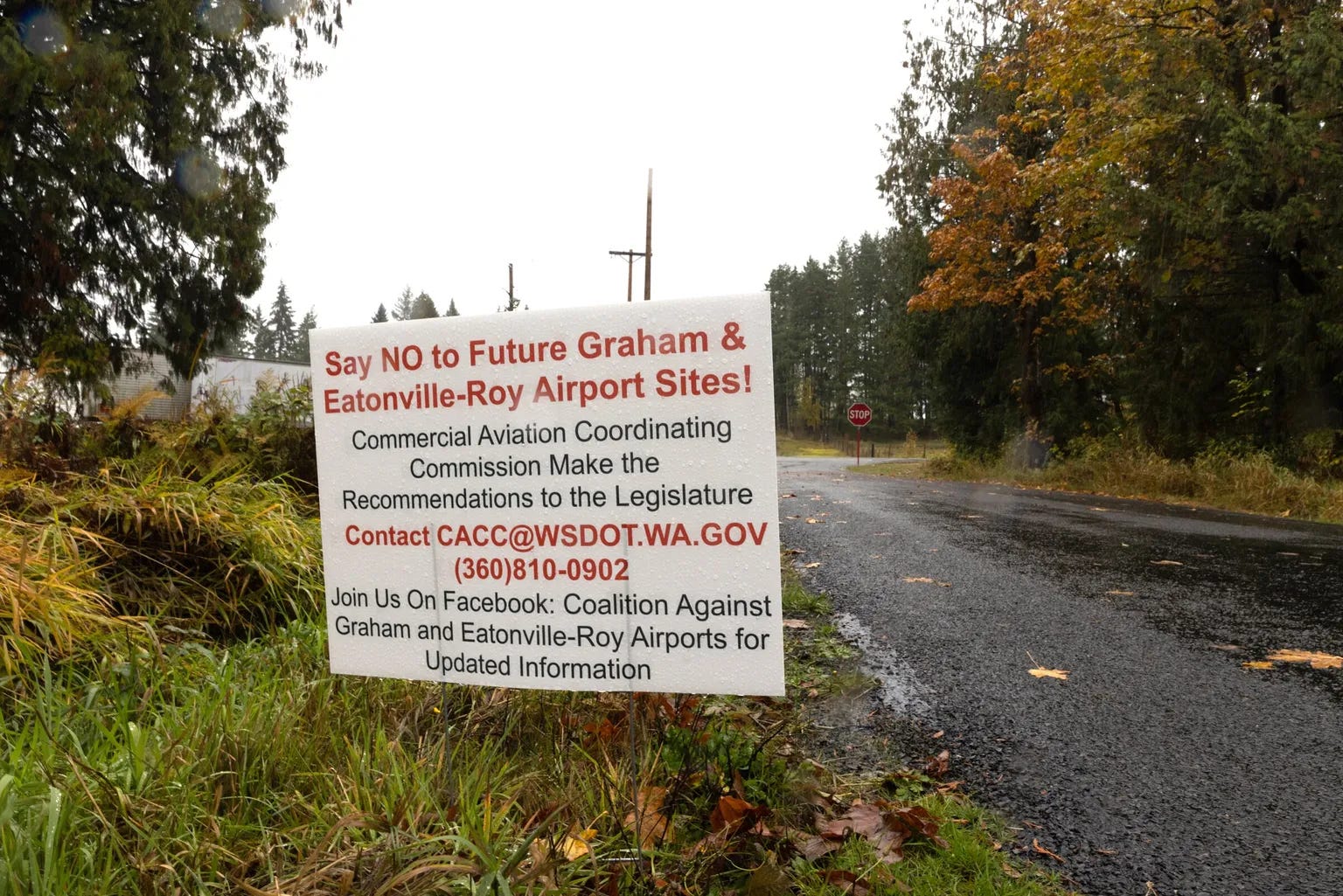
DC has its own version of this story sitting under our noses. Reagan National is wedged between the Potomac River and a full residential grid, with no room left to extend a runway. On top of the physical constraint, federal rules cap how many flights can use the airport each hour and how far nonstop flights can go. It’s essentially a push to grow Dulles instead. Sound familiar?
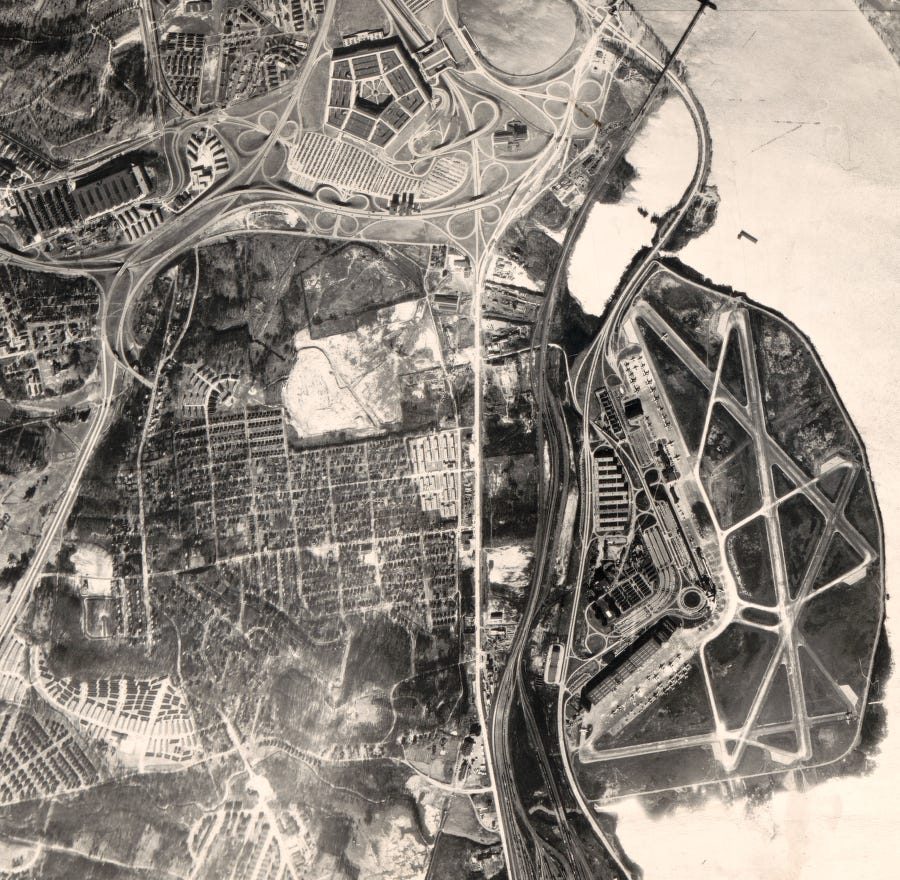
Seattle is living through a similar squeeze today, and its recent history shows just how hard “build new” has become even when the need is obvious. Seattle-Tacoma is in the middle of a $1-billion-plus expansion, and Paine Field up in Everett is separately expanding its own terminal. Even so, the region is still projected to fall short of demand by mid-century. Washington state spent two years searching for a third-airport site to close that gap, but every option it identified fell through.
Building new airports was fairly easy through the first half of the century. Then, seemingly overnight, cities switched to expansion instead. It turns out that the timing is almost too perfect to be a coincidence. Remember how DFW broke ground back in 1969? Well, the National Environmental Policy Act, which requires federal environmental review for major infrastructure, was signed on January 1, 1970. Since then, most U.S. airports have opted for expanded runways, bigger terminals, and brand-new concourses. Cities have rarely picked a new plot of land and started over.
The bigger pattern
That regulatory shift hasn’t been contained to airports. A pair of economists went looking for an explanation for why the cost of building one mile of interstate highway roughly tripled, in real dollars, between the 1960s and the 1980s. They ruled out the obvious suspects (labor, materials, and tougher terrain) and traced it instead to a rise in what they call “citizen voice”: more lawsuits, more mandatory environmental review, more people with legal standing to hold up a project they didn’t want in their backyard. The inflection point, once again, lands in the early 1970s, right where NEPA does.
That explanation makes Denver’s airport stop looking like a quirky outlier and start looking like a logical response. The city couldn’t expand Stapleton, but selecting a spot 25 miles from downtown meant far less friction to deal with. Building new usually means a fresh set of neighbors with legal rights to slow you down for years. However, you don’t have nearly as many neighbors to deal with whenever you buy up more land than the city boundaries of Boston, Miami, or San Francisco.
If this were simply how airport economics worked everywhere, you’d expect the same slowdown globally. Beijing opened an entirely new second major airport in 2019, while its original airport kept running right alongside it. Mexico City opened a brand-new third airport in 2022. Neither example means overriding local objections is a better way to run a country. The U.S. gives affected communities real legal standing to object for good reasons. Both examples are merely to rule out the idea that “build new” is off the table because of costs or logistics.
Final Thoughts
This brings us back to Manassas. Unlike Seattle or Reagan National, Northern Virginia doesn’t have the same geography problem forcing its hand. It has instead opted for the path of least resistance: a general-aviation field far enough from anyone influential to object, and close enough to the interstate to market itself as “DC” anyway.
I can share some personal experiences with how this might play out for travel, and it isn’t flattering. Several years ago, I booked a cheap flight to “Washington DC” for a conference, but I didn’t check how close the airport actually was. Shortly after the flight landed in Baltimore, I also learned how to board a train for the first time, which is not nearly as intuitive as you think if you’ve grown up with trains and subways your whole life. I clearly didn’t learn my lesson on checking airport locations because I made nearly the same mistake the next year when I booked a “cheap flight to Paris” that landed 50-plus miles from where my hotel was located. I got to figure out how their train system worked, but this time in French!
Baltimore is a real city that can support its own airport, but Beauvais can’t, and exists purely to catch tourist demand for Paris on the cheap. It’s built far outside the city and lets its name do the marketing. Sound familiar? It’s a good deal for the airport operator, but far from ideal for travelers standing in a terminal an hour from where they actually want to be. No offense, Manassas.
But this is all really circling back to the original question I was hoping to arrive at. America hasn’t lost the ability to build new airports, but it has decided over and over again since the 1970s that the cheapest place to build them is far away from people who might object, even if that isn’t an ideal location to serve a market. Denver bought 53 square miles to get permanent distance from just about everyone, while Manassas is betting that being 40 miles away is fine for travelers and won’t offend the 44,000 people who live there won’t object.
This newsletter doesn’t have a capacity problem. I’ve got plenty of room for more readers, no NEPA review needed. If you liked this, forward it to someone who’d argue with you about it.

The population of Manassas, Virginia, is estimated to be 44,332 [U.S. Census Bureau]
The Northwest Florida Beaches International Airport officially opened on May 23, 2010 as the first international airport built in the United States post-September 11 [Northwest Florida Beaches International Airport]
Hartsfield–Jackson began with a five-year, rent-free lease on 287 acres that was an abandoned auto racetrack named The Atlanta Speedway [Hartsfield-Jackson Atlanta International Airport]
College Park Airport in Maryland is the oldest continuously operated airport in the United States and the world, established in 1909 [National Park Service]
Nearly 1-in-5 flights across America’s 10 largest carriers have been delayed so far in 2026 [Bureau of Transportation Statistics]
Looking at the chart of passenger volume per year reminded me how fantastic flying was in 2020. Whole sections of aircraft to myself, breezing through security, oh it was wonderful.
I suspect that the benefit of building new airports ~an hour drive out of a city isn't going to be evenly distributed among the people who live in the city vs in the exurbs. Not never, but very rarely do I fly into an urban airport and stay in the city in which I landed. I usually have an ~hour drive to get *out* of the city to my actual destination. We might see the effect that exurban airports serve mainly those customers while the urban airports continue to serve travelers whose final destination is actually in the city. (Which, even then, often takes ~an hour to get to the city center anyway.)
Great post this week! Lots of food for thought
I’m guessing the Manassas airport is designed not for travelers/visitors TO DC, but for the hundreds of thousands of federal workers and contractors who live in suburban Virginia and now won’t have to trudge into DC for travel FROM the DC region for work.