


You’re reading Monday Morning Economist, a free weekly newsletter that explores the economics behind pop culture and current events. Each issue reaches thousands of readers who want to understand the world a little differently. If you enjoy this post, you can support the newsletter by sharing it or by becoming a paid subscriber to help it grow:
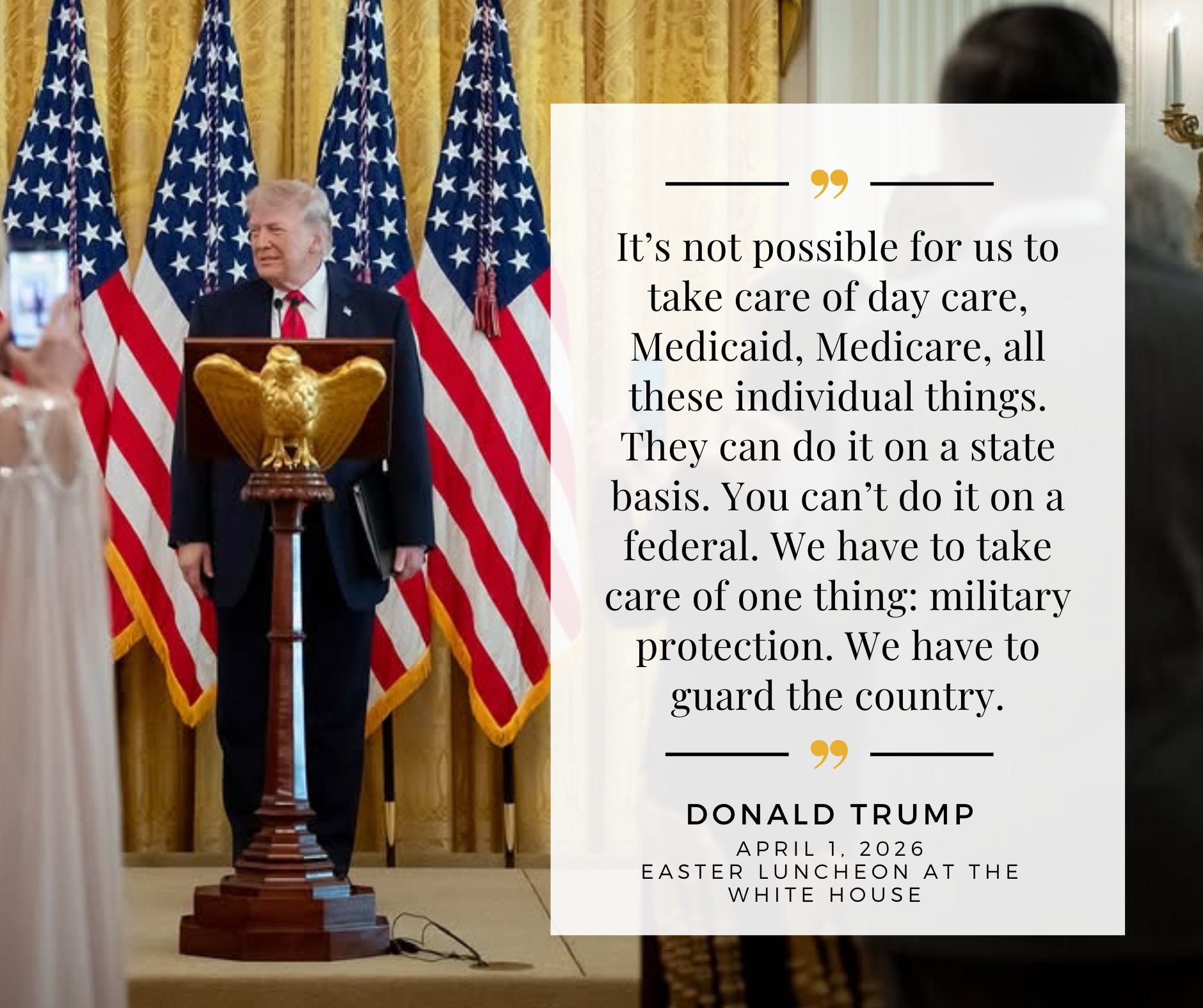
An off-the-cuff remark by President Trump during a luncheon last week at the White House has become a political talking point. It’s either a gaffe or a statement of priorities, depending on which cable news channel you were watching.
“We’re fighting wars. We can’t take care of daycare.”
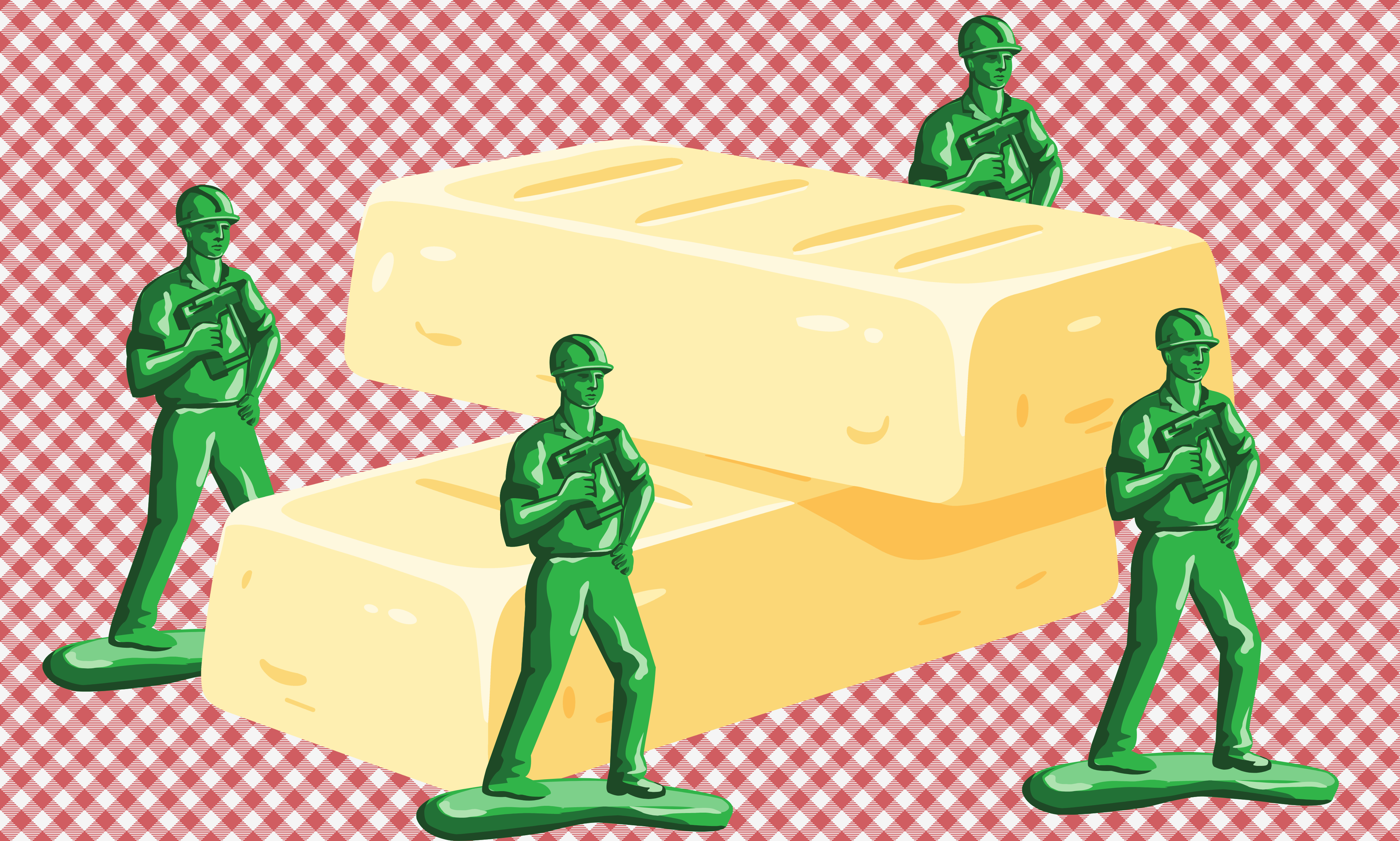
Those particular words are new to the moment, but the sentiment is not. The trade-off between military spending and civilian welfare has been a cornerstone of economic thinking for over a century, and politicians have been making this exact argument for nearly as long. Turns out that economists and political scientists have a name for this particular type of trade-off: “guns and butter.”
Where the Phrase Comes From
You’ll find some version of the guns-and-butter dilemma in almost every introductory economics textbook on the planet. It’s usually in the first couple of chapters, right next to a graph with a curved line on it. We’ll get to that graph later, but let’s see if we can figure out where this phrase came from.
One origin story traces back to the lead-up to World War I. Congress was deadlocked over where to build a facility to produce nitrate, one of those useful chemicals that can be used to make fertilizer or gunpowder. The National Defense Act of 1916 broke the impasse by directing the government to produce nitrates for fertilizer in peacetime and munitions in war. Guns or butter, built into the same factory.
But the phrase as we know it comes from a much darker place.
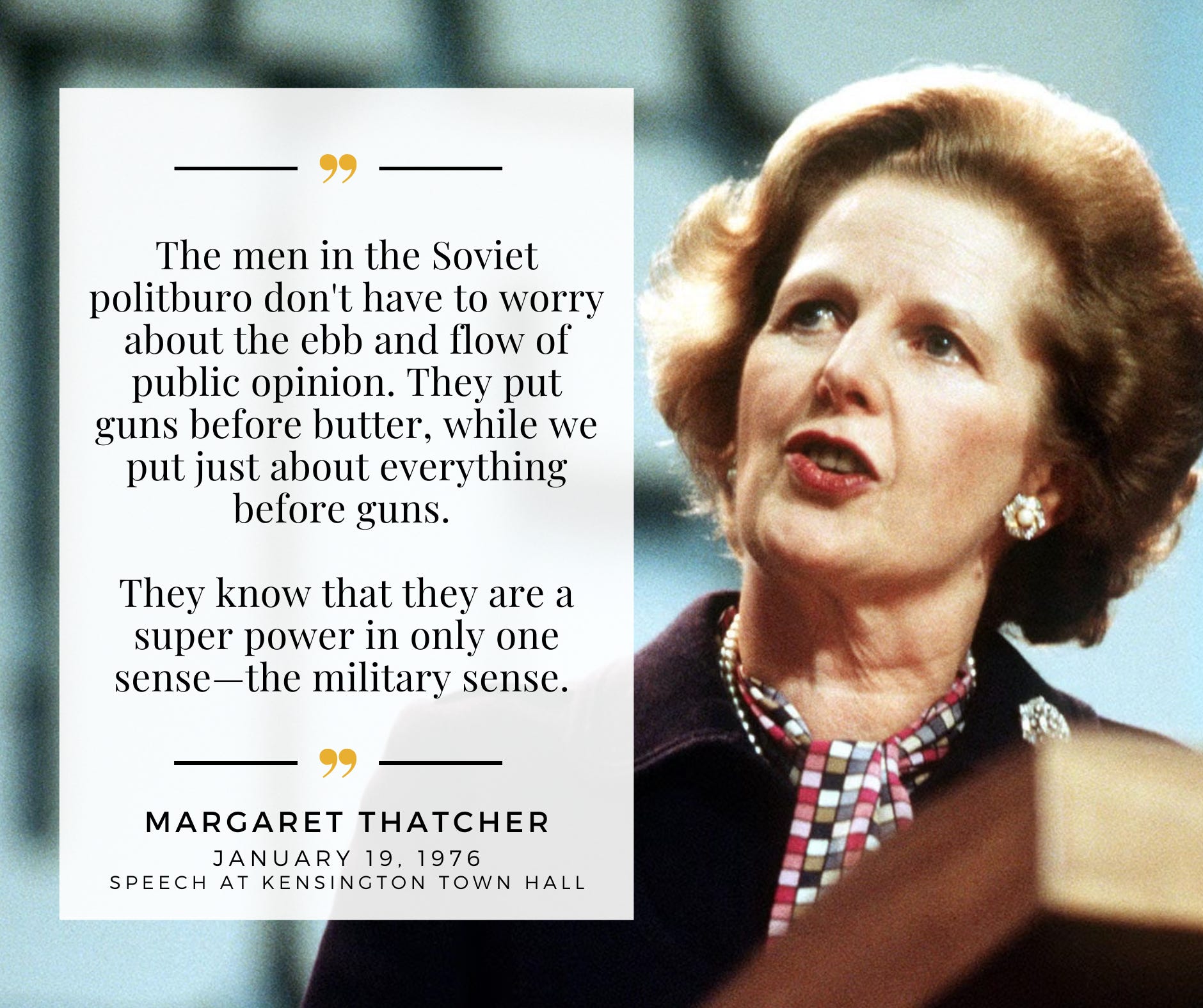
Germany, 1936. The Nazi regime is rearming at a staggering pace, and the economy is straining under the weight of it. On January 17th, Propaganda Minister Joseph Goebbels declared: “We can do without butter, but, despite all our love of peace, not without arms. One cannot shoot with butter, but with guns.” The phrase entered political language with a very specific meaning: military power matters more than civilian comfort. Full stop.
Fast forward a few decades, and Lyndon Johnson is staring down two enormous commitments at once. The first is an escalating war in Vietnam that saw hundreds of thousands of troops and billions of dollars flowing overseas. The second is the most ambitious domestic agenda in decades: the Great Society would eventually create Medicare, Medicaid, Head Start, and the War on Poverty.
What makes Johnson unique in our story is that he refused to choose. America was the richest country in the history of the world, and he believed it could do both. For a while, it actually worked. The economy was roaring, and Johnson was signing landmark legislation while simultaneously pouring resources into Vietnam.
But eventually, the bill comes due.
Johnson never raised taxes enough to pay for both commitments, so the government was flooding the economy with spending it couldn’t back up. Inflation started creeping upward, and then it started running away. The instability that followed would haunt the country for more than a decade: stagflation, oil shocks, and the miserable economy of the 1970s.
The lesson economists drew from this was brutal and clear: you can try to dodge the guns-or-butter trade-off, but you can’t dodge it forever.
The Graph That Explains Everything
Economists talk about this trade-off as though it were a fundamental law of the discipline. It turns out there’s a single diagram that explains why. It’s called the Production Possibilities Frontier.
Picture a graph. On one axis, you’ve got the guns that represent military spending. On the other, everything else: fertilizer for crops, Medicare, daycare. That’s your butter. Now draw a curve that bows outward, like the edge of a bowl. That curve represents every possible combination of guns and butter an economy can produce given its current set of workers, factories, and technology.
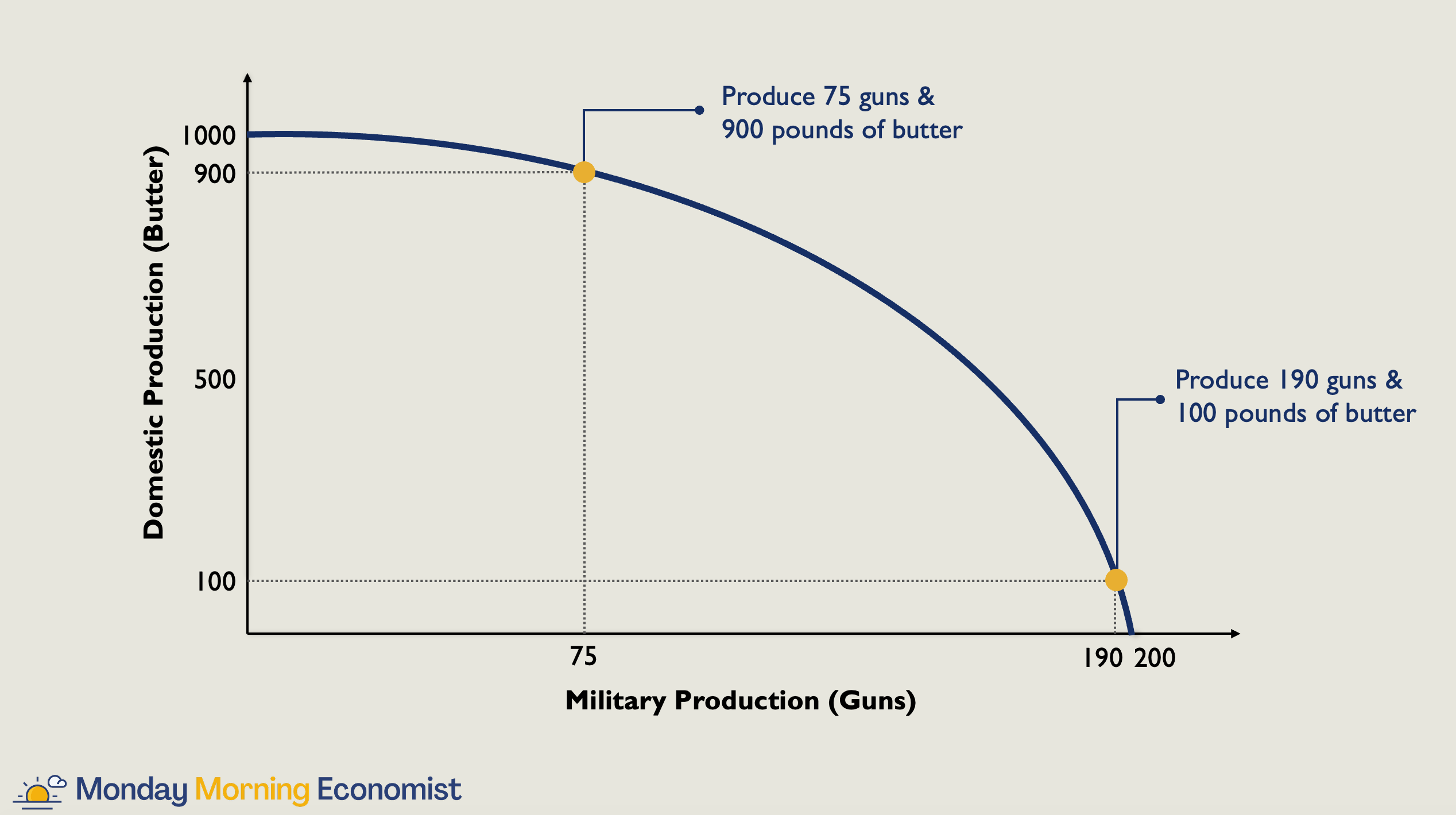
Dump all of a country’s resources into the military, and you’re at the far end of the guns axis. Maximum firepower, no daycare. Dump everything into civilian life, and you’re at the other end. No army, but great schools. Every real country sits somewhere in the middle, along that curve. And the core idea is this: if you’re on the curve, more of one means less of the other. Every dollar spent on a missile is a dollar that didn’t go to a preschool.
But look at the shape of that curve again. It’s not a straight line. Rather, it bows outward. And that’s telling you something else important about the country’s opportunity costs.
Suppose you’re a country that spends almost nothing on the military, and you decide to build your first army base. The workers you pull from the civilian economy are probably the least productive ones there anyway. Maybe you’re converting an underused factory. The cost, in terms of lost butter, is pretty low.
Now imagine you’re already spending massively on the military, and you want to spend even more. You’re pulling teachers out of classrooms, diverting steel from apartment buildings, and taking resources that were really good at making butter and forcing them to make guns. Each additional dollar costs you more and more civilian welfare. Economists call this increasing opportunity costs, and it’s why the trade-off gets more painful the further you push a country toward the endpoints.
Oh, The Places You Can Be
There’s one more thing about the graph worth knowing, because it does influence how the debate is played out. An economy can actually sit in one of three places relative to its frontier.
On the curve is where the hardest trade-offs live. You’re using all your resources, so every choice involves a sacrifice.
Inside the curve means you’re not using all your resources. You have high unemployment or waste in the system. If you’re here, you might get more guns and more butter just by putting existing resources to better use.
Outside the curve isn’t possible on your own unless you do something to grow the economy. That means new technology, more workers, or better infrastructure. This is the argument Johnson was making in the 1960s: America is so productive that the frontier is big enough for everything. He wasn’t wrong about the frontier being large, but even a very large frontier still has a boundary.
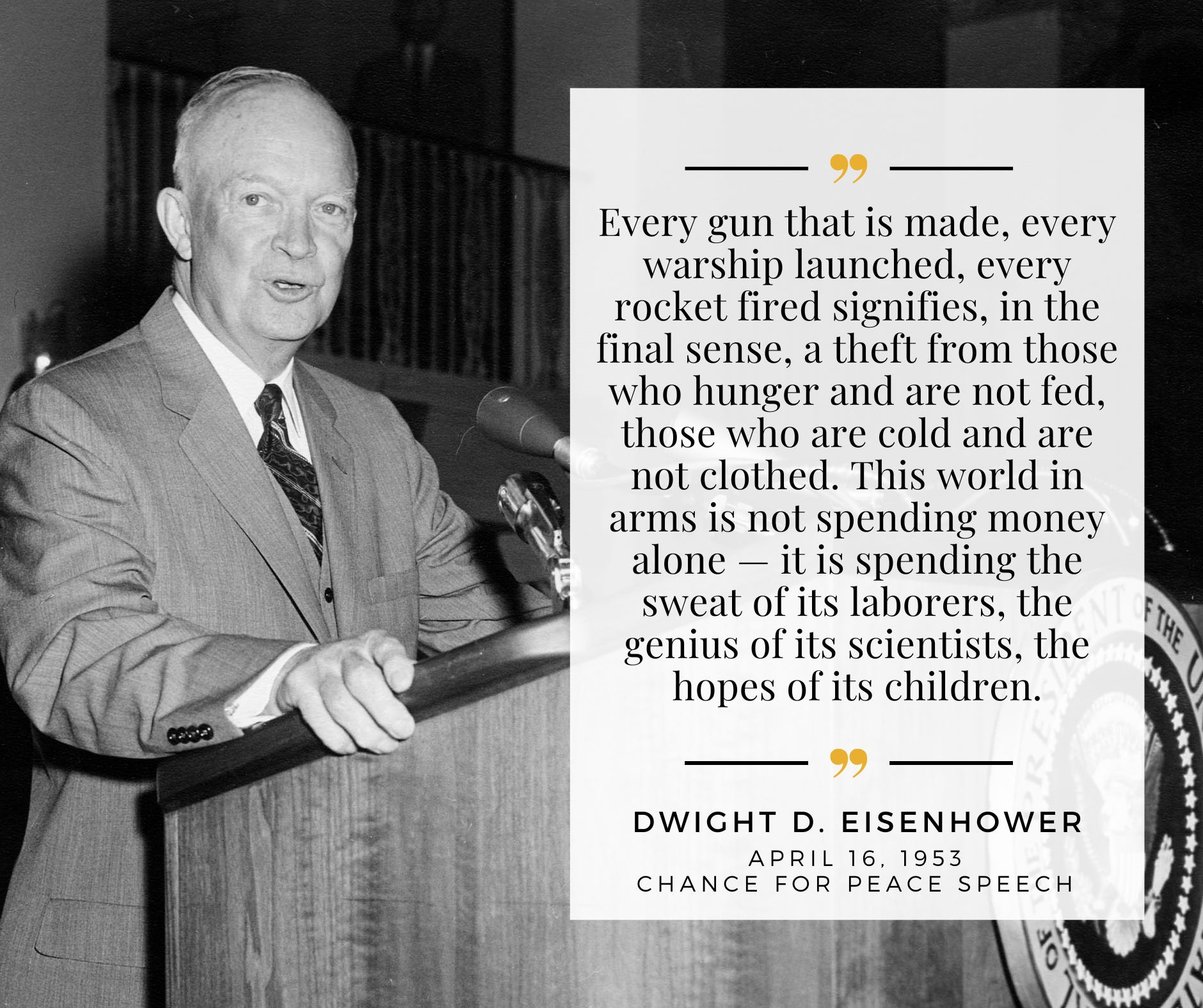
“Guns or butter” isn’t really about guns or butter. It’s about the fact that resources are finite, choices have costs, and those costs are real even when politicians pretend they aren’t.
Final Thoughts
When Trump told his guests that the country can’t afford daycare because it’s fighting wars, he was making the most explicit guns-over-butter argument from an American president in several decades. He wasn’t trying to have both, like LBJ. He was picking a side. But if his remarks caught people off guard, it might be because his own administration made the opposite argument just days earlier.
Just a few days before Trump’s remarks, Secretary of State Marco Rubio went on television and lectured Iran about how much better off its people would be if the government stopped wasting its resources on weapons and invested in civilian welfare instead. Rubio was making a guns-and-butter argument about Iran at the same moment his own president was making the identical choice in the opposite direction. The irony was, to borrow a phrase, almost childishly obvious.
Unfortunately, the trade-off is about to get very real. Congress is weighing cuts to federal health spending to help fund the Pentagon’s proposed $200 billion war expenditure, even though polling shows a majority of Americans would rather see that funding go toward domestic social programs. Gas is above $4 a gallon. Oil is past $100 a barrel. Lawmakers will soon need to decide how far along the curve toward guns are we willing to slide, and what butter are we willing to give up to get there?
The answer will be measured in daycare subsidies, Medicare funding, and Medicaid coverage. As one congressman has already put it, the money spent on just a few weeks of the war could fund child care support for every American family. Whether you agree with that framing or not, it’s a textbook illustration of opportunity cost. The money exists, but it can’t be in two places at once.
Know someone who’d want to understand the economics behind the headlines? Share this article and help them see the trade-offs hiding in plain sight. And if you’re not already subscribed to Monday Morning Economists, sign up so you never miss an edition.
Rearmament was responsible for the bulk of economic growth in Nazi Germany between 1933 and 1938, creating millions of jobs for German workers [BBC]
LBJ’s increased government spending increased the national debt by 13%, almost double the amount added by JFK, but less than a third of the debt added by President Nixon [The Balance]
A 71% majority says they’d oppose Congress authorizing spending $200 billion to fund further US military action in Iran, as the Pentagon has proposed [CNN]
67% of Americans and 36% of Republicans said Americans should not be willing to pay more for gas during the war [CBS News]
LBJ thought he could do both, and raised national debt by 13%. You seem to imply that kicked off inflation, yet it was Nixon that raised the debt by multiples of LBJ
This is a great, real-life application of the PPF! It's so interesting to see basic economic concepts appearing on the world stage.