


You’re reading Monday Morning Economist, a free weekly newsletter that explores the economics behind pop culture and current events. Each issue reaches thousands of readers who want to understand the world a little differently. If you enjoy this post, you can support the newsletter by sharing it or by becoming a paid subscriber to help it grow:
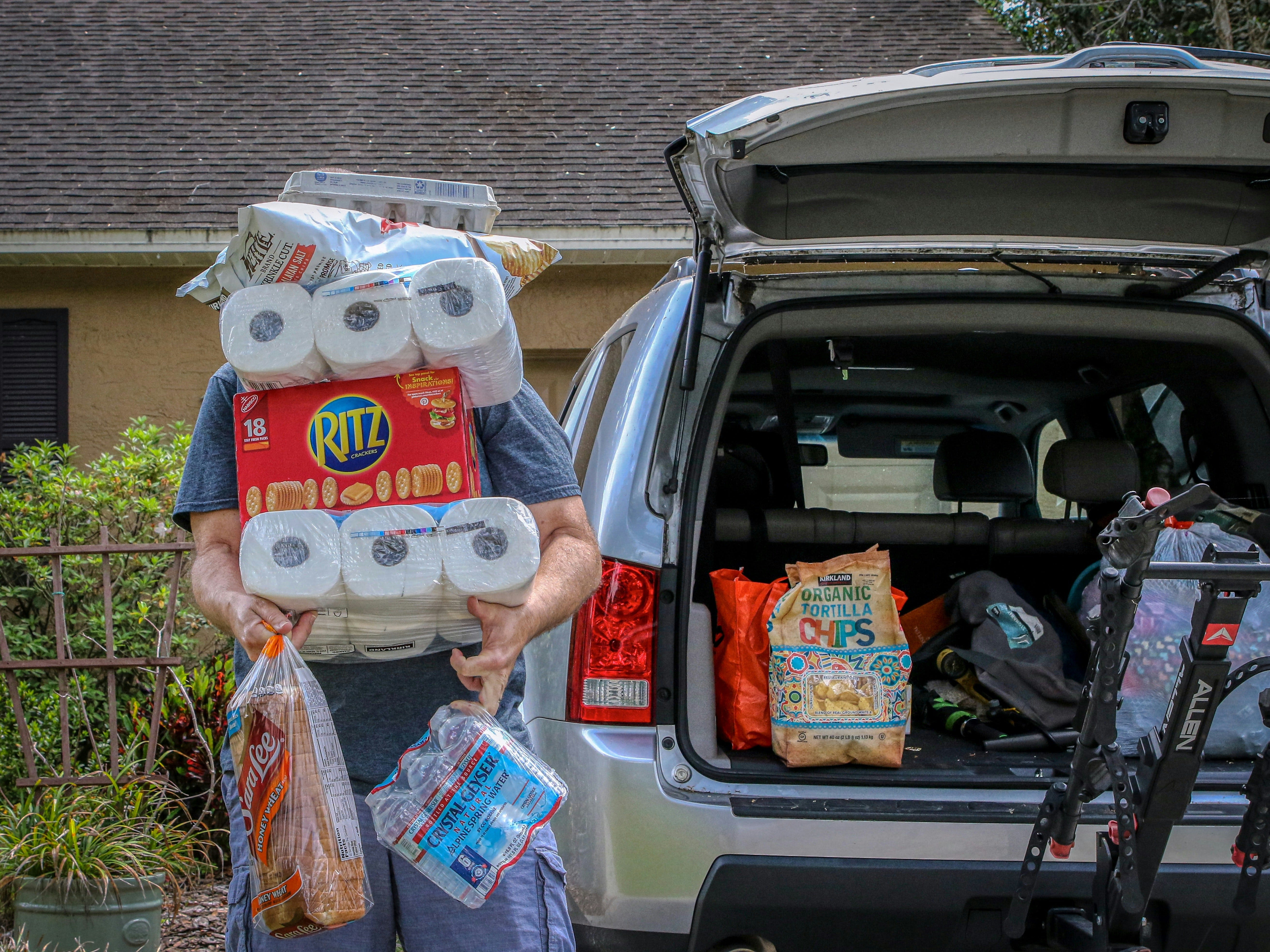
On any given Tuesday in America, a man is standing in a grocery store aisle holding a can of tomato sauce, texting his wife to ask if it’s the right one. She’s busy, so he buys two cans just to be safe.
It’s a small thing. A little expensive, maybe a little funny. But multiply it across thousands of households each day and several other items in the cart, and it starts to look less like a domestic comedy and more like an economics problem.
Every household runs on a quiet division of labor. One person takes out the trash when the bag is full. Someone else handles the laundry. And one person, usually the same person each week, knows exactly which brand of pasta sauce is never on sale. That last skill is easy to overlook, and surprisingly hard to replace.
When the pandemic pushed millions of workers into their homes, it reshuffled a lot of that division. A team of economists set out to track what happened to household spending when remote work rearranged who was doing the shopping. Their findings go well beyond a funny TikTok moment in that grocery aisle. The real story is an economics lesson about what it costs to lose an expert.
Shopping is a skill, not a chore
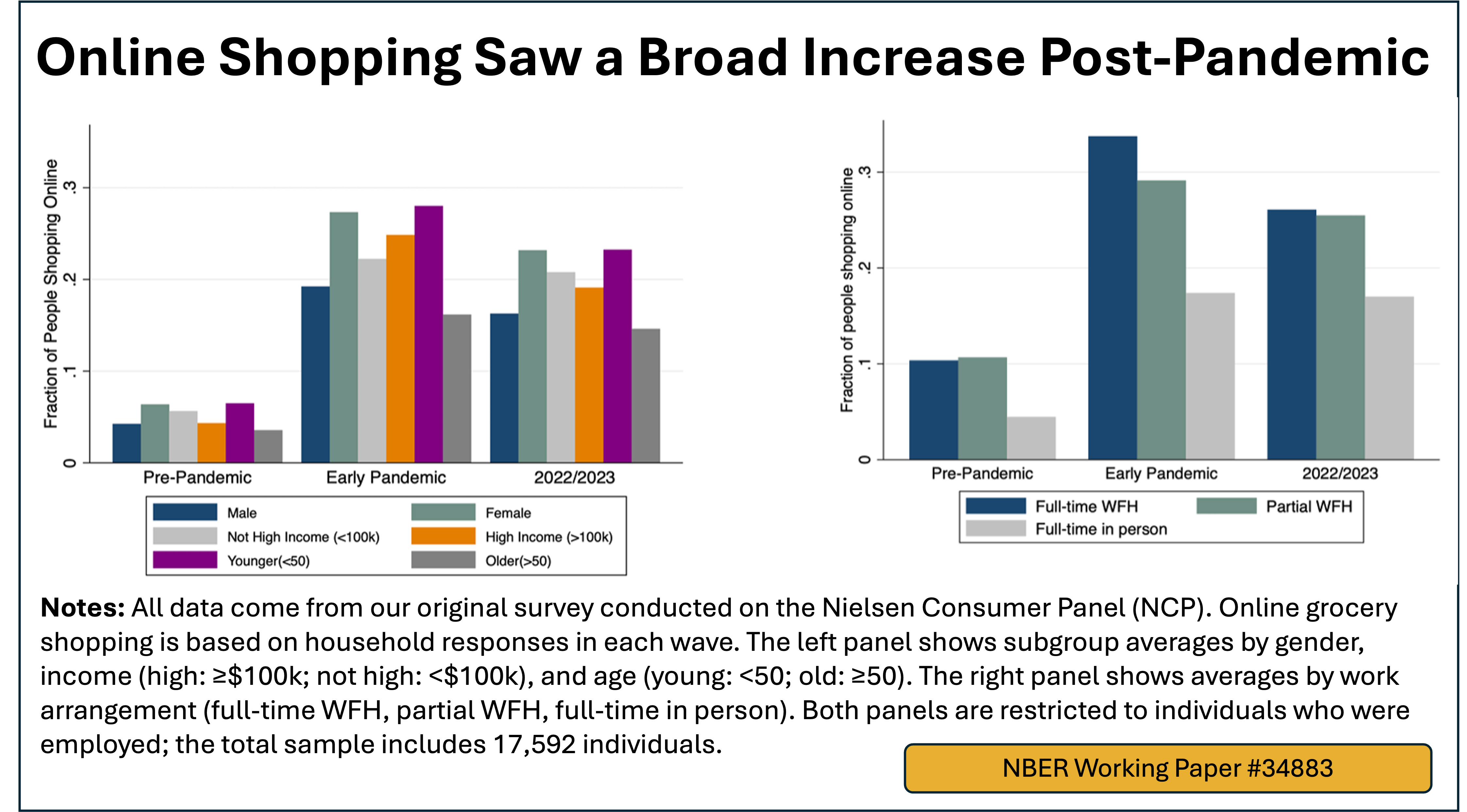
Scott Baker, Nicholas Bloom, Stephanie Johnson, and Jana Obradović tracked household spending before and after workers shifted to remote work based on the premise that people working from home are more likely to take on shopping duties. When a less-experienced household member started doing more of the shopping, the family paid meaningfully more for the same products because of how those new shoppers approached the task.
Three mechanisms drove the difference. First, experienced shoppers make heavy use of promotions and deal purchases, but inexperienced shoppers largely miss those and end up paying closer to full price more often. Second, the new shoppers took more trips but spent less time per trip, leaving little room to browse, compare, or notice that a different brand is cheaper. Third, they drifted toward pricier or more convenient products. When you’re uncertain what the “right” choice is, you default to whatever looks familiar or premium.
What these three patterns have in common is price elasticity, a measure of how sensitive shoppers are to price differences. Experienced shoppers tend to be price-elastic and notice price differences. They respond by switching brands, waiting for a sale, or driving to a different store if the savings justify it
Inexperienced shoppers largely don’t because they tend to be price-inelastic. They tend to reach for the familiar option and move on. Retailers love price-inelastic customers. Household budgets do not.
Where price sensitivity comes from
But what makes someone price-elastic in the first place? This is where another economic concept earns its place in the story: human capital. This is a measure of the skills and knowledge built up through repeated practice that make you more productive at a task.
The experienced shopper carries a mental price index. They know roughly what things should cost, which stores run the best deals on which items, and when to wait for a sale versus when to just grab what you need. They navigate sales cycles, clip coupons, and instinctively comparison-shop across brands. These skills were built over years of doing the same task, week after week.
That accumulated knowledge is precisely what makes them price-elastic. They can respond to price differences because they can see price differences. The new shopper simply hasn’t built that index yet, and the experienced shopper can’t transfer that human capital. The new shopper starts from scratch. The researchers found that when a man switches to remote work (and, in turn, takes on more shopping duties), the family spends about 5% more on similar products.
Those price increases aren’t just a temporary bump up while the new shopper learns the ropes. The research found it to be persistent. That takes us to another concept worth considering: search costs. That’s a measure of the time, energy, and information required to find the best price for something. An experienced shopper has already paid most of those costs. They know where the deals are without having to look. An inexperienced shopper has to pay for them fresh every trip. Perhaps more importantly, they often don’t know what they don’t know. After all, you can’t search for a deal you don’t realize exists.
Final Thoughts
It turns out that price-inelastic shopping tends to be self-reinforcing. Without a baseline sense of what things should cost, there’s no obvious signal that you’re overpaying. The tomato sauce goes in the cart. The bill is a little higher than it used to be. But nothing in the experience tells you why or what to do about it.
But there is something also fundamental about how markets work buried in this research. Prices in a grocery store are not fixed. They vary by brand, by store, by week, and by whether you’re paying attention. Navigating that complexity efficiently requires information, and information takes time and effort to acquire.
Remote work created a large, natural experiment in what happens when shopping expertise gets redistributed inside households. The answer is that price sensitivity doesn’t travel with the grocery list. It stays with the person who built it.
Inexperience has a price. It’s just usually someone else who pays it.
If you know someone who has ever texted their partner a photo of a tomato sauce label asking “is this the one?”, they need this newsletter. Send it their way. If you’re reading this secondhand, subscribe here so you never miss an issue:

59% of Americans who live with other people say they are very or somewhat satisfied with the current division of tasks in their household [YouGov]
Moms spend an average of 68 minutes per day on meal preparation, vs. 23 minutes for dads [Pew Research Center]
Remote workers are 25% more likely to order groceries online at least once weekly, while hybrid workers are 31% more likely to do so [Grocery Dive]
More than 25% of US adults are using more coupons because of the state of the economy, up from 18% in mid-2021 [Morning Brew]
I notice the YouGov poll asks about who does what, and who enjoys what, but not whether the respondents even cared about that particular chore getting done at all. "Women do more dusting" is meaningless if they're the only ones who care about dust.
I spend a fair bit of my time in an apartment where I'm responsible for the household tasks. I'm not super-efficient because I place a high value on my time (which I then spend writing Substack comments). With online shopping, it's pretty easy to check for specials.
But you have to be careful even then. The big supermarkets here in Oz are in a lot of trouble because of a sneaky way of raising prices they have long adopted. When they know an increase is coming, they jack the prices up a lot (the canny shoppers notice and stop buying) wait a prescribed time like 30 days, then partially roll back the increase and advertise "Down, down!". I have some more thoughts on this here https://www.theguardian.com/business/commentisfree/2026/feb/19/coles-shameless-down-down-promotions-have-been-exposed-so-why-arent-they-even-trying-to-rebuilt-trust