


You’re reading Monday Morning Economist, a free weekly newsletter that explores the economics behind pop culture and current events. Each issue reaches thousands of readers who want to understand the world a little differently. If you enjoy this post, you can support the newsletter by sharing it or by becoming a paid subscriber to help it grow:
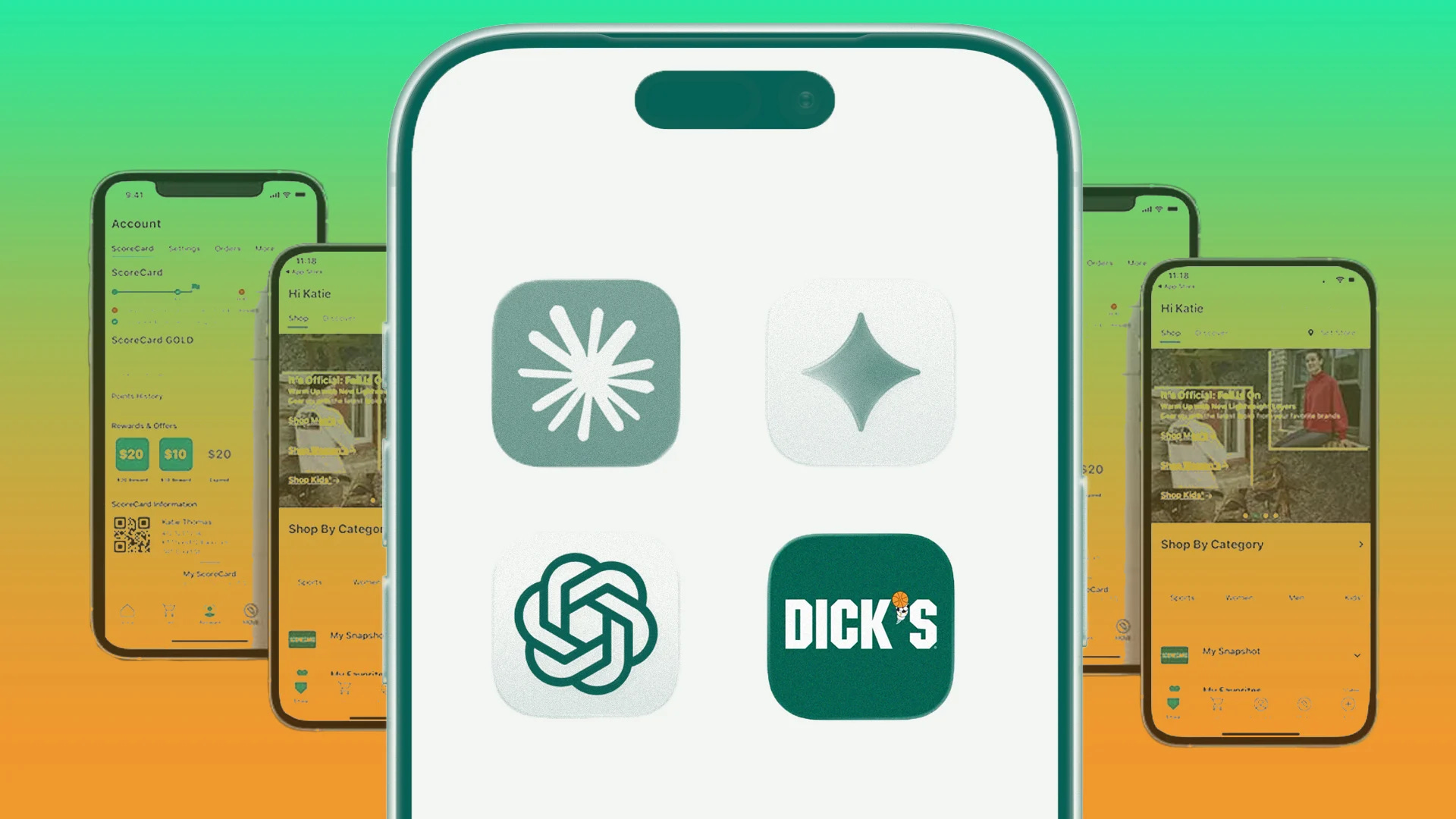
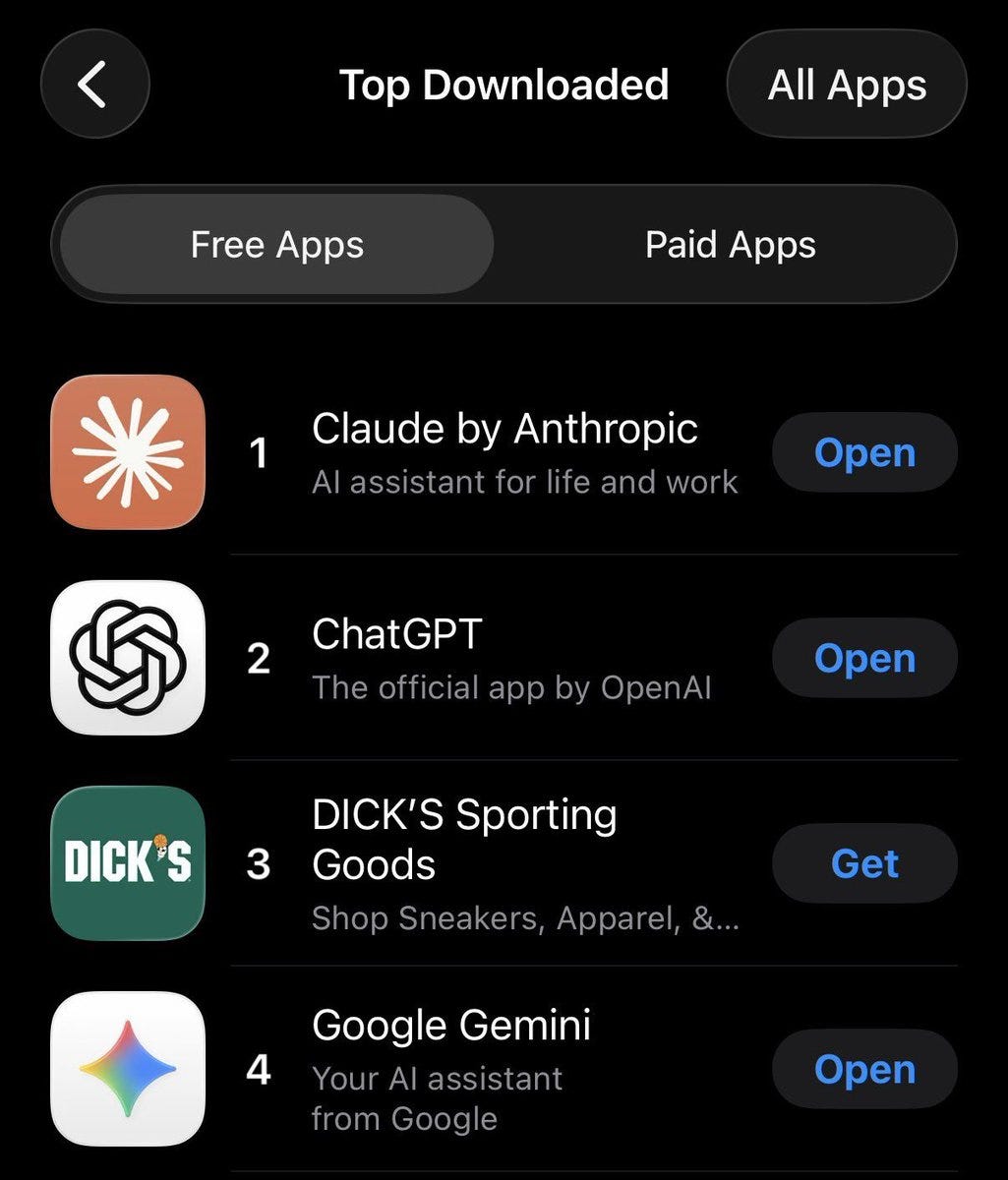
Last week, something unexpected showed up at the top of Apple’s App Store. Anthropic’s AI assistant, Claude, made it to the top spot following its coverage all over the news. ChatGPT was right behind it at No. 2. Google’s Gemini at No. 4. Some of the most sophisticated software ever built. We’re talking billions of dollars and thousands of engineers. The cutting edge of artificial intelligence.
And sandwiched between them, sitting at No. 3, was the Dick’s Sporting Goods app.
Yes. That Dick’s. The one at the mall.
What was going on?
An App That Pays You to Walk
Dick’s didn’t build a better app than OpenAI. They didn’t invent some breakthrough feature. What they did was offer people something simple: a small, reliable reward for going for a walk.
Buried inside the Dick’s app is a feature called Move. Connect your fitness tracker, and the app starts watching your activity. Hit 10,000 steps in a day, walk three miles, or get 30 minutes of exercise, and you earn three points. Stack up 300 points, and Dick’s will deliver a $10 reward for you to spend in their store.
Do the math, and it comes out to roughly ten cents a day.
Ten cents.
And yet thousands of people downloaded the app specifically for this. Social media lit up with posts about it. People who hadn’t thought about Dick’s Sporting Goods in years suddenly had a reason to download the app.
Ten Cents and the Psychology of Almost
Economists generally sort incentives into three buckets. There are financial incentives, like money, discounts, and rewards. There are social incentives that involve reputation, belonging, and what other people think of you. And there are moral incentives. These rely on an internal sense of doing the right thing. Dick’s isn’t appealing to your conscience or your social circle. They’re going straight for your wallet.
But here’s the thing: the Move program is offering something more subtle than just ten cents a day.
Consider someone who already walks 10,000 steps each day. For them, syncing their fitness tracker feels like finding money in an old pants pocket. They haven’t changed anything about their life. They’re just... collecting a reward they’d been leaving on the table.
And for someone close but not quite hitting their goals, the app creates a visible finish line. You can see your points accumulating. You can see how far you are from $10. This incentive provides a nudge for people right on the edge of their daily goals. Someone who logged 9,200 steps at work might take a quick loop around the neighborhood when they get home to hit 10,000. They’re not doing it because it was good for their health, but rather it was good for their wallet.
The Hurdle is the Point
Consider what this surge in popularity means for Dick’s. Most retail apps have the same problem: nobody opens them. You download one to use a coupon once, and then it sits on your phone for two years collecting digital dust. The Move program gives people a reason to open the app every day to keep an eye on their progress.
And every time someone checks in, they see products and promotions. They’re reminded that the store exists, even if it’s been a while since their last trip to the mall.
But the bigger payoff comes when a user finally hits 300 points and earns their $10 reward. This milestone sends a signal to Dick’s about what kind of customer they have on the app. It’s one who has put in 100 days of activity to get to this point, and they now have money to spend.
What Dick’s is doing has a name in economics: second-degree price discrimination. It sounds complicated, but the idea is simple. Instead of charging everyone the same price, the company creates a hurdle. Customers willing to clear the hurdle by connecting their tracker and logging their exercise to collect points get an effective discount. Everyone else pays full price.
The hurdle is everywhere once you start looking for it. It’s the coupon you have to clip. The rebate you have to mail in. The loyalty card you have to remember to scan. Companies make the process difficult by designed so that only certain customers will bother to claim the reward.
And those are exactly the customers Dick’s wants to know about. Someone who tracks their steps to earn the reward has revealed that they’re engaged, they’re active, and they respond to discounts. They’re the exact customers a sporting goods store most wants to know about.
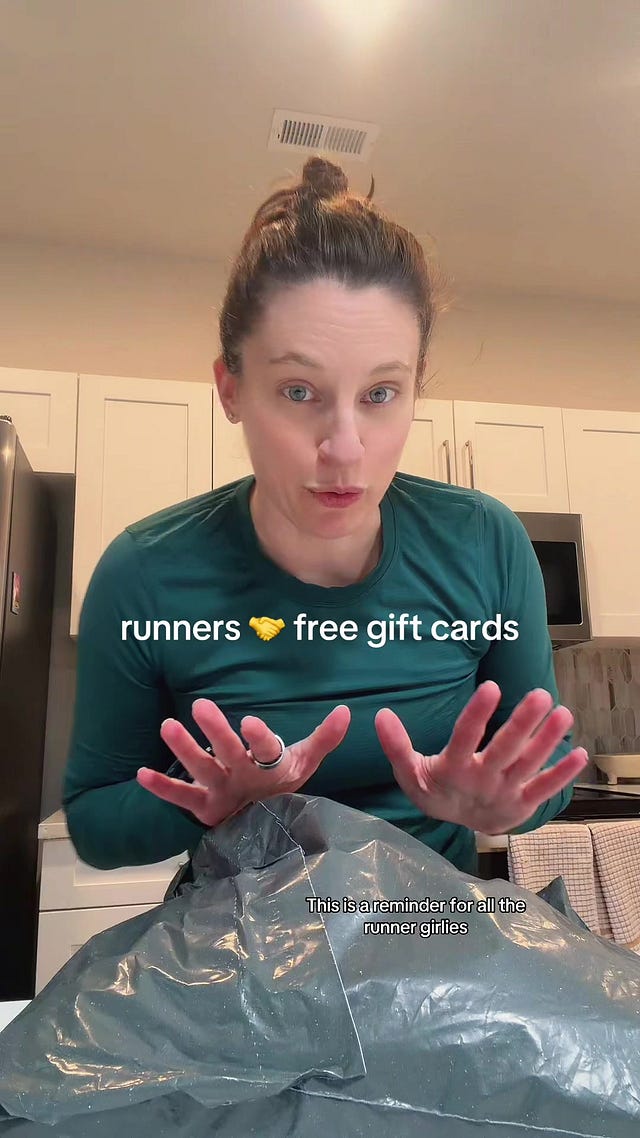
 Tiktok failed to load.
Enable 3rd party cookies or use another browser
Final Thoughts
Step back for a moment and look at what actually happened here. The companies at No. 1, No. 2, and No. 4 are racing to build artificial general intelligence. They are attempting to replicate human cognition in software. The resources involved are staggering.
Dick’s Sporting Goods was right there with them for a few days because they asked a much simpler question: What if we just paid people a little bit to go for a walk?
The AI revolution is real. But this story is a reminder that the oldest forces in economics haven’t lost their power in the economy, or anywhere else.
Sometimes, ten cents is enough.
If you enjoyed this breakdown, consider sharing it with a friend or family member. Economics often shows up in unexpected places, and sometimes the best examples come from something as simple as a walk around the block.
Dick’s Sporting Goods operates more than 850 stores across its various banners, including DICK’S Sporting Goods, Golf Galaxy, Public Lands, and Going Going Gone! [National Golf Foundation]
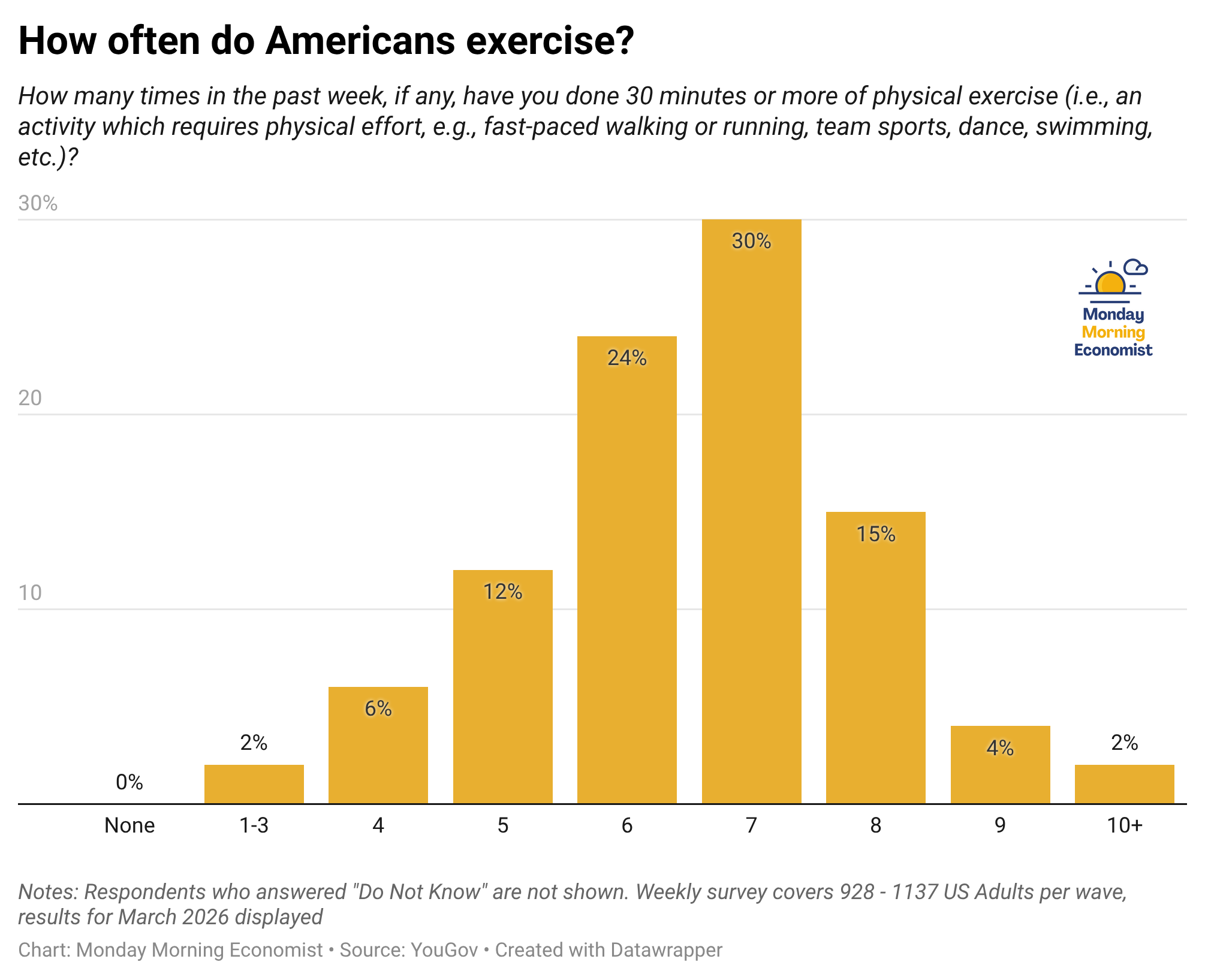
In Britain and the US, for example, three in ten (30%) say they exercise 1-3 times a week, next to a quarter in Germany (24%), a third in France (35%), and two in five people in Hong Kong (42%) and the UAE (39%) [YouGov]
In an experiment designed to get people already going to the gym to go more regularly, the top intervention offered small rewards for returning to the gym after missed workouts [NBC News]
37% of Americans haven’t visited a shopping mall in at least a year [YouGov]
Now I'm curious to see what kind of promotional app Dick's Last Resort will gin up
Steve is doing this every single day! Just told him to sign up. Forty easy dollars per year. Thanks again for the pearls of information you regularly throw out there. I truly enjoy economics because of you Jadrian!