



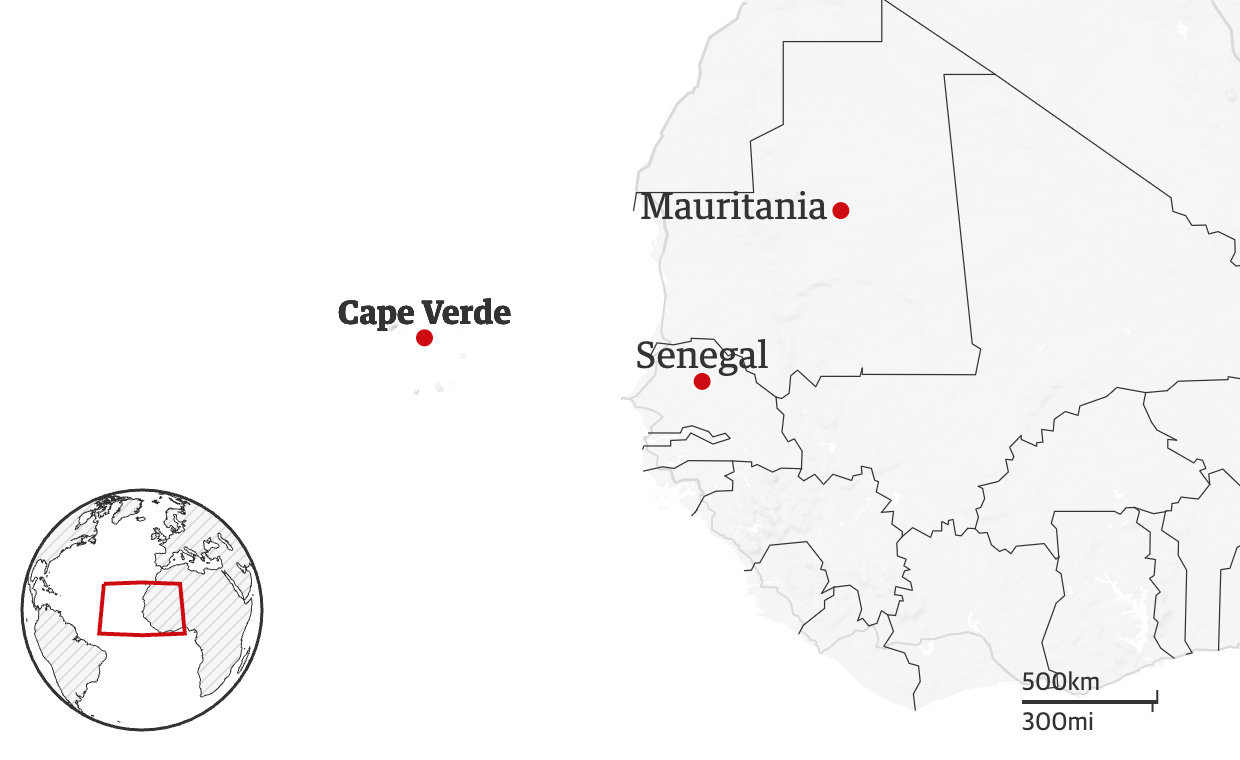
Cabo Verde has emerged as the undeniable darling of the 2026 FIFA World Cup. Africa’s third-smallest country has a population of roughly 530,000, which is about the same size as the Lexington, Kentucky metro area. The Blue Sharks have already pulled off a stunning draw against reigning European champions Spain in their World Cup debut, then drew this past weekend against Uruguay.
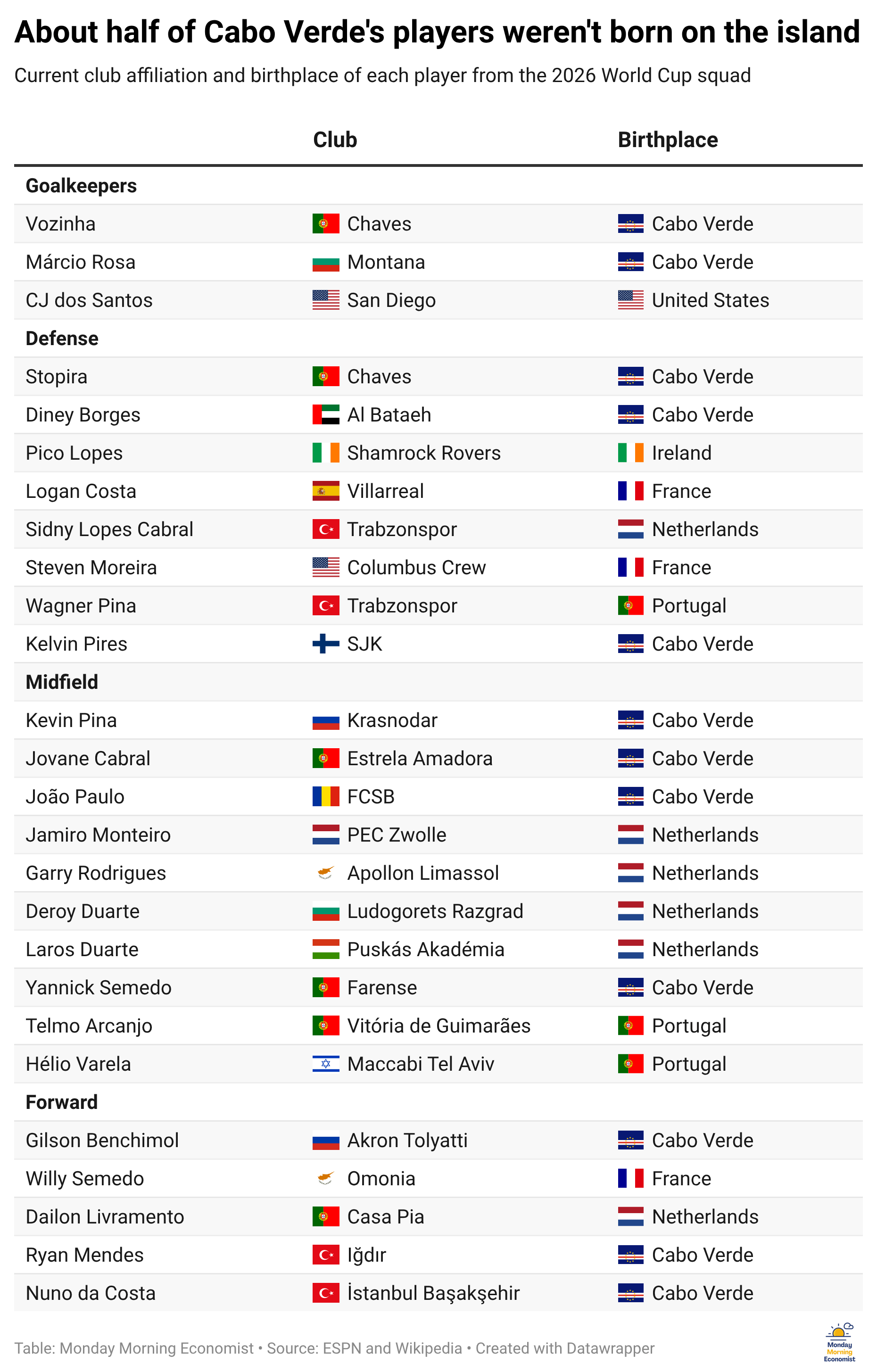
Nearly half of this squad grew up somewhere other than the island, but it’s not like they’re mercenaries sent to fill out one of the tournament’s lowest-ranked rosters. They have genuine African heritage. They were born to families who carried Cabo Verde with them to Europe and North America, but they were shaped by some of the most sophisticated football systems ever built. And now they represent an island most fans couldn’t find on a map.
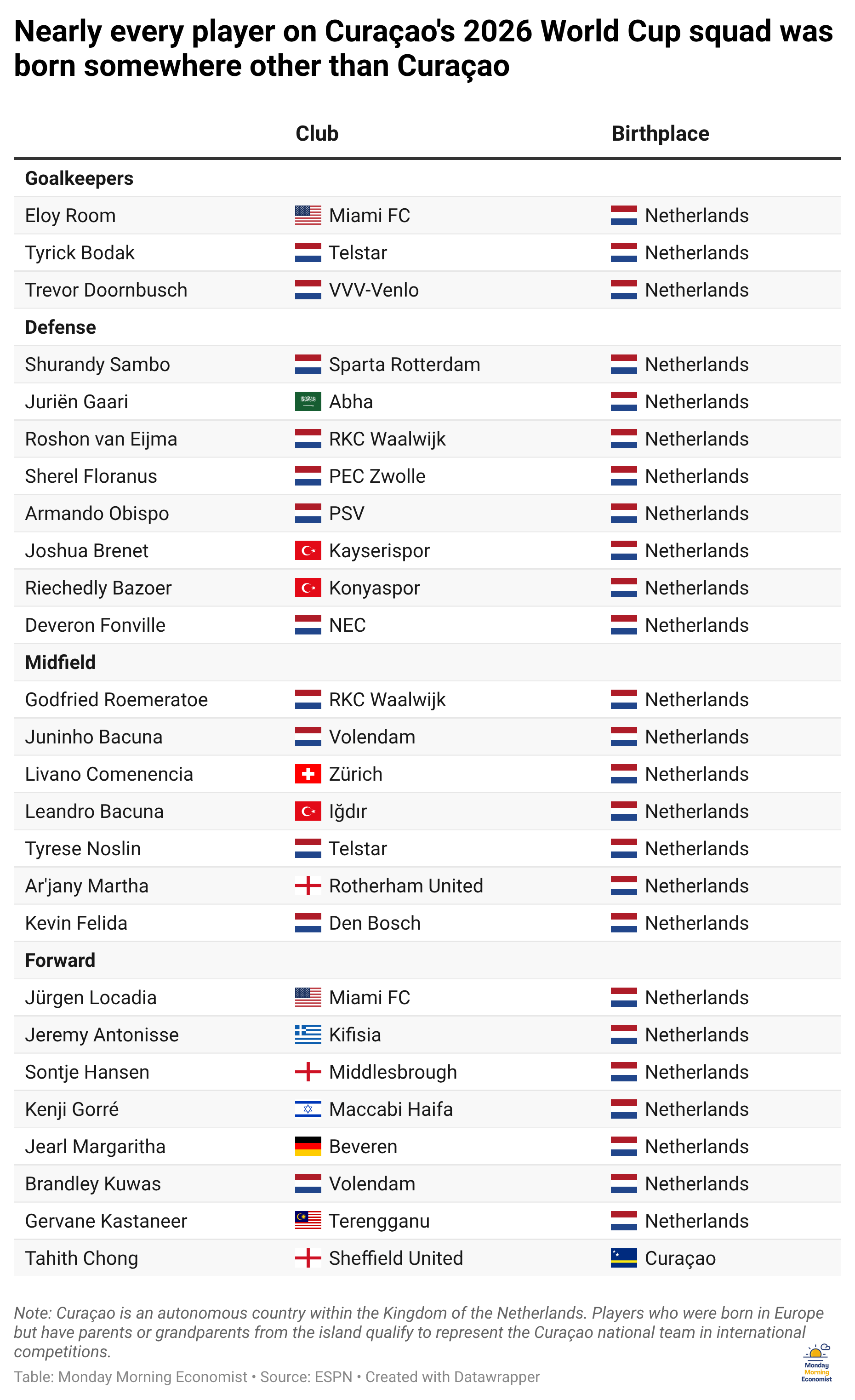
Cabo Verde is the story everyone is watching, but they aren’t the most extreme example of this phenomenon at the tournament. That title actually belongs to Curaçao, a Dutch Caribbean island of roughly 150,000 people. Of their 26-man World Cup squad, 25 were born and raised in the Netherlands. One player was born on the island itself.
It might look like a quirk of FIFA paperwork, but it’s actually one of the clearest illustrations you’ll ever find of what happens when labor is allowed to flow freely.
The Rules That Made This Possible
At their core, FIFA’s eligibility rules are a mechanism for labor mobility, albeit a carefully regulated one. This isn’t a free-for-all where players shop for whichever passport suits them best. A player can only represent a country based on where they were born, where a parent or grandparent was born, or where they grew up. The details can get complicated fast, but the underlying principle is simple: there has to be a genuine connection.
Players are allowed to switch their affiliation, but there are limits there too. A youth player who represents one country isn’t automatically locked in, but a player who appears in a senior competitive match is. Play in a World Cup or continental championship, and that’s your nation.
Still, the rules allow young players real movement beyond where they were born. Many have genuine options based on a European upbringing, an African grandparent, a Caribbean parent. Coaches of smaller nations actively recruit through lineage, making the case that a player’s heritage is worth representing on the world stage.
For players with African heritage living in Europe, that creates a real choice: wait indefinitely for a call-up to one of the most competitive national squads in football, or represent the country your family comes from. Many choose heritage, and from a purely economic standpoint, that makes complete sense.
Take France, for example, which produces an extraordinary surplus of elite football talent. In this year’s tournament, seventy-five players were born in France but are representing other nations. Its academy system generates more professional-caliber players than any single team can absorb. The same is true, to varying degrees, for the Netherlands, Germany, and England. When the supply of labor vastly exceeds demand in one place, economics predicts that the surplus flows elsewhere.
A Concept Called Allocative Efficiency
Economists have a name for what’s happening here: allocative efficiency. It’s what occurs when resources like labor flow to where they are most valued, increasing total output in the process.
That last part is the key. Allocative efficiency isn’t just about fairness or opportunity. Rather, it focuses on production. When talent sits in the wrong place, total output suffers. When it flows to where it’s most valued, output rises. In a factory, that’s a physical product. At the World Cup, it’s the quality of the matches themselves.
This year’s tournament features 104 games regardless of whether the teams are evenly matched or hopelessly outclassed. The schedule is fixed, but labor mobility changes what happens on the pitch. A Cabo Verde squad built from players developed in top European academies, who play their club football across Portugal, France, and the Netherlands, produces a different game than one fielded entirely from a domestic league on an island of half a million people.
It’s worth noting that the fact that these players are scattered across clubs throughout Europe is itself evidence of the same mechanism. Football’s global transfer market is incredibly efficient, pulling talent toward the clubs that value it most regardless of borders. When that same talent flows into a Cabo Verde shirt, it doesn’t just benefit Cabo Verde. It benefits everyone watching.
From the Pitch to the Broader Economy
Imagine a defender with Cabo Verdean heritage, developed in European academies and skilled enough to earn a professional contract. He trains every day for the French youth squads, hoping for a call-up to the senior team. He plays sporadically, but never earns a competitive senior minute.
Now picture the same player in a Cabo Verde shirt, starting in a World Cup match against Spain, holding a 0-0 draw in front of a global audience. It’s the same player with the same talent, but a completely different output.
That’s the labor mobility story in its most vivid form, but it isn’t confined to a soccer field. Somewhere out there is a talented, well-trained computer engineer born and raised in Omaha, Nebraska. There are jobs in Omaha, but the labor market is thin. The companies that need her specific skills most are clustered in Silicon Valley or Boston. The moment she moves to where her skills are most valued, output rises: for her, for the company that hires her, and for the colleagues she works alongside.
That mechanism is identical to the defender’s. Talent in the wrong place produces less than talent in the right place. When labor can move, that gap closes.
Final Thoughts
Labor mobility is not a frictionless topic. Brain drain is a legitimate economic concern, and plenty of sports fans have strong opinions about what national identity in football should mean. These tensions are real, and one article isn’t going to resolve them. What the economics does show is the underlying mechanism: when labor can move toward where it’s most valued, allocative efficiency improves and total output rises. What any given society decides to do with that knowledge is its own, separate conversation.
Cabo Verde is a small, unusually visible example of something economists have studied for decades. An island that cannot build the academies or develop the infrastructure that elite football requires is still competing on the world’s biggest sporting stage thanks to a policy that allows talent to flow to where it is most valued.
Know someone who’s been watching Cabo Verde and doesn’t know why they’re so good? Now you do. Send this their way.

23% of players at this year’s World Cup are playing for nations where they weren’t born [Viz Laurai]
Eight of the 48 squads are made up of 50% or more foreign-born players [Yahoo! Sport]
Three Italian-born players are on 2026 World Cup rosters, despite the soccer powerhouse failing to qualify [USA Today]
As of 2023, Mexico (9,464), Spain (8,560), and England (5,582) produced the most professional male footballers across the world [FIFA]
More than 130 FIFA member nations have never qualified for the Men’s FIFA World Cup, but the most notable include Venezuela (the highest-ranked CONMEBOL team to never qualify), India (the world’s most populous nation), Finland, and Malaysia [Sporting News]