


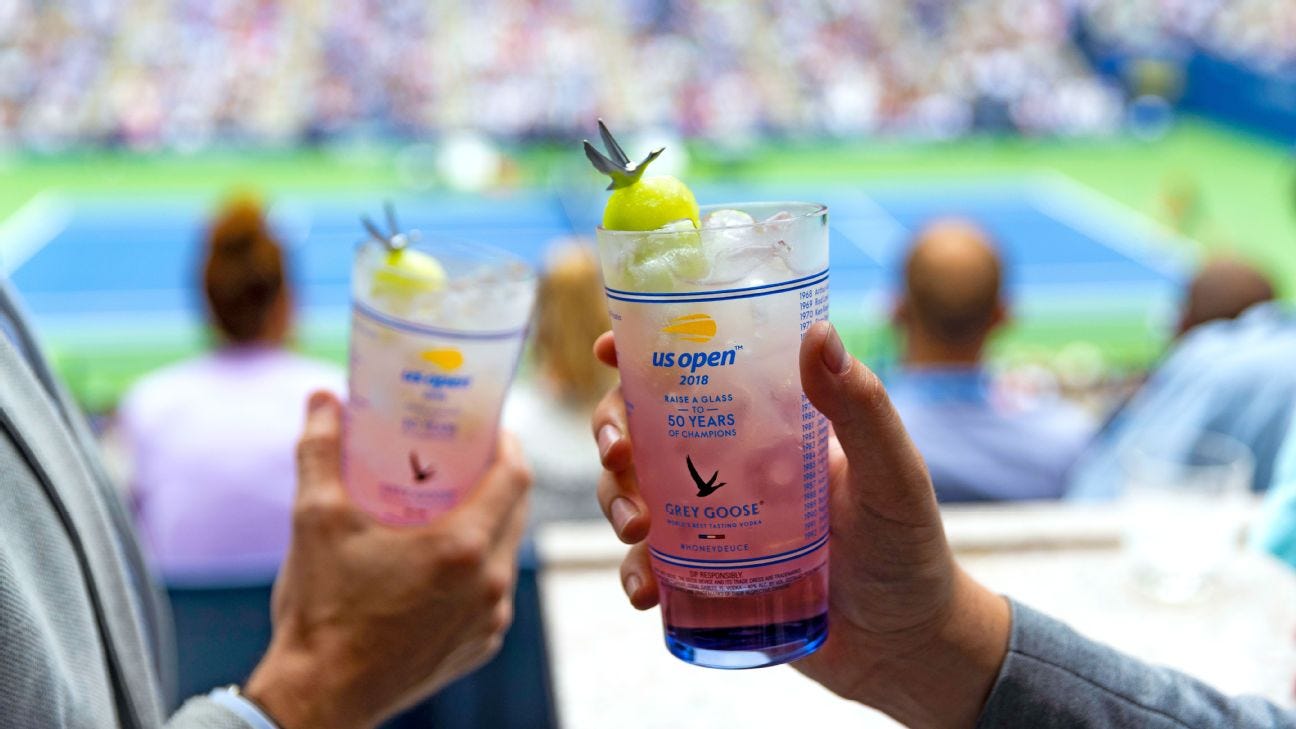
The US Open is officially over, which means my feed will be free of Honey Deuce cups for another year. Elena Rybakina and Alexander Zverev will go down as this year’s champions, but they weren’t the only big winners. The tournament’s famous cocktail had a pretty good run too. Most of the articles I’ve seen over the past two weeks have focused on how expensive the drink is, but social media doesn’t seem to suggest the people in the venue care all that much. Heck, some have even said it was cheaper than they expected.
The Honey Deuce debuted nearly 20 years ago at $12. If the price had only kept pace with inflation, it would sit at around $19 today. Instead, it currently costs $23, and the tournament just wrapped up another record year for it anyway. One of the USTA’s own executives put it bluntly: “I’d be lying if I said I had the foresight to think that 25,000 was going to turn into 800,000.”
The Honey Deuce has been a genuine phenomenon for the last few years, but it wasn’t nearly this big a deal during its first decade at the tournament. So what’s actually changed?
From 25,000 Cups to Nearly a Million
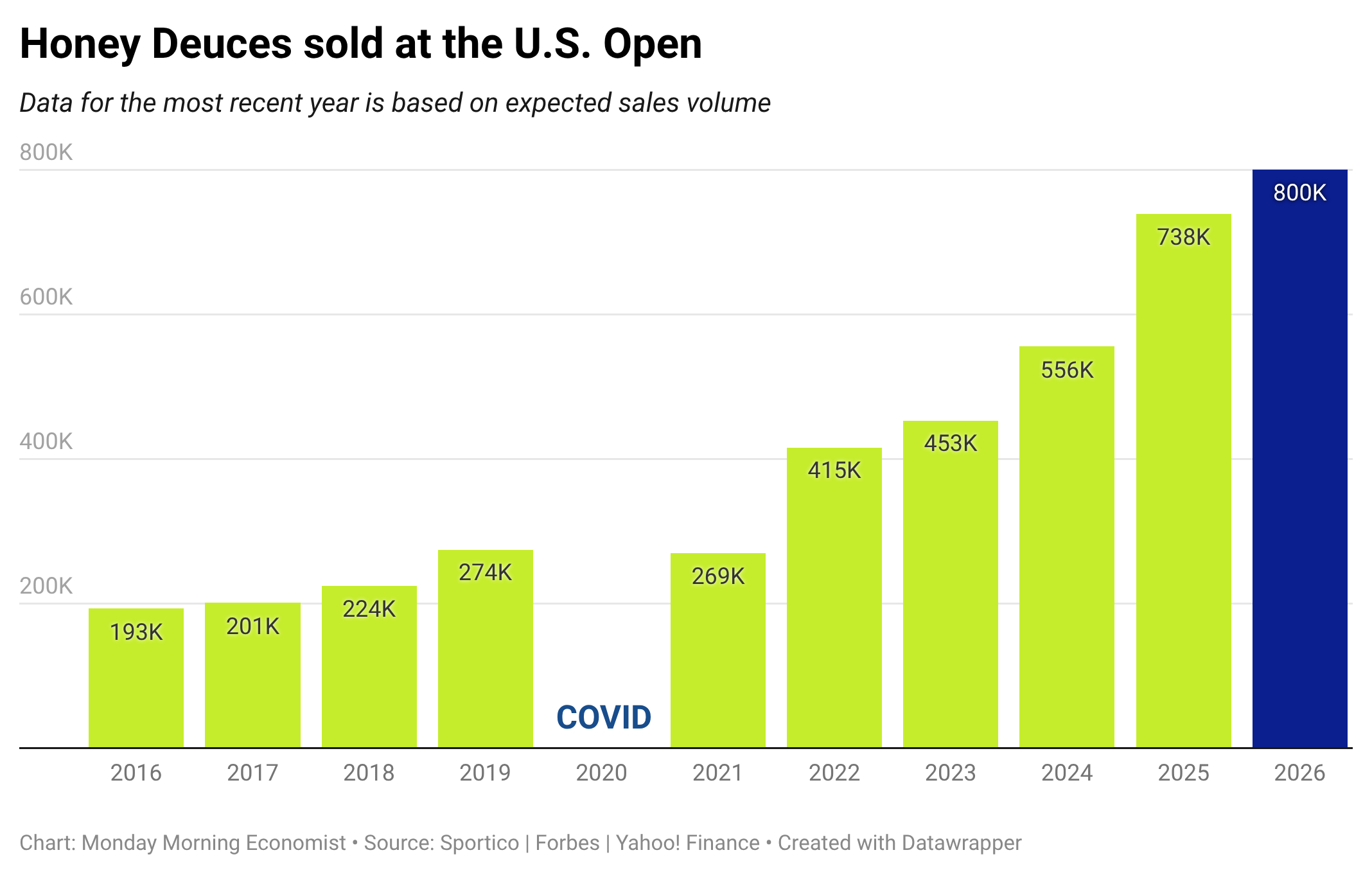
The Honey Deuce sold out when it first appeared at the US Open back in 2007. At the time, organizers only had enough prepared for 25,000 cups. Fast forward to 2022, and the tournament was selling more than 400,000 units. Last year, the tournament sold 738,459 drinks. At $23 a pop, the tournament brought in roughly $17 million last year. That’s more than the two tournament winners earn combined.
The USTA hasn’t raised the drinks’ price this year, but they have ordered more cups in anticipation of another record-breaking year. We should find out any day now whether their bet looks conservative or exactly right.
But here’s what jumped out to me while digging into the sales data, and what ultimately led to this article: for its first fifteen years, Honey Deuce sales grew roughly in step with attendance. But since the pandemic, sales have taken off. It’s grown far more than the crowds, but why?
What Is the Experience Economy?
Let’s pause for a moment and talk about what makes sporting events and even the Honey Deuce unique. Experience goods are products or services that are hard to accurately judge before you’ve purchased them. A match at the US Open fits this nicely, since you don’t really know what you’re getting until you’ve arrived. Will it be a five-set classic or a blowout? Will your favorite player show up in top form, or crumble in the 95-degree heat? You only learn the value of your purchase after you’ve paid and watched it play out.
This is where the experience economy framework comes in. The argument goes that businesses increasingly succeed by orchestrating memorable events around whatever they’re selling, until the memory itself becomes the product. If the quality of any individual match is uncertain, the tournament needs something else to get people through the gates for the early rounds. It needs something reliably great that guarantees a good memory no matter the scoreline.
Enter the Honey Deuce: a social media sensation generating cultural buzz that sometimes rivals the tennis itself. The cocktail debuted almost 20 years ago, and social media has been around just as long. So why is it only now, two decades in, that Honey Deuce sales are exploding?
So, Why Now?
Consumer spending data offers a place to start. Pandemic lockdowns meant drastically reduced spending for a lot of people. The personal savings rate spiked to nearly 25% in mid-2020, compared with a pre-pandemic average of about 6%. Some estimates suggest U.S. households built up over $2 trillion in “excess savings.” Once those stay-at-home restrictions were lifted, a lot of that money went straight into concerts, travel, and live events. That “revenge spending” benefited the tournament nicely. Profits nearly doubled, from $157 million before the pandemic to $277 million last year.
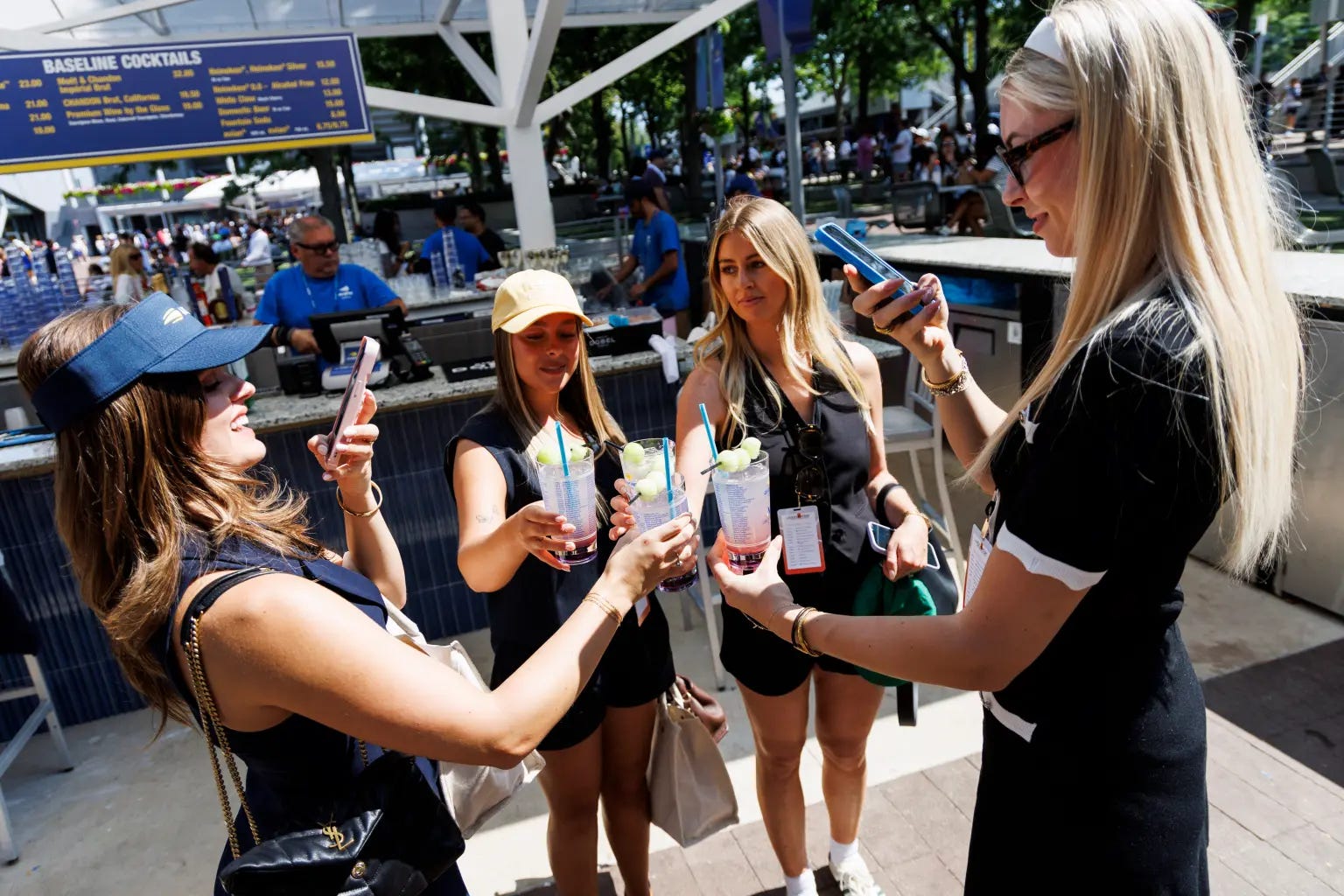
Honey Deuce sales managed to grow by more than double. Social media amplified people’s desire to broadcast the experiences that all that pent-up demand was now funding. Since you can only get the drink at Flushing Meadows during the tournament, showing up with one in hand became its own small proof that you were back out in the world. A similar drink at a bar might run closer to $10. But in a stadium packed with fans, at one of the world’s marquee sporting events, in a commemorative cup, it’s $23. The drink is the same at both venues, but the experience is vastly different.
Final Thoughts
The US Open isn’t the only tournament to figure that out. The Mint Julep has been the Kentucky Derby’s official drink since the 1930s, and Wimbledon’s Pimm’s Cup has been around since the 1970s. Both were built on the same logic decades before the Honey Deuce showed up, but neither has matched its viral reach. Perhaps it’s because the Open’s crowd skews younger and more online, which is exactly the ingredient that turns a good concession-stand strategy into a $17-million phenomenon.
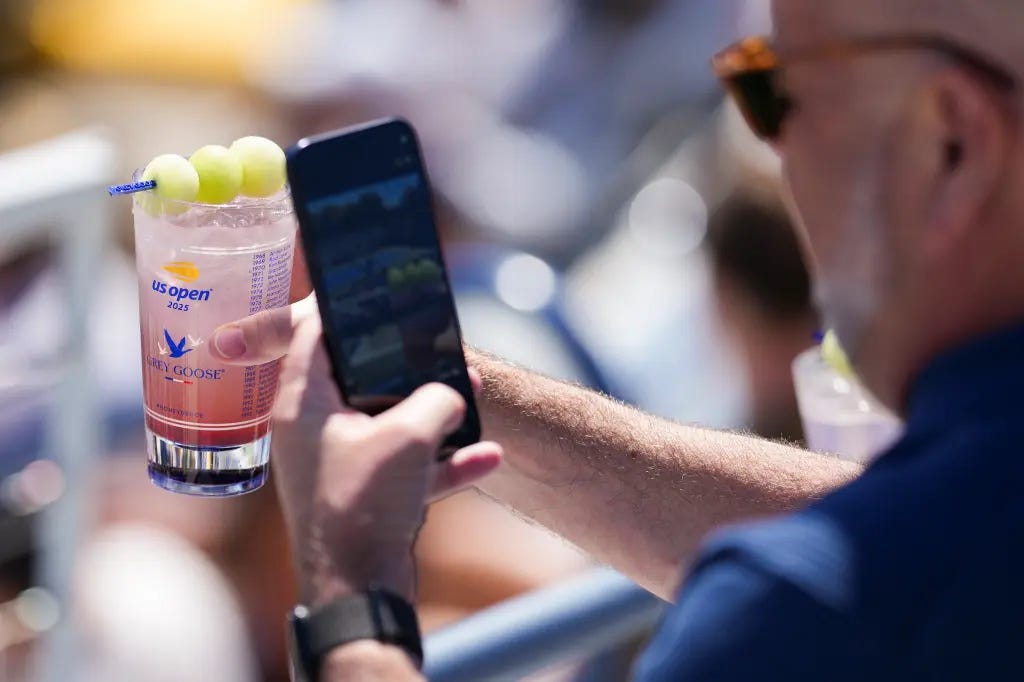
The drink is more than just a cocktail in a commemorative glass. The product is really just proof of presence at a premium cultural moment. It’s something you can broadcast to your entire network, long after the tournament ends. Call it irrational spending if you want, but it’s really just the experience economy doing exactly what it was theorized to do almost thirty years ago.
One more thing: this newsletter is an experience good, too. You can’t actually know if this newsletter is worth your time until you’ve read it. Since you’ve made it this far, I think it’s safe to say the verdict is in. Your friends, though? They’re still stuck guessing. Forward this along and let them find out for themselves.

8,000 cases of honeydew melons were trucked from California to New York for the US Open [Cascade PBS]
The winners of the 2026 US Open men’s and women’s singles titles each make $5,500,000 [People Magazine]
On resale sites like eBay, single cups can be listed for $10- $20, while a set of six can go for $100 [ESPN]
Personal savings as a percentage of disposable personal income is currently at 3.0%. [U.S. Bureau of Economic Analysis via FRED]
There were an estimated 905,255 people in attendance for the main draws of singles and men’s and women’s doubles in 2025 [Forbes]